Barberry Shrub Care & Identification Guide
The Barberry Shrub (Berberis thunbergii), specifically the Japanese Barberry or Red Barberry, is an exceptionally colorful, heavily armed deciduous shrub native to eastern Asia. Celebrating for its intensely vibrant purplish-red foliage and brilliant crimson berries, it is one of the most effective, low-growing defensive barriers in modern landscaping. Botanically, its woody stems are densely armed at almost every node with sharp, slender single or triple spine thorns designed to deter any animal or human intrusion. TOXICITY WARNING: While the ripe berries are edible, the roots, bark, and stems contain high concentrations of the alkaloid berberine, which is mildly toxic to pets and causes severe stomach distress if chewed.





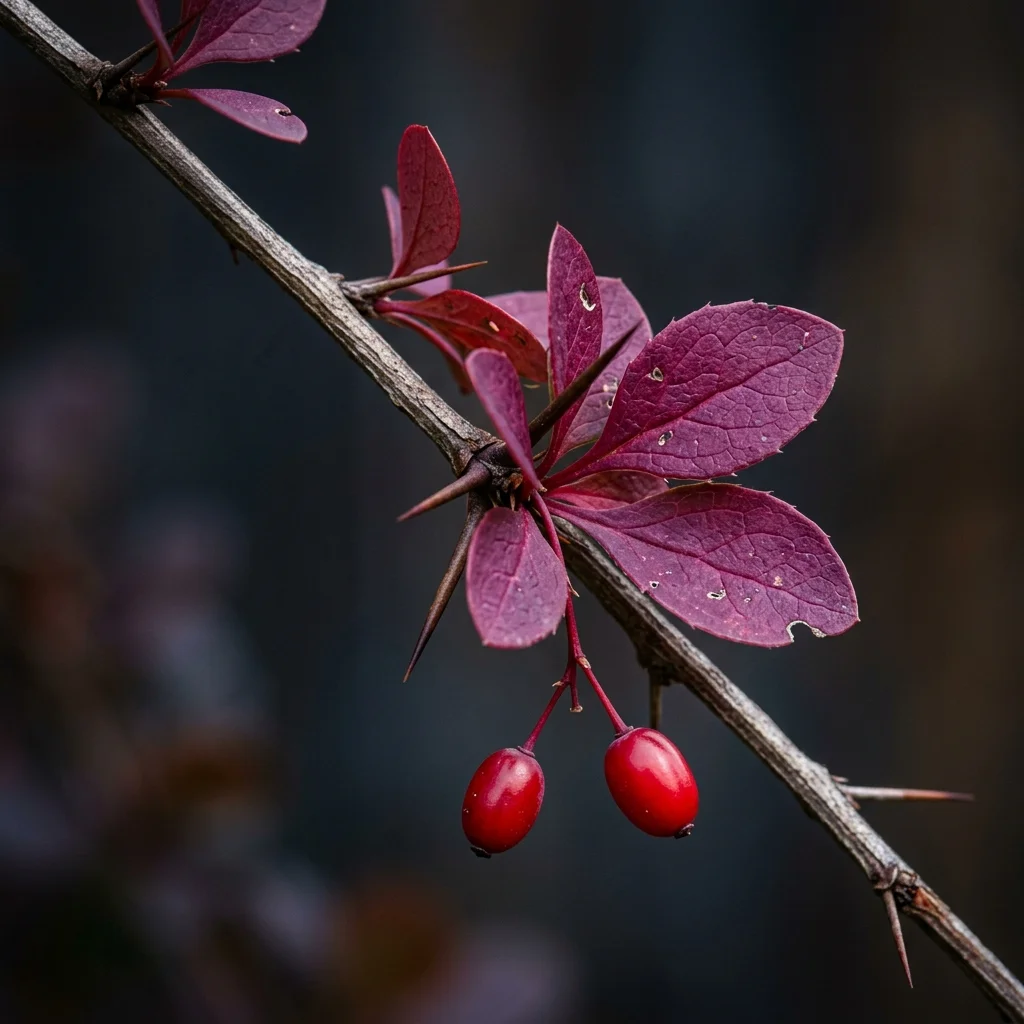
How to Identify Barberry Shrub
Identify Barberry Shrub (Berberis thunbergii) immediately by its distinctive leaf arrangements, wood structures, and flowers. Recognizing its definitive visual traits is key to distinguishing it from other similar species.
-
✔
Distinctive Features: Dense, wiry branches packed with sharp single or three-pronged spine thorns at the nodes, carrying intense purplish-red obovate leaves and dangling crimson berries.
-
✔
Typical Coloration: Deep wine-red to purplish-purple leaves, bright coral-red berries, and wiry gray-brown thorny twigs.
-
✔
Potential Confusions: Sometimes superficially confused with Cotoneaster due to the small red berries, but Barberry Shrub is instantly distinguished by its intense purplish leaves, yellow inner wood, and sharp三叉刺 (triple node thorns).
Complete Care & Cultivation Guide
Follow our detailed scientific care guide to keep your Barberry Shrub thriving and gorgeous all year round.
Frequently Asked Questions
Why does the Japanese Barberry have yellow wood?
The bright yellow color is due to the presence of berberine, a natural bitter alkaloid that protects the wood from decay, fungi, and boring insects.
Is the Barberry Shrub toxic to cats and dogs?
The roots, stems, and bark contain berberine, which is toxic to dogs and cats if chewed. Ingestion causes gastrointestinal upset, drooling, vomiting, and diarrhea.
Does Barberry Shrub make a good security barrier?
Yes! Its dense, wiry branches, packed with sharp三叉刺 (triple thorns) at almost every node, make it one of the absolute best low-growing security hedges in landscaping.
Why is my Barberry Shrub losing its purple color?
Loss of color is almost always caused by a lack of sunlight. Move the plant to a location with absolute full sun (at least 6 hours daily) to restore its intense wine-red foliage.