Japanese Barberry Care & Identification Guide
The magnificent Japanese Barberry (Berberis thunbergii) is an outstanding deciduous ornamental shrub, widely celebrated for its spectacular, deep purple foliage and sharp thorns that form dense security barriers. Native to sunny mountain slopes of East Asia, this highly resilient wood perennial features beautiful obovate leaves. WARNING: All parts of Berberis thunbergii, especially the roots and stems, contain highly toxic isoquinoline alkaloids (primarily Berberine), which cause severe gastrointestinal irritation and drop blood pressure in pets if ingested.





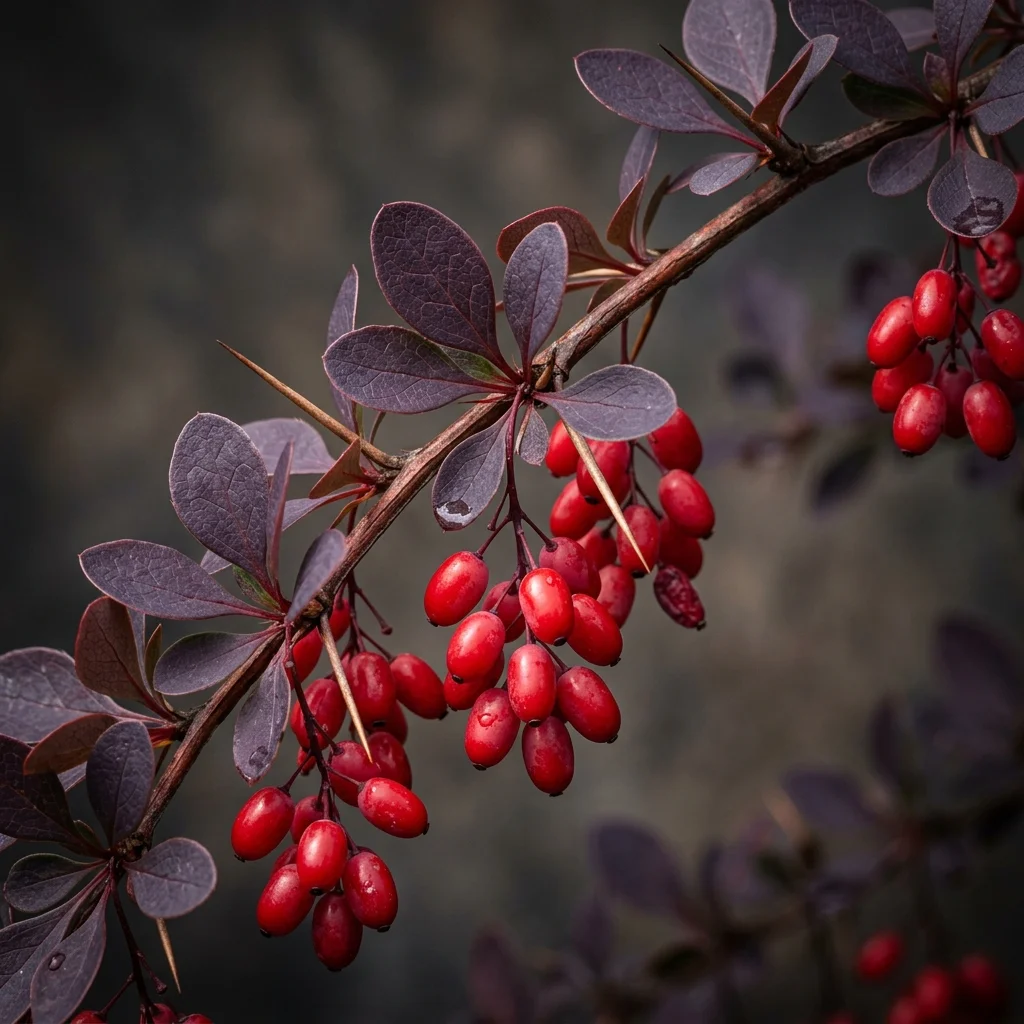
How to Identify Japanese Barberry
Identify Japanese Barberry (Berberis thunbergii) immediately by its distinctive leaf arrangements, wood structures, and flowers. Recognizing its definitive visual traits is key to distinguishing it from other similar species.
-
✔
Distinctive Features: Clusters of deep purple obovate leaves measuring 0.5 to 1.2 inches long, armed with extremely sharp triple thorns at branch nodes.
-
✔
Typical Coloration: Rich deep purple-red leaves turning fiery scarlet in autumn, with dangling bright red egg-shaped berries in winter.
-
✔
Potential Confusions: Sometimes confused with Loropetalum due to purple leaf colors, but easily distinguished by its extremely sharp woody thorns and dangling red berries in winter.
Complete Care & Cultivation Guide
Follow our detailed scientific care guide to keep your Japanese Barberry thriving and gorgeous all year round.
Frequently Asked Questions
Why are my purple Barberry leaves turning completely green?
This is a classic sign of insufficient sunlight. Japanese Barberry requires absolute full, direct sun to synthesize the deep purple-red anthocyanin pigments. In partial shade, the plant reverts to green chlorophyll.
Is Barberry toxic to cats and dogs?
Yes! All parts of Berberis thunbergii contain the toxic alkaloid Berberine. Ingestion causes severe salivation, vomiting, diarrhea, lethargy, low blood pressure, and potential cardiac depression in pets.
Does Japanese Barberry harbor ticks?
Yes, ecological studies show that dense thickets of invasive Japanese Barberry retain high humidity, creating a perfect shelter for black-legged ticks which transmit Lyme disease. Plant it away from patios.
How often should I prune my Barberry?
Prune once in late winter or early spring before active growth starts to shape it. Wear heavy gauntlets, as the sharp triple thorns at each leaf node can easily puncture standard gardening gloves.