Bayberry Care & Identification Guide
Bayberry (Myrica pensylvanica), specifically the Northern Bayberry, is a highly spectacular, aromatic semi-evergreen shrub native to the dunes, pine barrens, and coastal cliffs of eastern North America. Celebrated for its tight clusters of highly waxy, bumpy grayish-blue berries packed closely along light-gray twigs, this resilient shrub has a fascinating history: early American colonists painstakingly boiled the berries to skim off the thick, aromatic wax to manufacture the famous, clean-burning 'Bayberry candles' that released a pleasant herbal scent. Botanically, it is highly salt-tolerant and hosts nitrogen-fixing Frankia actinomycetes in its root nodules, allowing it to thrive in barren, sandy soils.





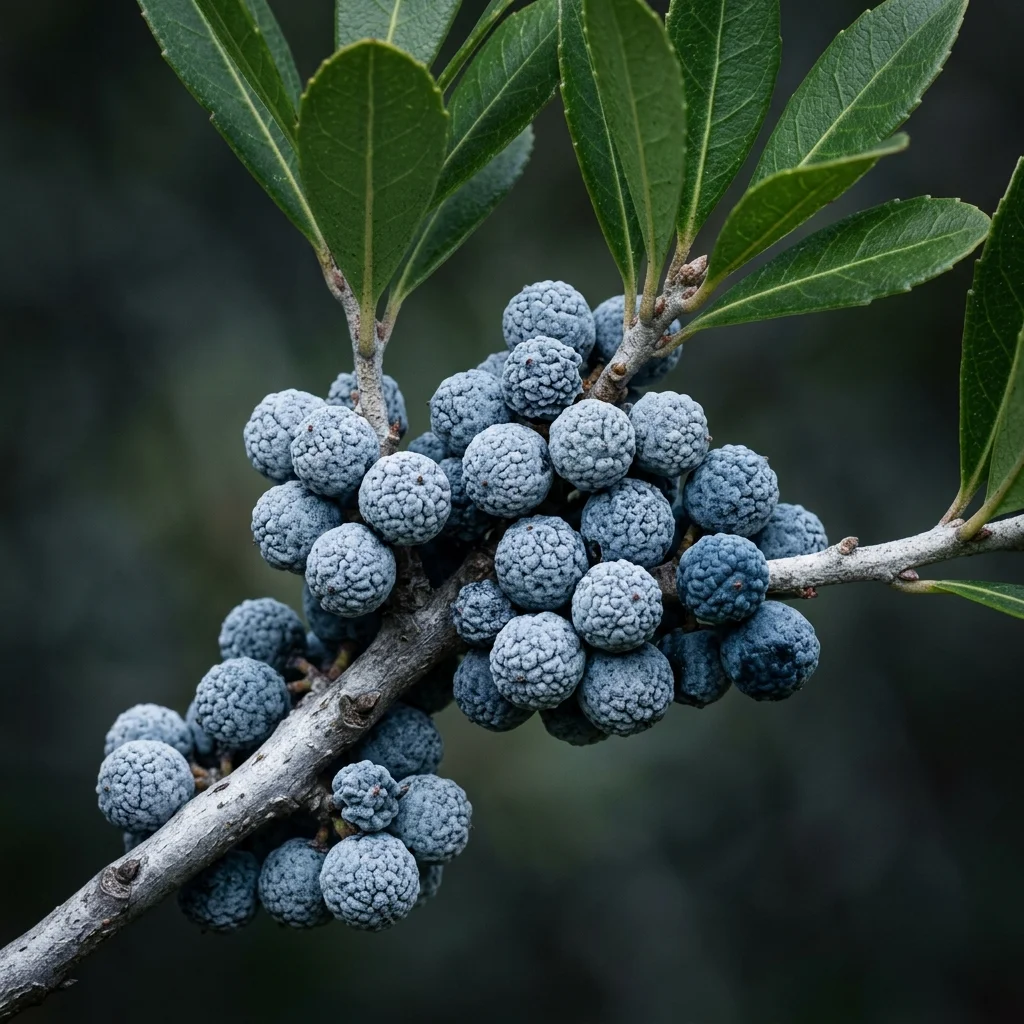
How to Identify Bayberry
Identify Bayberry (Myrica pensylvanica) immediately by its distinctive leaf arrangements, wood structures, and flowers. Recognizing its definitive visual traits is key to distinguishing it from other similar species.
-
✔
Distinctive Features: Tight, dense clusters of tiny, round, waxy, and bumpy grayish-blue berries packed closely along silvery-gray twigs under highly aromatic, leathery green leaves.
-
✔
Typical Coloration: Grayish-blue waxy berries, glossy dark green leaves, light gray branches, and small copper-brown catkins.
-
✔
Potential Confusions: Sometimes confused with Wax Myrtle (Myrica cerifera), but Northern Bayberry (Myrica pensylvanica) has much broader, less serrated leaves, is significantly more cold-hardy, and is deciduous to semi-evergreen rather than strictly evergreen.
Complete Care & Cultivation Guide
Follow our detailed scientific care guide to keep your Bayberry thriving and gorgeous all year round.
Frequently Asked Questions
How were Bayberry candles historically made?
Early settlers harvested the gray berries and boiled them in water. The wax melted and floated to the top, which was skimmed off and used to mold highly aromatic, clean-burning candles.
Is Bayberry toxic to household pets?
No. Myrica pensylvanica is completely non-toxic to dogs, cats, and horses. It is a highly safe, color-rich and fragrant addition to pet-friendly coastal landscaping.
Why are there no waxy berries on my Bayberry?
You may have a male plant, or a female plant with no male pollinator nearby. Since Bayberry is dioecious, you need both a male and a female shrub close together for wind pollination to occur.
How does Bayberry tolerate sandy coastal soil?
It has symbiotic Frankia bacteria in its root nodules that convert atmospheric nitrogen into nutrients, allowing it to thrive in barren sand dunes where other shrubs starve.