American Beautyberry Care & Identification Guide
The magnificent American Beautyberry (Callicarpa americana) is an outstanding deciduous ornamental shrub, widely celebrated for its spectacular, tight clusters of vibrant metallic-purple berries that wrap gracefully around woody leaf nodes in late autumn. Native to rich woodlands and thickets of the southeastern United States, this highly resilient wood perennial is a traditional garden favorite, prized for its excellent wildlife value and natural insect-repelling qualities. To support its prolific summer blooming and heavy autumn berry display, it requires full sun to partial shade, organic well-drained loam, and proper spring pruning.





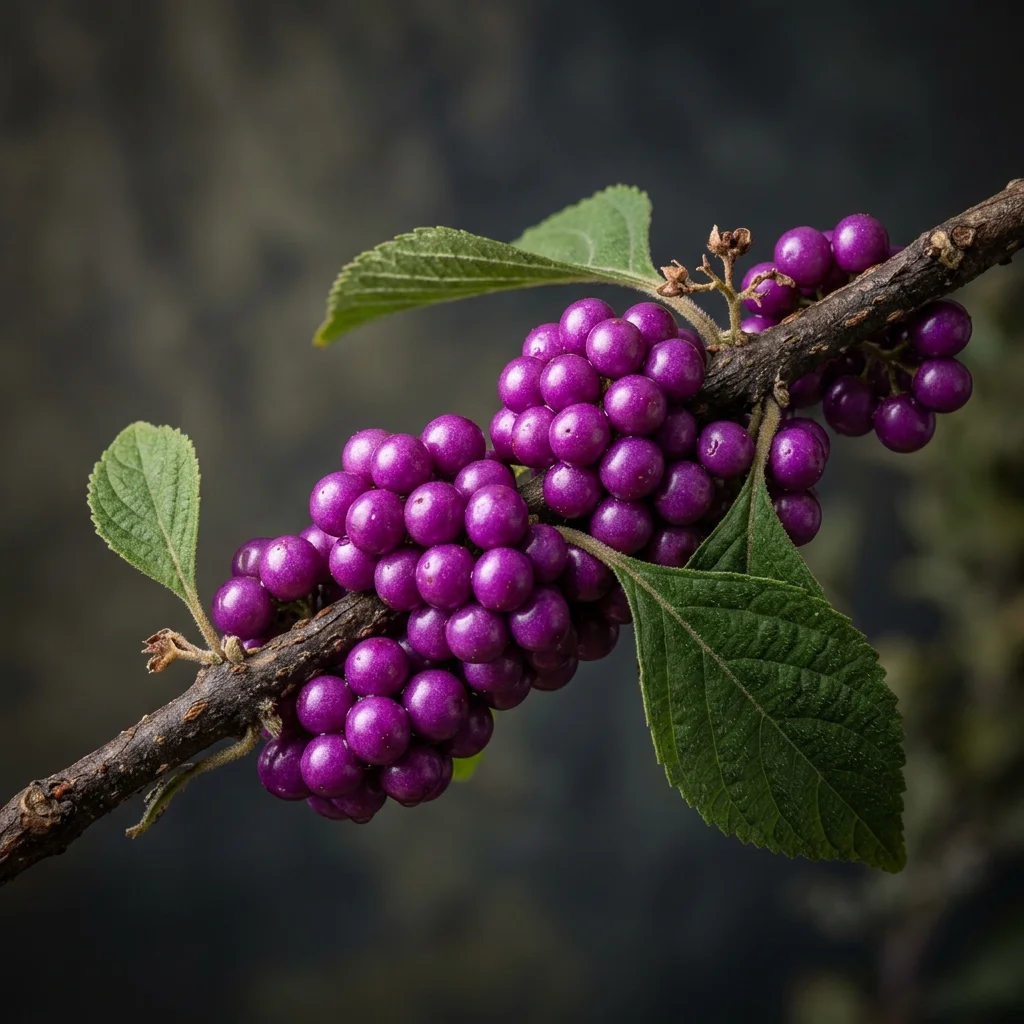
How to Identify American Beautyberry
Identify American Beautyberry (Callicarpa americana) immediately by its distinctive leaf arrangements, wood structures, and flowers. Recognizing its definitive visual traits is key to distinguishing it from other similar species.
-
✔
Distinctive Features: Tight, spectacular clusters of vibrant glossy metallic-purple berries wrapped around woody leaf nodes along arching stems.
-
✔
Typical Coloration: Vibrant metallic-purple berries, with coarse, fuzzy opposite medium green leaves turning soft yellow in autumn.
-
✔
Potential Confusions: Sometimes confused with Callicarpa japonica, but distinguished by its much larger size, larger fuzzy leaves, and much tighter, denser metallic-purple berry clusters.
Complete Care & Cultivation Guide
Follow our detailed scientific care guide to keep your American Beautyberry thriving and gorgeous all year round.
Frequently Asked Questions
Why is my Beautyberry not producing those metallic purple berries?
The primary causes are insufficient direct sunlight or pruning too late in spring. Beautyberry blooms on 'new wood' generated in spring, so it must be pruned in late winter or early spring before growth starts. Also, ensure it receives 5 hours of sun.
Is Beautyberry toxic to domestic pets?
No, Callicarpa americana berries are completely non-toxic to cats and dogs. Birds and wildlife absolutely love them, and humans can even cook the ripe berries down into unique sweet jellies.
How do I use Beautyberry leaves as a natural mosquito repellent?
Simply crush fresh Beautyberry leaves in your hands to release the aromatic volatile oils (Callicarpenal) and rub the crushed foliage directly onto your skin and clothing to repel mosquitoes and ticks.
How hard can I prune my Beautyberry Shrub?
Very hard! You can cut the entire plant down to 12 inches from the ground in late winter. This rejuvenation pruning stimulates extremely vigorous new stems and massive autumn berry clusters.