Blackthorn Care & Identification Guide
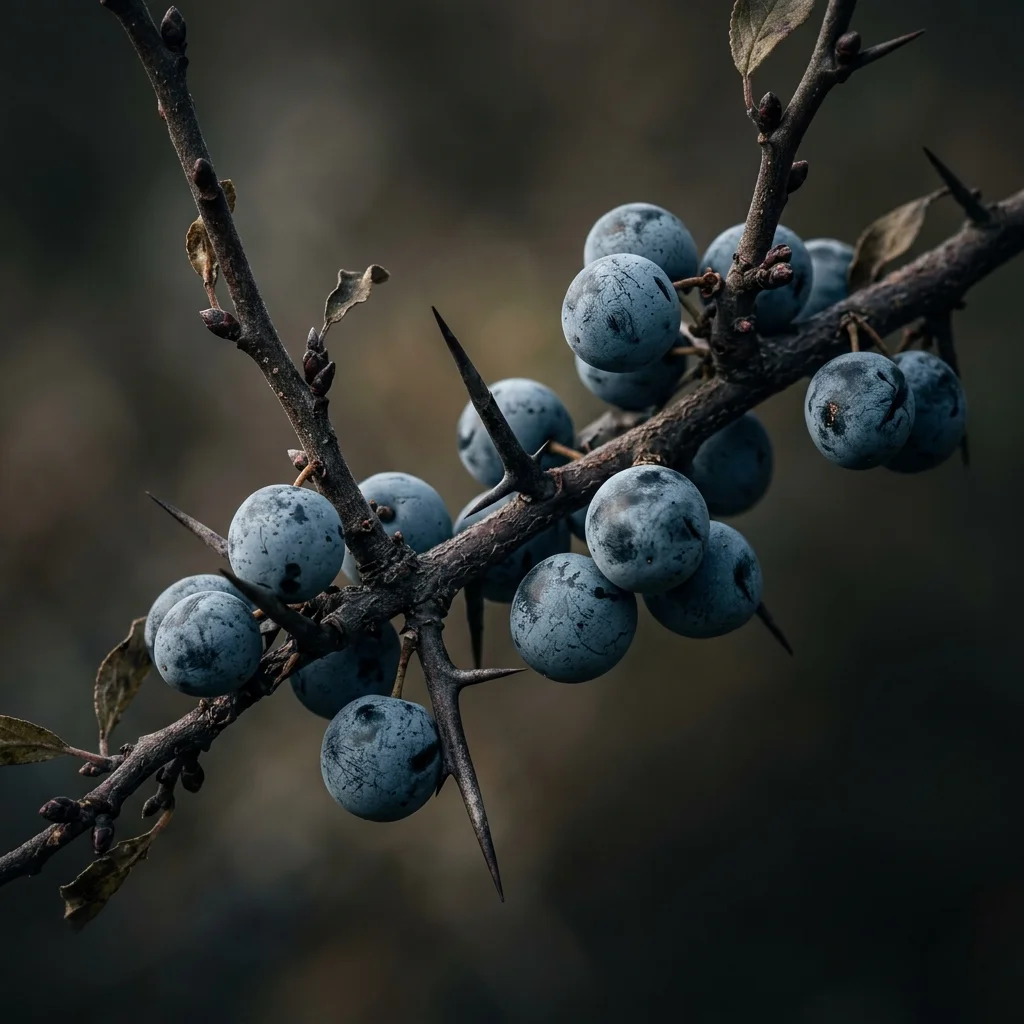
Blackthorn (Prunus spinosa), widely known as Sloe or Sloe Bush, is an exceptionally rugged, heavily armed deciduous shrub native to Europe, western Asia, and northwest Africa. Celebrated for forming the absolute toughest and most impenetrable cattle-proof wild barriers, its branches are densely packed with extremely sharp, stiff, dark thorns that can cause painful, easily infected punctures. Botanically, it is a key ecological plant that blooms in early spring before its leaves emerge, producing a spectacular blanket of snowy-white flowers, followed in late autumn by clusters of round, dusty blue-black sloe berries that are globally famous as the core flavoring ingredient of Sloe Gin.





How to Identify Blackthorn
Identify Blackthorn (Prunus spinosa) immediately by its distinctive leaf arrangements, wood structures, and flowers. Recognizing its definitive visual traits is key to distinguishing it from other similar species.
-
✔
Distinctive Features: Wiry, charcoal-black branches armed with long, exceptionally sharp, needle-like dark thorns, carrying simple dark green leaves and clusters of dusty blue-black sloe berries.
-
✔
Typical Coloration: Dusty blue-black sloe berries with a glaucous powder bloom, snowy-white spring flowers, and charcoal-black bark.
-
✔
Potential Confusions: Commonly confused with Hawthorn (Crataegus monogyna) due to similar thorny hedges, but Blackthorn is easily distinguished by its simple leaves (Hawthorn has lobed leaves) and blue-black sloe berries (Hawthorn has red haw berries).
Complete Care & Cultivation Guide
Follow our detailed scientific care guide to keep your Blackthorn thriving and gorgeous all year round.
Frequently Asked Questions
What is Blackthorn wood historically famous for?
Its wood is incredibly dense, hard, and tough. It is traditionally used in Ireland to carve the famous, polished 'shillelagh' (traditional walking and defensive sticks).
Are sloe berries safe for dogs and cats?
The ripe flesh is safe, but like all Prunus species, the pits, leaves, and bark contain cyanogenic glycosides which are toxic to dogs and cats if chewed or swallowed.
How does Blackthorn protect gardens from intruders?
Its exceptionally dense, interlocking branches, packed with needle-sharp, rigid dark thorns, create an impenetrable natural barrier that deters both animals and intruders.
Why is the Sloe berry so famous?
Sloe berries are the essential flavoring ingredient in Sloe Gin, a traditional red liqueur. The tart, astringent berries release their rich plum-almond flavor when steeped in gin and sugar.