Boxwood Care & Identification Guide
The magnificent Boxwood (Buxus sempervirens) is the absolute king of classical European formal garden design, celebrated for its dense, small glossy oval leaves that permit meticulous geometric topiary clipping and low parterre hedging. Hailing from limestone rocky slopes and thin understories of southern Europe, this slow-growing evergreen subshrub features exceptionally hard, fine-grained wood. WARNING: All parts of Buxus sempervirens contain highly toxic steroidal alkaloids (such as Buxine), which cause severe neurological tremors and vomiting in pets if ingested.





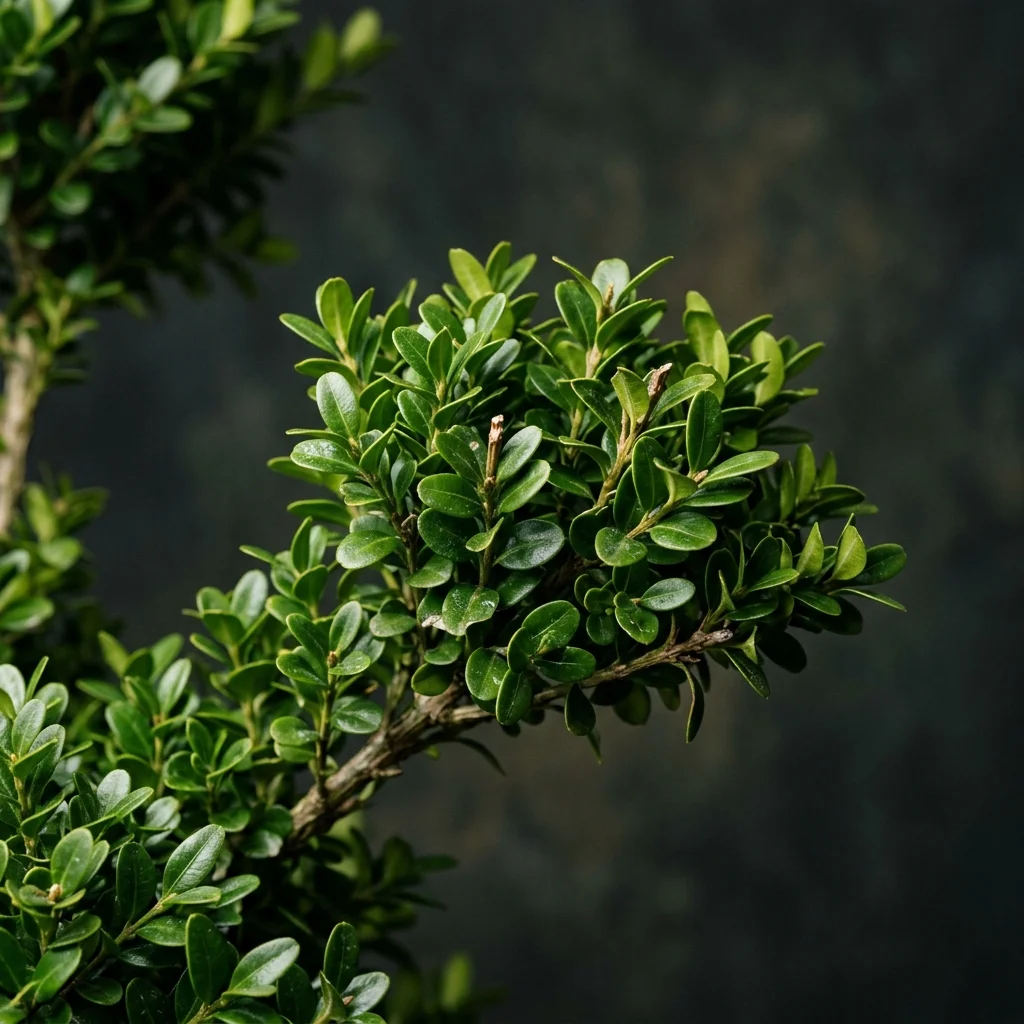
How to Identify Boxwood
Identify Boxwood (Buxus sempervirens) immediately by its distinctive leaf arrangements, wood structures, and flowers. Recognizing its definitive visual traits is key to distinguishing it from other similar species.
-
✔
Distinctive Features: Dense, compact mounds of small, opposite waxy oval leaves measuring 0.5 to 1 inch long, forming an impenetrable evergreen wall.
-
✔
Typical Coloration: Rich glossy dark green leaves with pale yellow-green undersides, and rigid grey-brown woody branches.
-
✔
Potential Confusions: Often confused with Ilex crenata (Japanese Holly), but distinguished by its opposite leaf arrangement and smooth, entire margins without any tiny teeth.
Complete Care & Cultivation Guide
Follow our detailed scientific care guide to keep your Boxwood thriving and gorgeous all year round.
Frequently Asked Questions
Why are the leaf tips of my Boxwood turning papery brown after pruning?
This is typically caused by using dull pruning shears. Dull blades crush and shred leaf tissue rather than slicing cleanly. The shredded margins dry out rapidly, browning the foliage and inviting Boxwood Blight.
Is Boxwood toxic to dogs and cats?
Yes! Buxus sempervirens contains highly toxic steroidal alkaloids, particularly Buxine. Ingestion of foliage or twigs causes severe vomiting, diarrhea, drooling, respiratory depression, and neurological tremors in pets.
How do I prevent Boxwood Blight?
Avoid overhead sprinkler watering, prune only when foliage is fully dry, sterilize your shears with rubbing alcohol between shrubs, and prune internal branches to maximize wind ventilation.
Can I grow Boxwood in complete shade?
While Boxwood can tolerate partial shade, complete heavy shade will lead to sparse, leggy leaf growth and significantly increases the risk of damp fungal infections like leaf spot.