Cotoneaster Care & Identification Guide
The magnificent Cotoneaster (Cotoneaster horizontalis), commonly known as the Wall-Spray or Rockspray Cotoneaster, is an outstanding deciduous ornamental shrub, widely celebrated for its highly unique herringbone branching structure and spectacular scarlet-red winter berries. Native to rocky slopes and valley edges of East Asia, this highly resilient wood perennial features flat, horizontal arching stems. WARNING: All parts of Cotoneaster horizontalis, particularly the bright red berries, are highly toxic, containing cyanogenic glycosides that cause vomiting and respiratory distress.





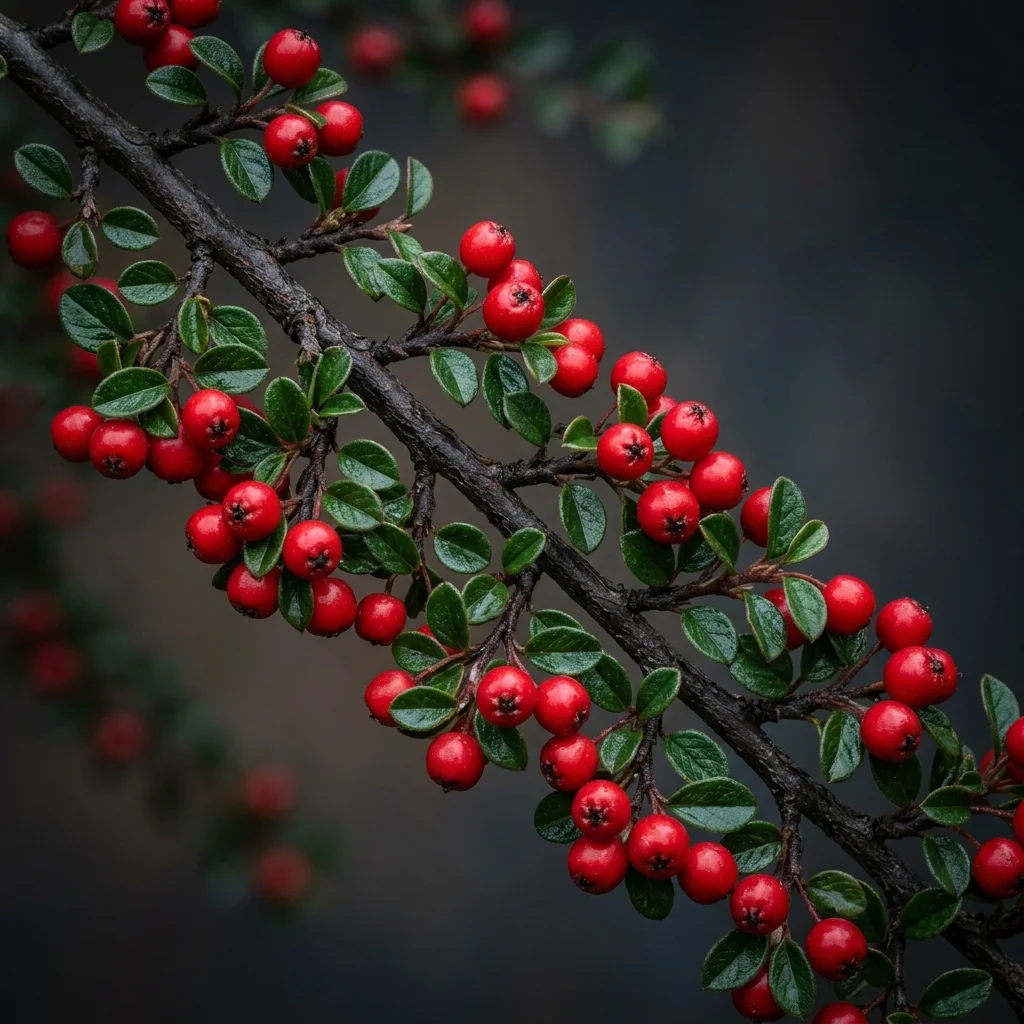
How to Identify Cotoneaster
Identify Cotoneaster (Cotoneaster horizontalis) immediately by its distinctive leaf arrangements, wood structures, and flowers. Recognizing its definitive visual traits is key to distinguishing it from other similar species.
-
✔
Distinctive Features: Highly unique, flat herringbone woody branch structure packed with tiny round glossy green leaves, forming a dense ground-hugging spray.
-
✔
Typical Coloration: Glossy dark green leaves turning bright orange-red in autumn, with brilliant waxy scarlet-red berries.
-
✔
Potential Confusions: Sometimes confused with Pyracantha, but distinguished by its completely thornless branches, herringbone woody structure, and much smaller round leaves.
Complete Care & Cultivation Guide
Follow our detailed scientific care guide to keep your Cotoneaster thriving and gorgeous all year round.
Frequently Asked Questions
What is a 'herringbone' branching pattern on my Cotoneaster?
The herringbone pattern is a highly unique physiological growth trait of Cotoneaster horizontalis where side shoots emerge in a single flat plane at regular alternate angles from the main stem, resembling a fish skeleton.
Is Cotoneaster toxic to cats and dogs?
Yes! All parts of Cotoneaster horizontalis, especially the bright red waxy berries, contain toxic cyanogenic glycosides. Ingestion by pets causes severe vomiting, diarrhea, abdominal pain, and respiratory depression.
Does Cotoneaster have thorns?
No, Cotoneaster horizontalis is completely thornless. This makes it a much safer, softer alternative to Pyracantha for ground covers, retaining walls, and high-traffic pathways.
How often should I water my Cotoneaster?
Water only when the top 1 to 2 inches of soil are fully dry. Established cotoneasters are highly drought-hardy and perform best in dryish, free-draining sandy loam.