Creosote Bush Care & Identification Guide
The Creosote Bush (Larrea tridentata) is the iconic, ultimate survivor of the North American arid deserts (Sonoran, Mojave, and Chihuahuan). A highly aromatic, evergreen shrub, it dominates dry valley floors with its dark resinous leaves that release a powerful, distinctive fragrance of desert rain after a storm. Botanically, it is one of the most long-lived organisms on Earth; underground root crowns expand outwardly in circular clonal rings, with the famous 'King Clone' in the Mojave Desert estimated to be over 11,700 years old. It utilizes sophisticated allelopathic chemicals to prevent competing seedlings from growing nearby.





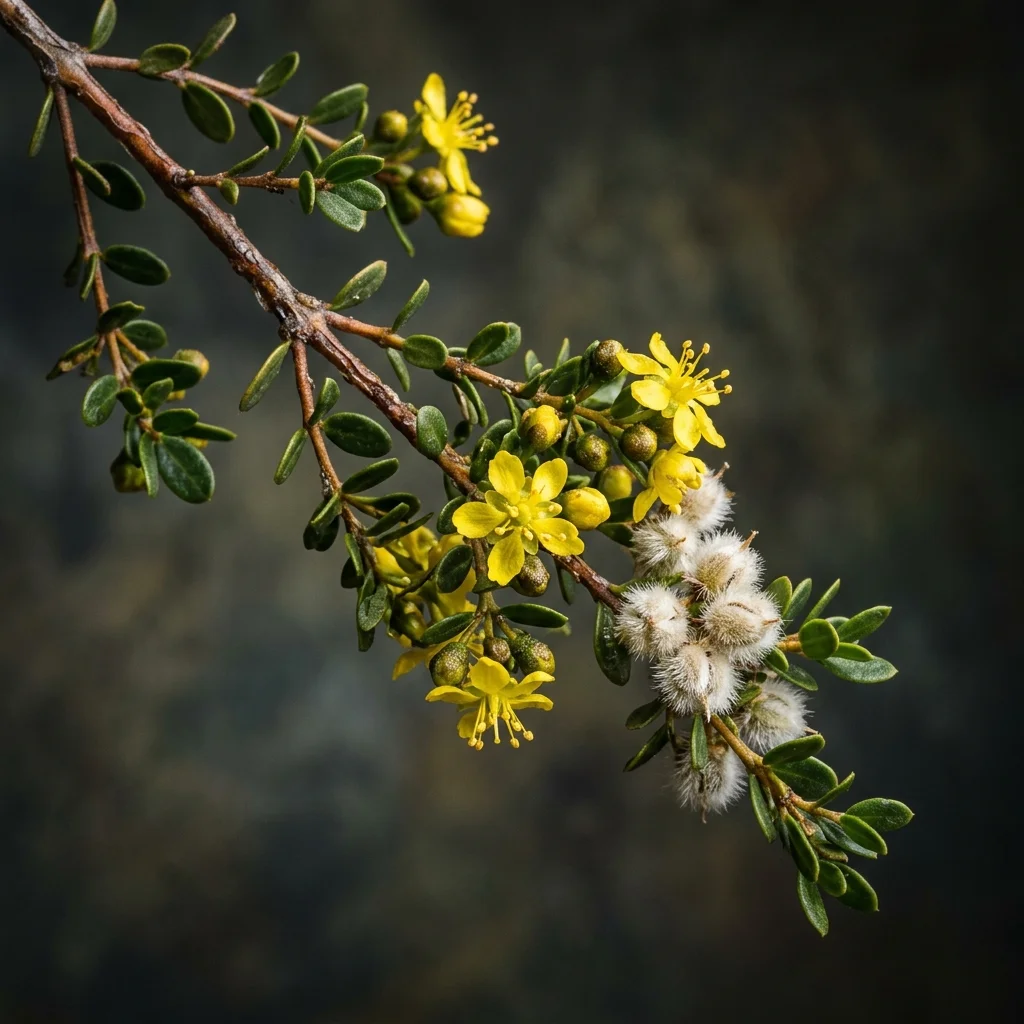
How to Identify Creosote Bush
Identify Creosote Bush (Larrea tridentata) immediately by its distinctive leaf arrangements, wood structures, and flowers. Recognizing its definitive visual traits is key to distinguishing it from other similar species.
-
✔
Distinctive Features: Resinous, small two-lobed green leaves that appear varnished, bright yellow five-petaled flowers, followed by small, highly fuzzy white seed capsules resembling cotton balls.
-
✔
Typical Coloration: Resinous olive-green leaves, dark gray to blackish branching stems, bright yellow blossoms, and white fuzzy seed heads.
-
✔
Potential Confusions: Unlikely to be confused with other plants due to its highly distinct resinous aroma and desert growth form. However, its small yellow flowers can superficially resemble those of various desert senna species.
Complete Care & Cultivation Guide
Follow our detailed scientific care guide to keep your Creosote Bush thriving and gorgeous all year round.
Frequently Asked Questions
What is the smell of Creosote Bush after rain?
It releases a sharp, earthy, clean aroma resembling coal tar or clean rain, which desert locals associate with the arrival of monsoons. This scent is produced by volatile resins coating the leaf surfaces.
Is Creosote Bush toxic to dogs and cats?
Yes. The resinous leaves contain high concentrations of chemical compounds (phenols and NDGA) that can cause severe gastrointestinal distress, vomiting, and potential liver damage if ingested by pets.
How long does a Creosote Bush live?
Individual branches live for several decades, but the clonal root system can live for thousands of years. Circular clonal rings in the Mojave Desert are among the oldest living organisms on the planet.
How does Creosote Bush survive with so little water?
It has double survival mechanisms: its leaves have a thick, varnished resin coating that prevents evaporation, and its roots can absorb water from extremely dry soil by maintaining high internal osmotic pressure.