Croton Shrub Care & Identification Guide
The Croton Shrub (Codiaeum variegatum) is a highly spectacular evergreen tropical shrub native to open forests and scrublands of Indonesia, Malaysia, and Australia. Globally celebrated for its highly dramatic, leathery foliage painted in a brilliant, chaotic rainbow patchwork of yellow, neon orange, deep scarlet, and dark green, it utilizes anthocyanin and carotenoid pigments to capture varied light spectrums under tropical canopies. WARNING: All parts of the Croton Shrub contain a milky sap rich in phorbol esters. Contact with this sap causes painful blistering or severe contact dermatitis, and ingestion leads to violent vomiting, diarrhea, and intense oral burning in both humans and pets.





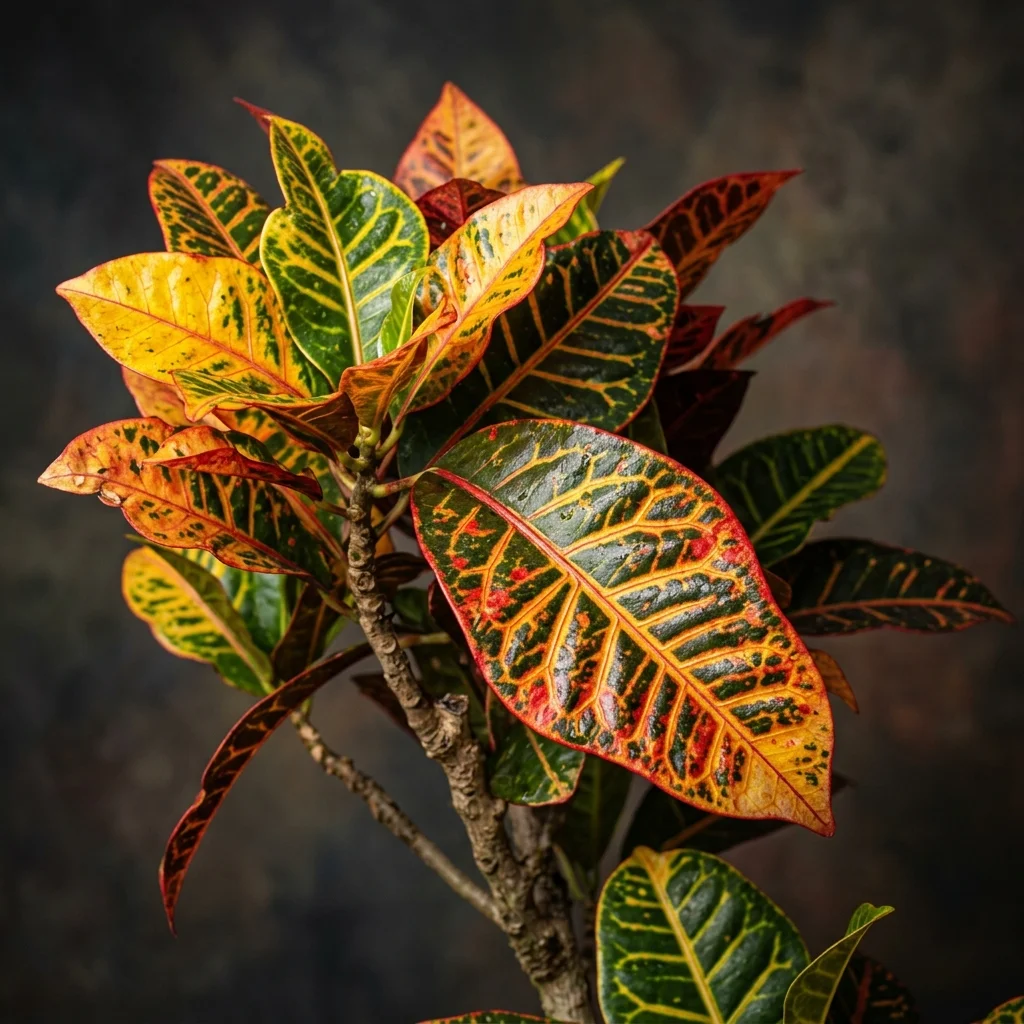
How to Identify Croton Shrub
Identify Croton Shrub (Codiaeum variegatum) immediately by its distinctive leaf arrangements, wood structures, and flowers. Recognizing its definitive visual traits is key to distinguishing it from other similar species.
-
✔
Distinctive Features: Thick, leathery, variable-shaped leaves (linear, lobed, or ovate) featuring highly vibrant patchwork variegation of red, orange, and yellow along bright yellow leaf veins.
-
✔
Typical Coloration: A kaleidoscope of scarlet red, glowing orange, bright lemon yellow, and dark forest green leaves, with grayish woody stems.
-
✔
Potential Confusions: Could be superficially confused with Aucuba japonica (Gold Dust Shrub), but Croton is easily distinguished by its significantly thicker, leathery leaves, much brighter rainbow colors, and sticky white toxic sap.
Complete Care & Cultivation Guide
Follow our detailed scientific care guide to keep your Croton Shrub thriving and gorgeous all year round.
Frequently Asked Questions
Why is my Croton Shrub dropping its leaves?
Crotons drop leaves as a reaction to shock, usually caused by moving the plant to a new location, cold drafts, dry air, or sudden temperature drops below 15°C (60°F). Keep conditions stable to prevent leaf drop.
Is the milky sap of Croton Shrub dangerous to pets?
Yes! The white milky sap contains toxic phorbol esters. If ingested by dogs or cats, it causes severe oral irritation, swelling, drooling, vomiting, and diarrhea. Keep the plant completely out of reach of household pets.
Why are the new leaves on my Croton Shrub completely green?
New leaves often emerge greenish and turn vibrant with light exposure, but if they remain green, it means the plant is not receiving enough light. Move your Croton to a brighter window with direct sun to restore its colors.
How do I clean my Croton leaves?
Wipe the leaves monthly with a damp cloth. This removes dust, allowing the leaves to absorb maximum light for photosynthesis, and helps wipe away early stages of spider mites and mealybugs.