Crown of Thorns Shrub Care & Identification Guide
The Crown of Thorns Shrub (Euphorbia milii) is a highly unique, heavily armed succulent evergreen shrub native to Madagascar. Celebrated for its remarkable display of delicate, bright-red flat blossoms and gnarled stems covered in dense, sharp needle thorns, it is one of the most popular choices for sunny windows and dry gardens. CRITICAL TOXICITY WARNING: Crown of Thorns is highly toxic. Like other Euphorbia species, its gnarled stems contain a sticky, milky white sap rich in phorbol esters. Contact with this sap causes painful skin irritation, severe contact dermatitis, and temporary blindness if rubbed into eyes. Ingestion causes violent vomiting, drooling, mouth ulceration, and severe stomach bleeding in pets.





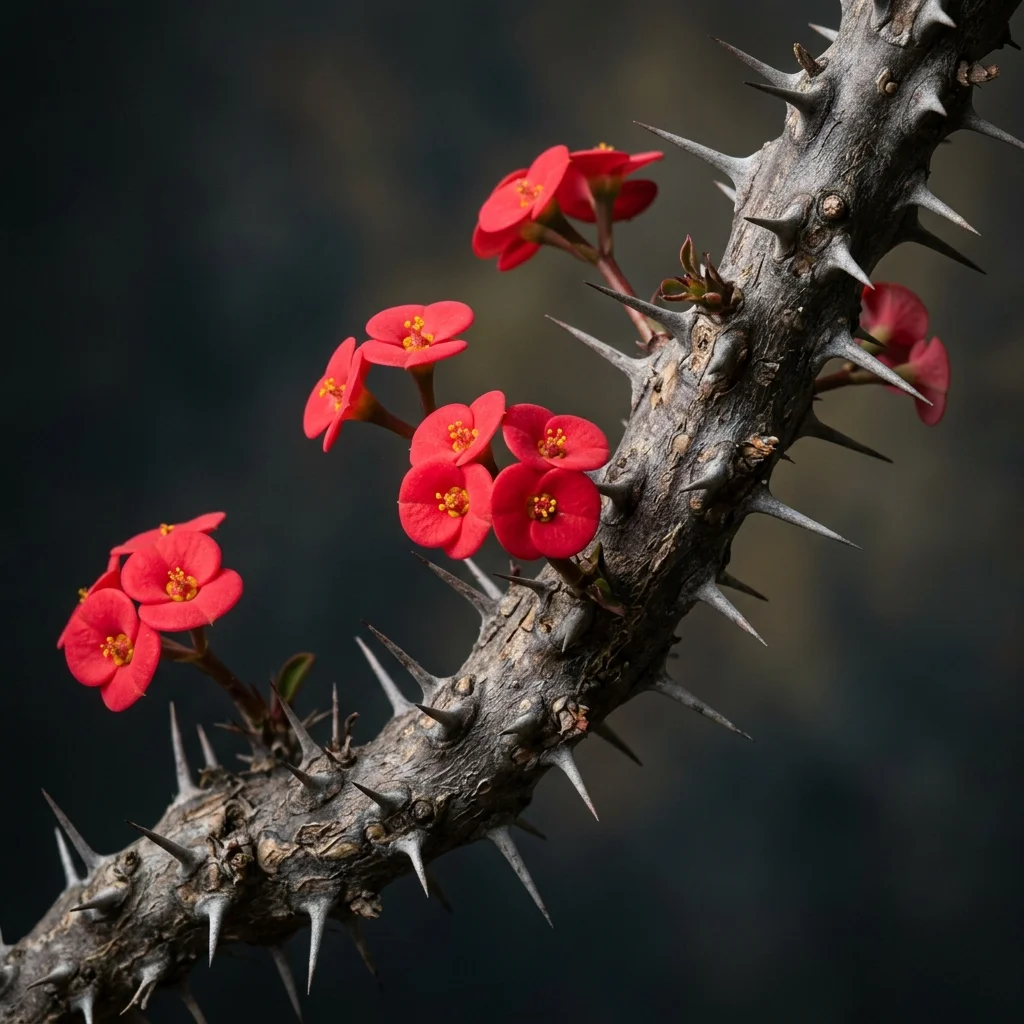
How to Identify Crown of Thorns Shrub
Identify Crown of Thorns Shrub (Euphorbia milii) immediately by its distinctive leaf arrangements, wood structures, and flowers. Recognizing its definitive visual traits is key to distinguishing it from other similar species.
-
✔
Distinctive Features: Gnarled, succulent grayish-brown stems densely covered in sharp, stout needle thorns up to 2 cm long, bearing delicate bright-red flat blossoms with yellow centers.
-
✔
Typical Coloration: Delicate bright-red blossoms, apple-green succulent leaves, grayish-brown thorny stems, and sticky white sap.
-
✔
Potential Confusions: Sometimes superficially confused with Cacti due to the gnarled thorny stems, but easily distinguished by its fleshy evergreen leaves, bright-red flowers, and sticky white toxic sap (cacti have non-milky sap and lacks true leaves).
Complete Care & Cultivation Guide
Follow our detailed scientific care guide to keep your Crown of Thorns Shrub thriving and gorgeous all year round.
Frequently Asked Questions
Why is it called the Crown of Thorns?
The name is a reference to the Christian belief that the thorny branches of this plant were used to make the crown of thorns worn by Jesus during his crucifixion.
Is Crown of Thorns toxic to dogs and cats?
Yes! Euphorbia milii is highly toxic to dogs, cats, and humans. Contact with its white sap causes severe skin irritation, and ingestion causes violent vomiting and stomach bleeding.
Why are my Crown of Thorns leaves turning yellow?
This is typically caused by overwatering or poorly-drained soil, leading to early root rot. Reduce watering and ensure the soil drains quickly and dries out between waterings.
How does the Crown of Thorns survive drought?
It has gnarled, succulent grayish-brown stems that store water, and thick, fleshy evergreen leaves that minimize transpiration, allowing it to survive extreme drought.