Daphne Cneorum Care & Identification Guide
Daphne Cneorum, commonly known as Garland Flower or Rose Daphne, is an exceptionally beautiful, low-growing evergreen trailing shrub native to the rocky, limestone mountains of central and southern Europe. Globally prized as the ultimate gem for rock gardens, it forms a dense, cascading carpet of narrow, glossy dark-green leaves. In early spring, it produces spectacular, rounded terminal clusters of highly fragrant, bright rose-pink four-lobed star blossoms that release an incredibly intense, sweet fragrance. HIGHLY TOXIC WARNING: All parts of Daphne cneorum are highly toxic. Ingestion of the bark, leaves, or berries causes rapid, severe mouth blistering, violent gastrointestinal inflammation, internal bleeding, kidney damage, and death in both humans and pets.





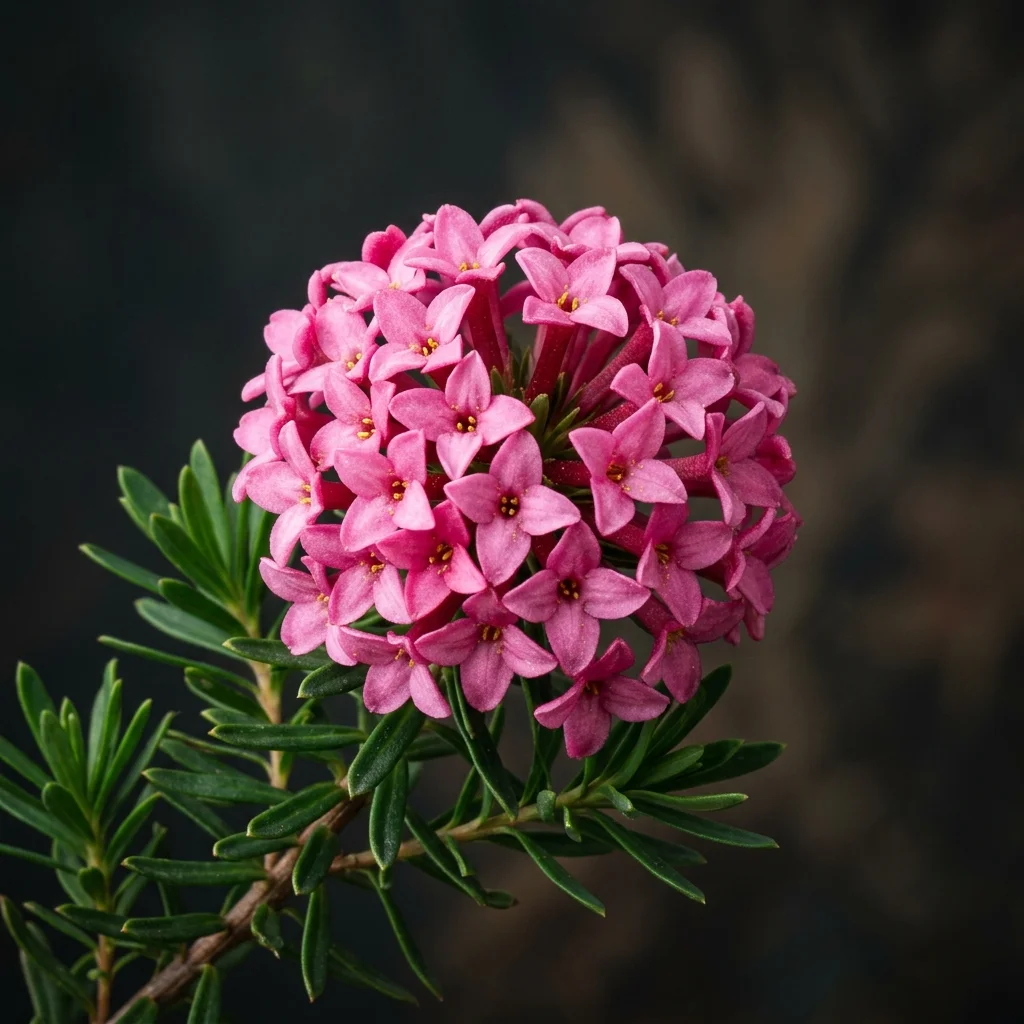
How to Identify Daphne Cneorum
Identify Daphne Cneorum (Daphne cneorum) immediately by its distinctive leaf arrangements, wood structures, and flowers. Recognizing its definitive visual traits is key to distinguishing it from other similar species.
-
✔
Distinctive Features: Low-growing, trailing stems forming a dense evergreen mat, bearing tight, rounded heads of highly fragrant, rose-pink four-lobed star blossoms over narrow, leathery dark-green leaves.
-
✔
Typical Coloration: Bright rose-pink blossoms, glossy olive-green linear leaves, and gnarled brownish branches.
-
✔
Potential Confusions: Superficially confused with Phlox subulata (Creeping Phlox) due to the similar low-growing pink flower carpet, but Rose Daphne is easily distinguished by its woody trailing branches, four-lobed flowers, and incredibly intense sweet fragrance.
Complete Care & Cultivation Guide
Follow our detailed scientific care guide to keep your Daphne Cneorum thriving and gorgeous all year round.
Frequently Asked Questions
Why is my Rose Daphne called calciphilic?
Because it is a lime-loving plant that naturally grows on limestone rocky cliffs. It requires calcium-rich, alkaline soils to thrive, which is rare for the Daphne family.
Is Daphne cneorum toxic to dogs?
Yes! All parts, especially the bark, leaves, and berries, contain highly toxic diterpenoids. Ingestion causes severe burning of the mouth, gastrointestinal bleeding, and kidney failure.
What does Rose Daphne smell like?
It has an intensely sweet, citrusy, clove-like floral fragrance that is exceptionally powerful and can be smelled from many yards away during its early spring bloom.
Why did my Rose Daphne suddenly wilt and die?
This is almost always caused by root rot or crown rot from waterlogged or compacted soil. Rose Daphne requires impeccable gravelly drainage; constantly wet roots are fatal.