Fothergilla Care & Identification Guide
Fothergilla (Fothergilla gardenii), commonly known as the Dwarf Fothergilla or Witch Alder, is an exceptionally unique, deciduous woodland shrub native to the coastal plains and peat bogs of the southeastern United States. It is celebrated for its highly unusual, petal-less spring flowers that resemble white, fuzzy bottlebrushes, made entirely of numerous fragrant, creamy-white erect stamens that release a sweet honey-like scent. In addition to its early spring blooms, Fothergilla provides a spectacular autumn display; its leathery green leaves turn vibrant shades of golden yellow, bright orange, and glowing scarlet red before shedding.





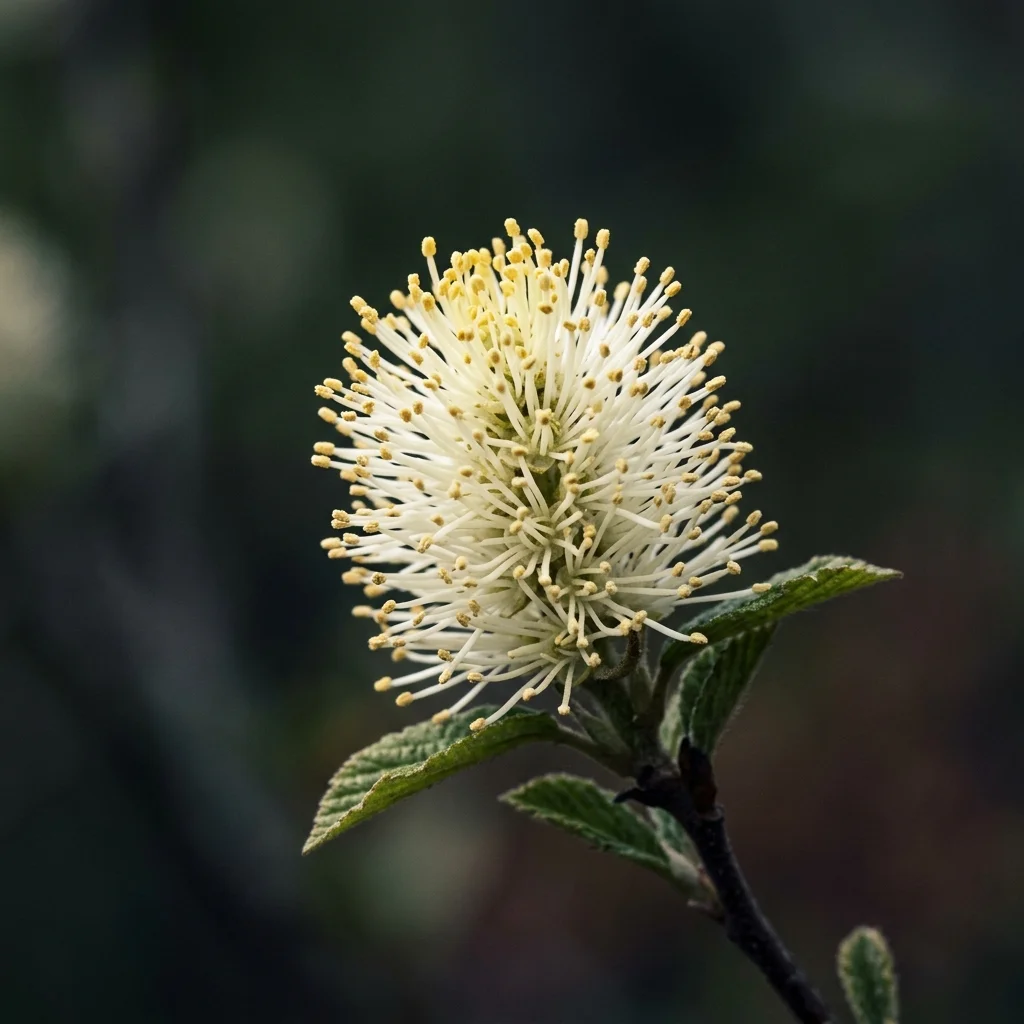
How to Identify Fothergilla
Identify Fothergilla (Fothergilla gardenii) immediately by its distinctive leaf arrangements, wood structures, and flowers. Recognizing its definitive visual traits is key to distinguishing it from other similar species.
-
✔
Distinctive Features: Petal-less, bottlebrush-like flower heads consisting of dense, erect creamy-white stamens with yellow tips, set against coarse, rounded witch-hazel-like leaves.
-
✔
Typical Coloration: Creamy-white bottlebrush-like flower heads, coarse dark green leaves that flush fiery orange-red in autumn, and dark gray twigs.
-
✔
Potential Confusions: Can be confused with Witch Hazel (Hamamelis) due to the similar leaf shape, but Fothergilla is easily distinguished by its completely unique, fuzzy white bottlebrush flowers instead of ribbon-like yellow petals.
Complete Care & Cultivation Guide
Follow our detailed scientific care guide to keep your Fothergilla thriving and gorgeous all year round.
Frequently Asked Questions
Why does the Fothergilla flower look like a bottlebrush?
Because its flowers have no petals! The fuzzy, brush-like appearance is created entirely by dozens of long, erect, fragrant white stamens clustered tightly around the flower stem.
Is Fothergilla safe for dogs and cats?
Yes! Fothergilla gardenii is completely non-toxic to dogs, cats, and humans. It is an exceptionally safe, color-rich addition to pet-friendly gardens.
Does Fothergilla spread in the garden?
It can produce slow-growing underground root suckers that form a beautiful, naturalized colony over time. If you want to keep it single, simply prune off suckers at the base.
What is the autumn color of Fothergilla?
It is famous for spectacular autumn foliage, turning brilliant shades of lemon yellow, vibrant glowing orange, and rich scarlet red, often on the same leaf!