Heavenly Bamboo Care & Identification Guide
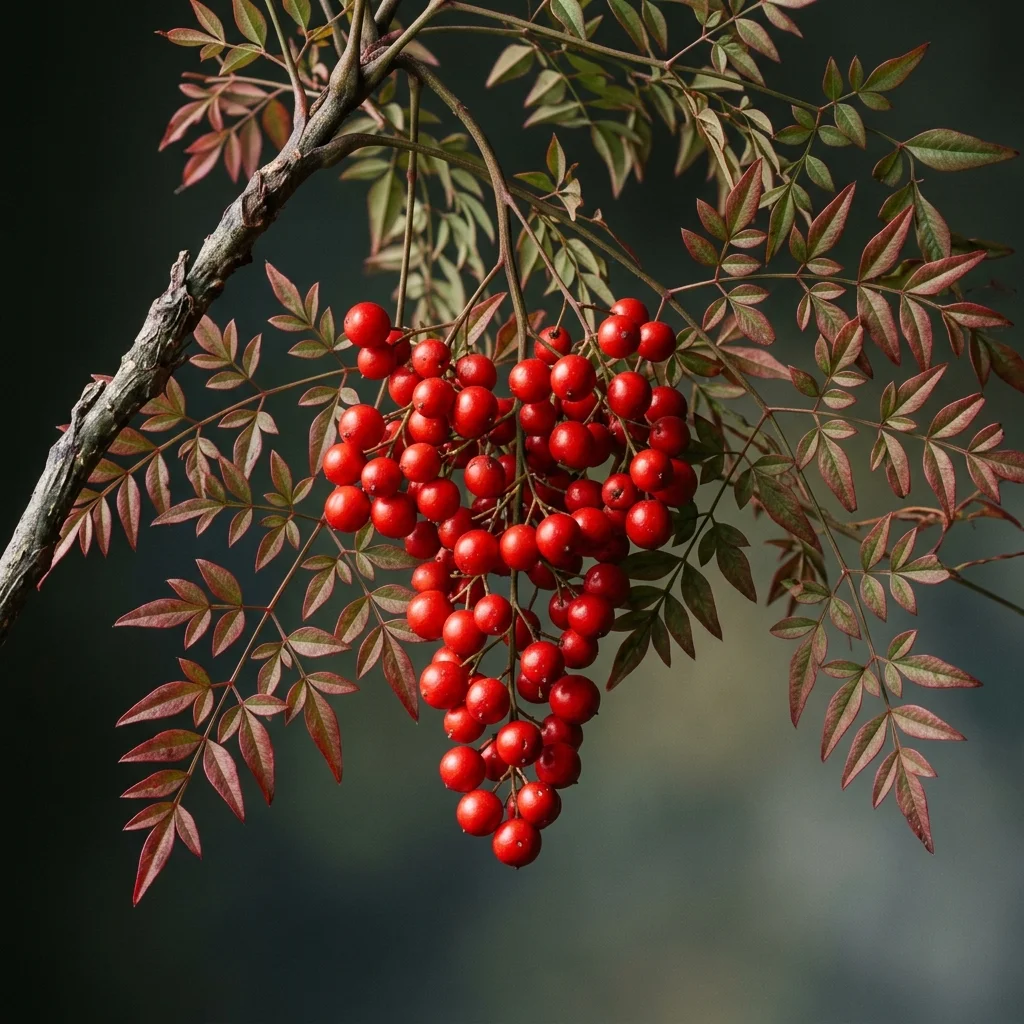
The magnificent Heavenly Bamboo (Nandina domestica) is an outstanding semi-evergreen ornamental shrub, highly celebrated for its spectacular, lacy tri-pinnate leaves and dense panicles of scarlet-red waxy berries that hang gracefully in winter. Native to open woodlands and valleys of East Asia, this highly resilient wood perennial is prized for its bamboo-like cane joints and brilliant autumn foliage colors. WARNING: All parts of Nandina domestica, especially the red berries, are highly toxic, containing cyanogenic glycosides that cause rapid blood oxygen loss and respiratory failure in pets and birds.





How to Identify Heavenly Bamboo
Identify Heavenly Bamboo (Nandina domestica) immediately by its distinctive leaf arrangements, wood structures, and flowers. Recognizing its definitive visual traits is key to distinguishing it from other similar species.
-
✔
Distinctive Features: Lacy tri-pinnate leaves with reddish tints and dense, dangling panicles of scarlet-red waxy berries on bamboo-like canes.
-
✔
Typical Coloration: Vibrant scarlet-red berries, with lacy green leaves turning brilliant purplish-red in late autumn.
-
✔
Potential Confusions: Sometimes confused with real bamboo due to its cane joints, but easily distinguished by its lacy tri-pinnate leaves, early-summer white flowers, and toxic red berries.
Complete Care & Cultivation Guide
Follow our detailed scientific care guide to keep your Heavenly Bamboo thriving and gorgeous all year round.
Frequently Asked Questions
Is Heavenly Bamboo actually a type of bamboo?
No! Despite its common name, Nandina domestica belongs to the Berberidaceae (Barberry) family. It is named 'bamboo' solely because its upright woody canes possess prominent bamboo-like growth joints.
Is Heavenly Bamboo toxic to dogs and cats?
Yes! All parts, especially the bright red waxy berries, contain highly toxic cyanogenic glycosides. Ingestion causes vomiting, abdominal pain, bright red gums, rapid breathing, and tissue oxygen starvation.
Why are my Heavenly Bamboo leaves not turning red in autumn?
Loss of brilliant reddish foliage color is a classic sign of insufficient sunlight. Move the plant to a location where it receives absolute full, direct sun to trigger the vivid red and purple pigments.
Are the red berries dangerous to wild birds?
Yes. While some wild birds can consume small amounts, cedar waxwings and other birds are highly susceptible to cyanide poisoning from Nandina berries. Trim off berries to protect birds.