Holly Shrub Care & Identification Guide
The Holly Shrub (Ilex aquifolium), commonly known as English Holly, is the classic evergreen ornamental shrub native to western and southern Europe, northwest Africa, and southwest Asia. Celebrated as the ultimate security screen and decorative winter highlight, its thick, leathery glossy dark green leaves feature wavy margins with exceptionally sharp, needle-like spine tips designed to deter browsing deer and prevent human intrusion. TOXICITY WARNING: English Holly is toxic to household pets and children. Its bright scarlet red berries contain high concentrations of ilicin, tannins, and saponins. Ingestion of just a few berries will cause violent vomiting, severe diarrhea, depression, and drooling in dogs and cats.





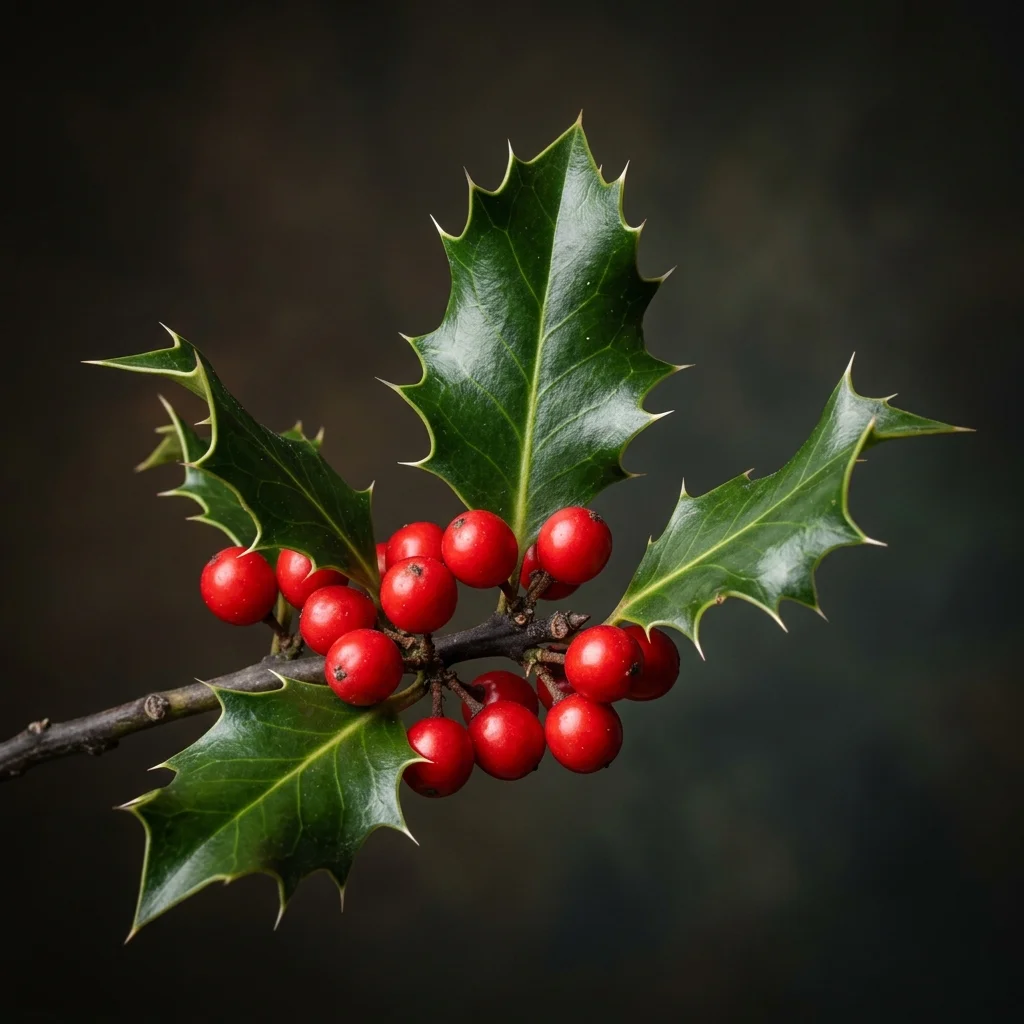
How to Identify Holly Shrub
Identify Holly Shrub (Ilex aquifolium) immediately by its distinctive leaf arrangements, wood structures, and flowers. Recognizing its definitive visual traits is key to distinguishing it from other similar species.
-
✔
Distinctive Features: Wavy, thick, glossy leathery dark-green leaves with extremely sharp bone-like spines pointing in varied directions along the margins, bearing dense clusters of bright scarlet red berries in winter.
-
✔
Typical Coloration: Glossy deep emerald green foliage, brilliant lacquer-red berries, and smooth silvery-gray woody branches.
-
✔
Potential Confusions: Commonly confused with Oregon Grape (Mahonia aquifolium) due to similar spiny leaves, but English Holly is easily distinguished by its bright red berries (Oregon Grape has dusty blue berries) and non-compound leaves.
Complete Care & Cultivation Guide
Follow our detailed scientific care guide to keep your Holly Shrub thriving and gorgeous all year round.
Frequently Asked Questions
Why does the Holly Shrub have such sharp spines on its leaves?
The sharp spines are a physical defense mechanism evolved to prevent herbivorous animals (like deer) from browsing the foliage. Interestingly, leaves higher up on mature trees often have no spines!
Are Holly berries toxic to dogs and cats?
Yes! English Holly berries contain ilicin, saponins, and tannins which are toxic to dogs and cats. Ingestion causes severe stomach pain, drooling, vomiting, and diarrhea.
Why is my Holly Shrub not producing berries?
You may have a male plant, or a female plant with no male pollinator nearby. Since Holly is dioecious, you need both a male and a female shrub close together for wind pollination to occur.
Does Holly make a good privacy hedge?
Yes! Its dense evergreen foliage, combined with extremely sharp, bone-like leaf spines, makes it one of the absolute best natural security and privacy barriers in the world.