Honey Locust Shrub Care & Identification Guide
The Honey Locust Shrub (Gleditsia triacanthos), specifically the wild, multi-stemmed shrub form, is an exceptionally rugged, heavily armed deciduous shrub native to central and eastern North America. Globally feared as the ultimate defensive nightmare, its bark and stems are armed with massive, sharply pointed, branching three-pronged woody thorns that can grow up to 10 cm long and are capable of puncturing heavy tractor tires. Historically, these red-brown spikes were used by Native Americans and early pioneers as heavy-duty sewing needles and fish hooks. In landscaping, it forms an absolutely impassable barrier, while its delicate, fern-like pinnate leaflets cast a soft, airy shade that allows grass to grow directly beneath it.





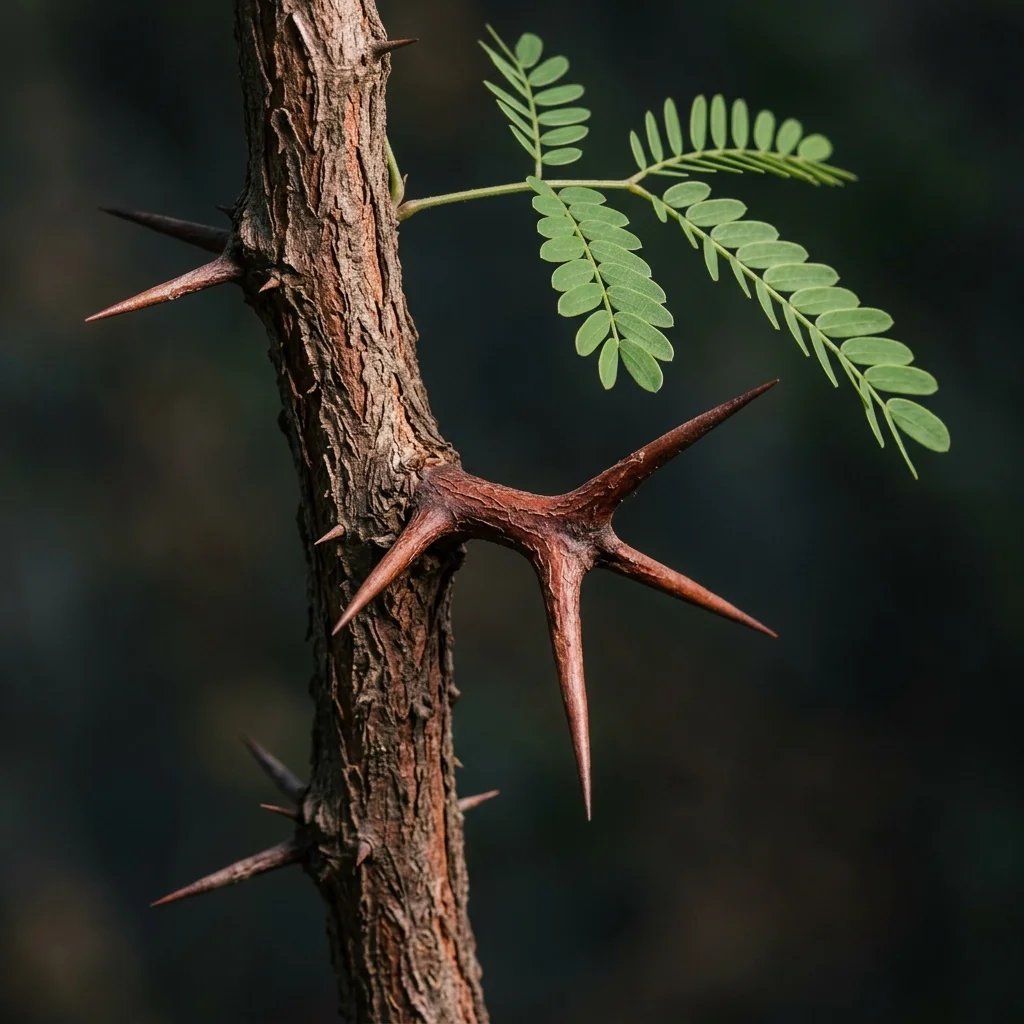
How to Identify Honey Locust Shrub
Identify Honey Locust Shrub (Gleditsia triacanthos) immediately by its distinctive leaf arrangements, wood structures, and flowers. Recognizing its definitive visual traits is key to distinguishing it from other similar species.
-
✔
Distinctive Features: Massive, sharply pointed, three-pronged (triacanthos) woody thorns of reddish-brown color growing directly from the bark, with delicate, fern-like pinnate leaflets.
-
✔
Typical Coloration: Reddish-brown to dark gray branching thorns, apple-green pinnate foliage turning golden-yellow in autumn, and dark gnarled bark.
-
✔
Potential Confusions: Sometimes confused with Black Locust (Robinia pseudoacacia), but Honey Locust Shrub is easily distinguished by its completely unique, massive branching three-pronged thorns (Black Locust has small, short double thorns at the leaf bases).
Complete Care & Cultivation Guide
Follow our detailed scientific care guide to keep your Honey Locust Shrub thriving and gorgeous all year round.
Frequently Asked Questions
Why are the thorns of Honey Locust branching into three prongs?
The species name 'triacanthos' is Greek for 'three-spined.' The branching woody structure evolved to protect the bark and branches from climbing herbivorous mammals.
Is the Honey Locust Shrub toxic to cats and dogs?
No! Gleditsia triacanthos is completely non-toxic to dogs, cats, and humans. However, its massive thorns present a serious physical hazard, so plant it with safety in mind.
What were the massive thorns historically used for?
Early settlers and Native Americans harvested the rigid, woody spikes to use as heavy-duty sewing needles, carding pins, fish hooks, and even nails for building.
Can Honey Locust tolerate urban conditions?
Yes! Honey Locust is exceptionally tolerant of road salt, compacted urban soils, high heat, wind, and atmospheric pollution, making it highly valued in city landscaping.