Leadwort Care & Identification Guide
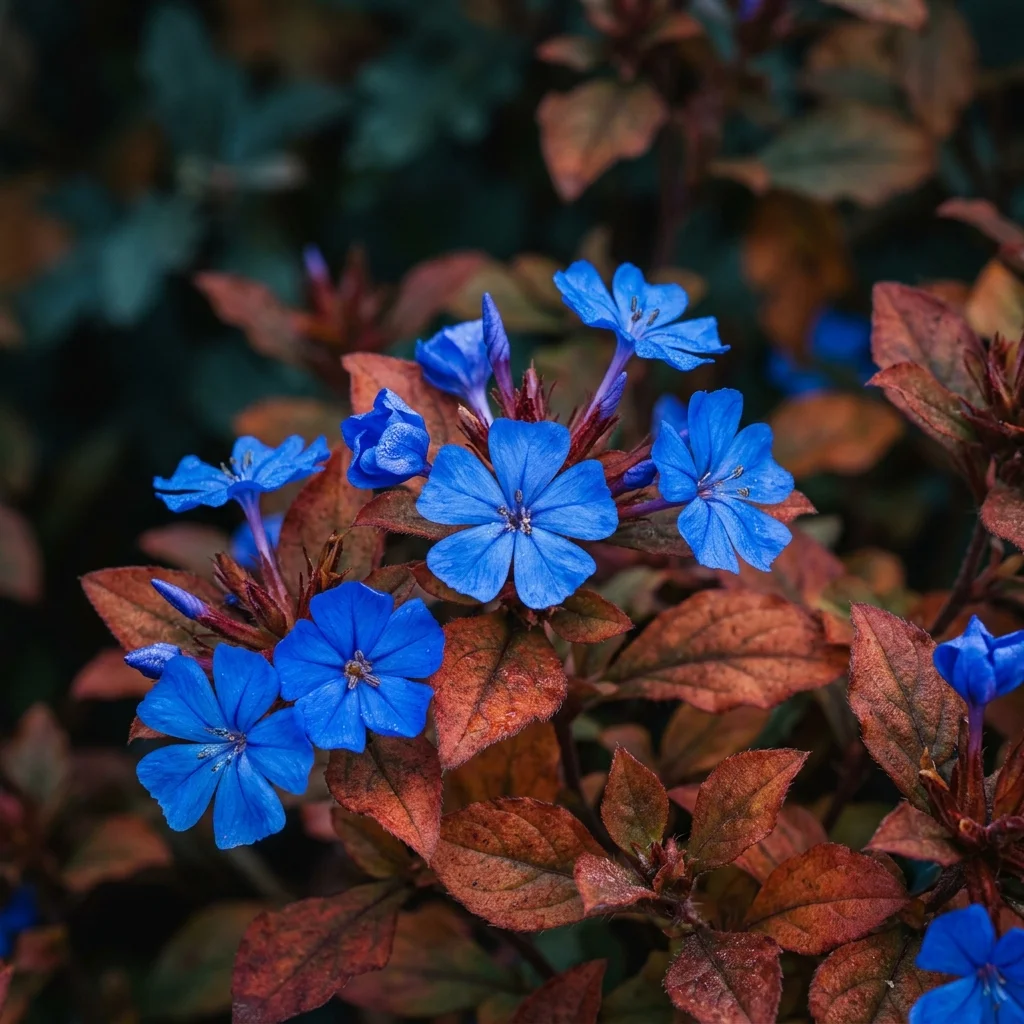
Leadwort (Ceratostigma plumbaginoides), commonly known as Hardy Plumbago or Dwarf Plumbago, is an exceptionally beautiful, low-growing deciduous dwarf shrub native to western China. Globally celebrated in landscaping as the ultimate 'autumn showstopper,' it features a completely unique, high-contrast display of sapphire-blue flowers and fiery foliage: in late summer and autumn, it produces an abundance of intensely brilliant, five-petaled starry blue flowers; as temperatures drop, its leaves rapidly accumulate red anthocyanin pigments, transitioning to a deep, glowing reddish-copper and rusty-burgundy that creates a spectacular visual contrast.





How to Identify Leadwort
Identify Leadwort (Ceratostigma plumbaginoides) immediately by its distinctive leaf arrangements, wood structures, and flowers. Recognizing its definitive visual traits is key to distinguishing it from other similar species.
-
✔
Distinctive Features: Low-growing trailing carpet bearing brilliant, five-petaled starry sapphire-blue flowers nestled among obovate green leaves that turn deep reddish-copper in autumn.
-
✔
Typical Coloration: Brilliant sapphire-blue blossoms, apple-green summer leaves turning rich copper-burgundy in autumn, and reddish twigs.
-
✔
Potential Confusions: Sometimes superficially confused with Plumbago auriculata due to similar blue starry flowers, but Hardy Plumbago (Ceratostigma) is easily distinguished by its much lower, trailing geophyte habit, deciduous nature, and brilliant red autumn leaf color.
Complete Care & Cultivation Guide
Follow our detailed scientific care guide to keep your Leadwort thriving and gorgeous all year round.
Frequently Asked Questions
Why is it called Leadwort?
Because of its ancient medicinal use! Historically, it was believed to be a cure for lead poisoning, and its sapphire-blue flowers were thought to resemble the color of oxidized lead.
Is Leadwort toxic to dogs?
No! Ceratostigma plumbaginoides is completely non-toxic to dogs, cats, and horses. It is an exceptionally safe, color-rich and hardy choice for pet-friendly landscaping.
How does the autumn color of Leadwort develop?
As autumn temperatures drop, the leaves produce intense red anthocyanin pigments. If planted in full sun, the leaves will turn a stunning, uniform copper-burgundy that lasts into early winter.
Why is my Leadwort slow to emerge in spring?
Hardy Plumbago is naturally one of the last deciduous geophytes to break dormancy in spring, often not producing shoots until late May. Once it starts, it grows very rapidly.