Manzanita Care & Identification Guide
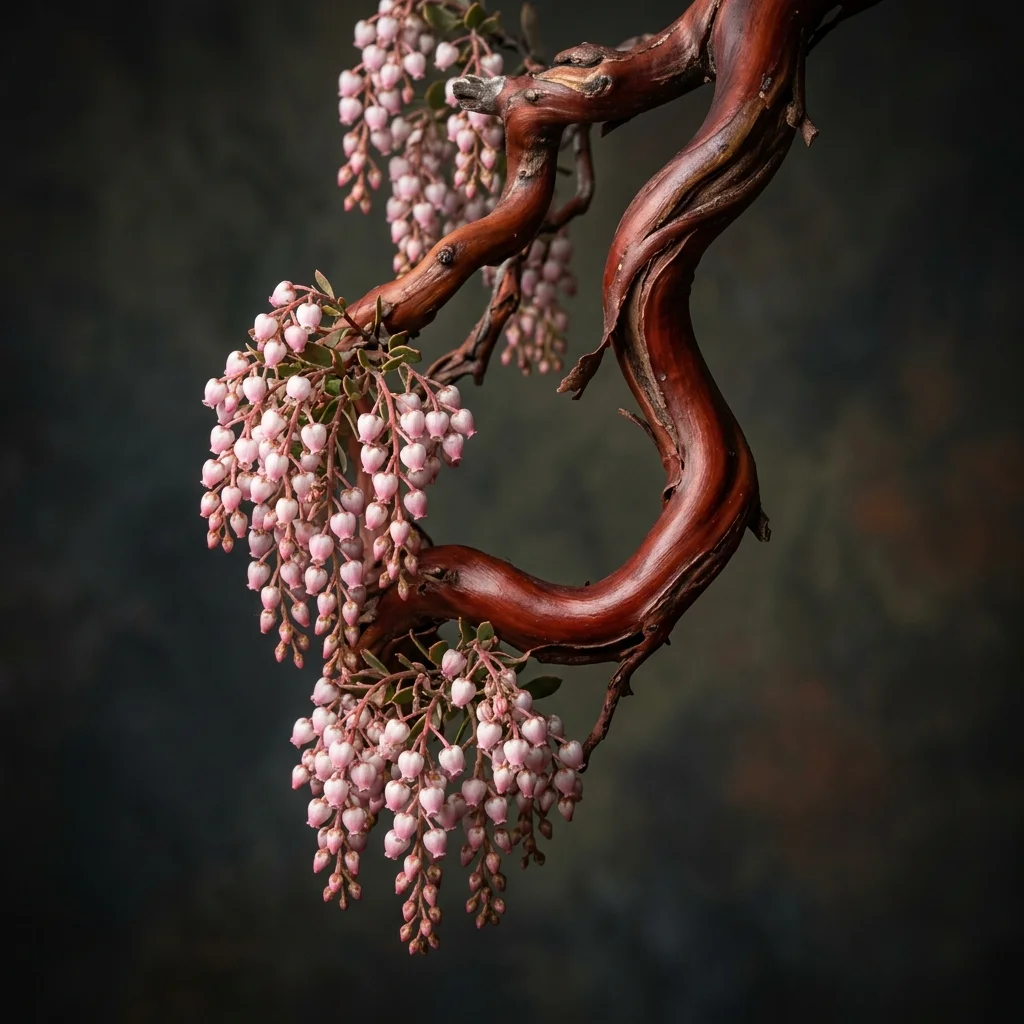
Manzanita (Arctostaphylos manzanita), particularly the Common Manzanita, is a highly spectacular evergreen shrub native to the chaparral slopes of western North America. It is celebrated for its extraordinarily smooth, polished, mahogany-red twisted branches that resemble living art. Adapted to fire-prone biomes, many species possess a thick underground lignotuber (burl) from which they rapidly regenerate after wildfire sweeps through. In late winter, it produces delicate clusters of pinkish, urn-shaped flowers that feed early pollinators, followed by small, apple-like red berries that are a crucial food source for native wildlife.





How to Identify Manzanita
Identify Manzanita (Arctostaphylos manzanita) immediately by its distinctive leaf arrangements, wood structures, and flowers. Recognizing its definitive visual traits is key to distinguishing it from other similar species.
-
✔
Distinctive Features: Thick, leathery, oval gray-green leaves on smooth, polished, twisted dark red-brown branches, bearing dangling clusters of pinkish-white urn-shaped winter flowers.
-
✔
Typical Coloration: Mahogany-red to purplish-brown smooth bark, pale gray-green leaves, pinkish-white flowers, and bright red-brown berries.
-
✔
Potential Confusions: Often confused with Madrone trees (Arbutus menziesii) due to the similar peeling red bark, but Manzanita is strictly a shrubby chaparral grower with much smaller, leathery leaves and distinctive twisted low branches.
Complete Care & Cultivation Guide
Follow our detailed scientific care guide to keep your Manzanita thriving and gorgeous all year round.
Frequently Asked Questions
Why is the bark of my Manzanita peeling?
This is completely natural! In early summer, Manzanita sheds its outer bark in thin, paper-like curls to allow the branches to grow, revealing the incredibly smooth, fresh mahogany-red bark underneath.
Is Manzanita toxic to dogs or other pets?
No. Arctostaphylos manzanita is completely non-toxic to dogs, cats, and humans. The berries and leaves are chemically safe, though too tough and woody for common pets to digest.
How often should I water my Manzanita after planting?
Water weekly during its first summer to help it establish. Once its roots are established, completely stop summer watering. Supplemental summer water is the number one cause of Manzanita death in gardens.
Can I grow Manzanita in clay soil?
No, clay soil holds water far too long, which will quickly cause root rot and kill the plant. If you have clay soil, plant Manzanita on a raised mound made of sandy-gravelly soil to ensure drainage.