Oleander Care & Identification Guide
Oleander (Nerium oleander) is an exceptionally beautiful, fast-growing evergreen coastal shrub native to the Mediterranean basin and subtropical regions. Highly valued in landscaping for its continuous show of spectacular peach-pink blossoms and narrow, leathery lanceolate leaves, it is exceptionally drought-resistant and salt-tolerant. CRITICAL TOXICITY WARNING: Oleander is one of the most lethally toxic plants on Earth. Every part of this shrub contains powerful cardiac glycosides (including oleandrin and nerine). Ingestion of even a single leaf can cause rapid, severe cardiac arrhythmia, heart block, violent vomiting, neurological collapse, and death in dogs, cats, horses, and humans.





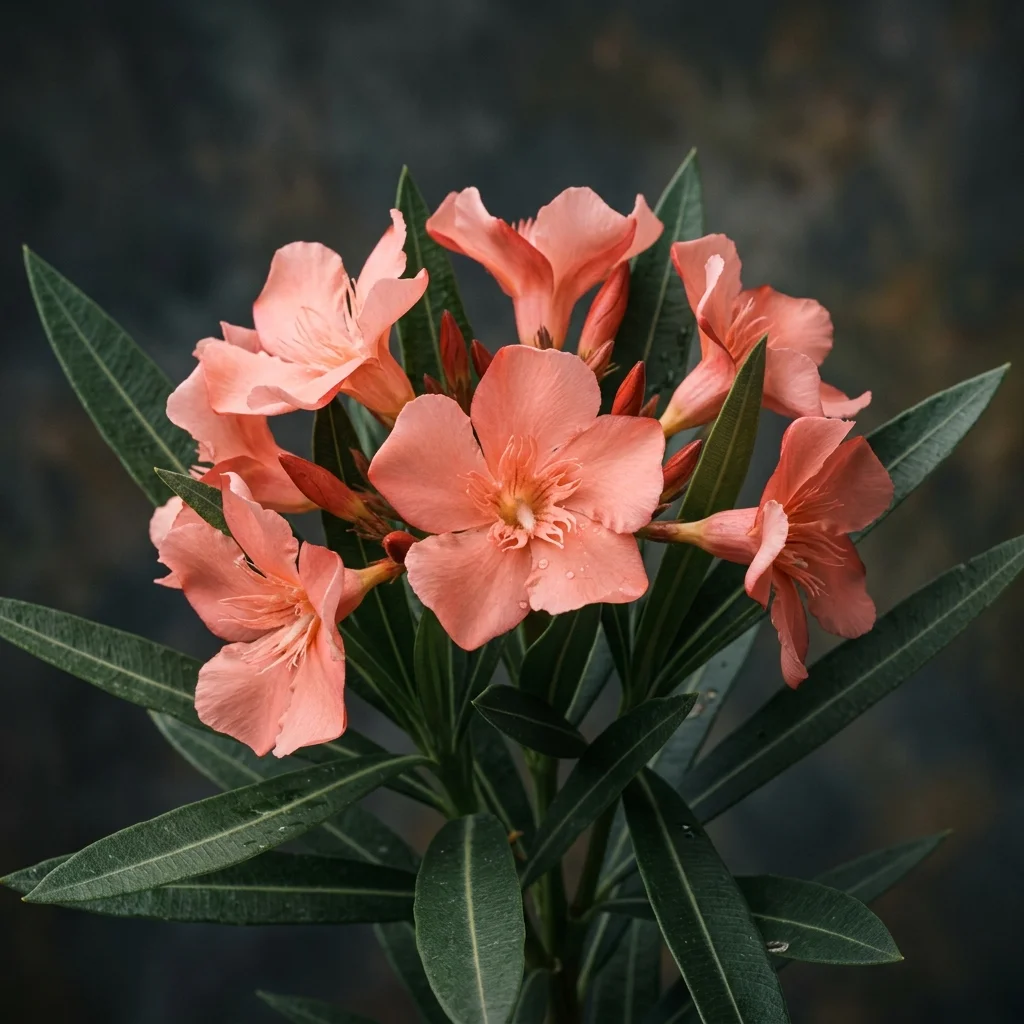
How to Identify Oleander
Identify Oleander (Nerium oleander) immediately by its distinctive leaf arrangements, wood structures, and flowers. Recognizing its definitive visual traits is key to distinguishing it from other similar species.
-
✔
Distinctive Features: Clusters of beautiful, peach-pink five-petaled starry blossoms with central fringe details, surrounded by long, narrow, dark-green leathery lanceolate leaves growing in whorls.
-
✔
Typical Coloration: Spectacular peach-pink blossoms, deep olive-green lanceolate leaves, and light green-gray woody branches.
-
✔
Potential Confusions: Could be superficially confused with Olive trees due to the narrow leaves, but Oleander is easily distinguished by its showy peach-pink summer flowers, thick toxic milky sap, and bushy multi-stemmed habit.
Complete Care & Cultivation Guide
Follow our detailed scientific care guide to keep your Oleander thriving and gorgeous all year round.
Frequently Asked Questions
How dangerous is the Oleander plant?
Oleander is one of the most toxic plants in the world. All parts (leaves, flowers, sap, stems) contain cardiac glycosides. Ingesting a single leaf can cause fatal heart failure in pets or humans.
Is it safe to burn pruned Oleander wood?
No, absolutely not! Burning Oleander wood produces highly toxic smoke that contains airborne cardiac glycosides. Inhaling this smoke can cause severe respiratory and heart poisoning.
Why are my Oleander leaves turning yellow?
This is typically caused by overwatering or poorly-drained soil, leading to early root rot. Reduce watering and ensure the soil drains quickly and dries out between waterings.
Does Oleander tolerate coastal sea spray?
Yes! Oleander is exceptionally salt-tolerant and wind-resistant, making it a highly popular and beautiful choice for dry, exposed coastal cliff landscapes.