Fraser Photinia Care & Identification Guide
The magnificent Fraser Photinia (Photinia x fraseri), commonly known as Red Robin, is a highly spectacular evergreen hedging shrub, widely celebrated for its brilliant, fiery scarlet-red new leaves that erupt in early spring. Native to warm temperate river valleys of East Asia, this highly resilient wood hybrid is a landscape classic. The fiery red color is caused by high concentrations of protective anthocyanin pigments in new leaves, which fade to dark green as they mature. WARNING: All parts of Photinia x fraseri are highly toxic to humans and pets, containing cyanogenic glycosides.





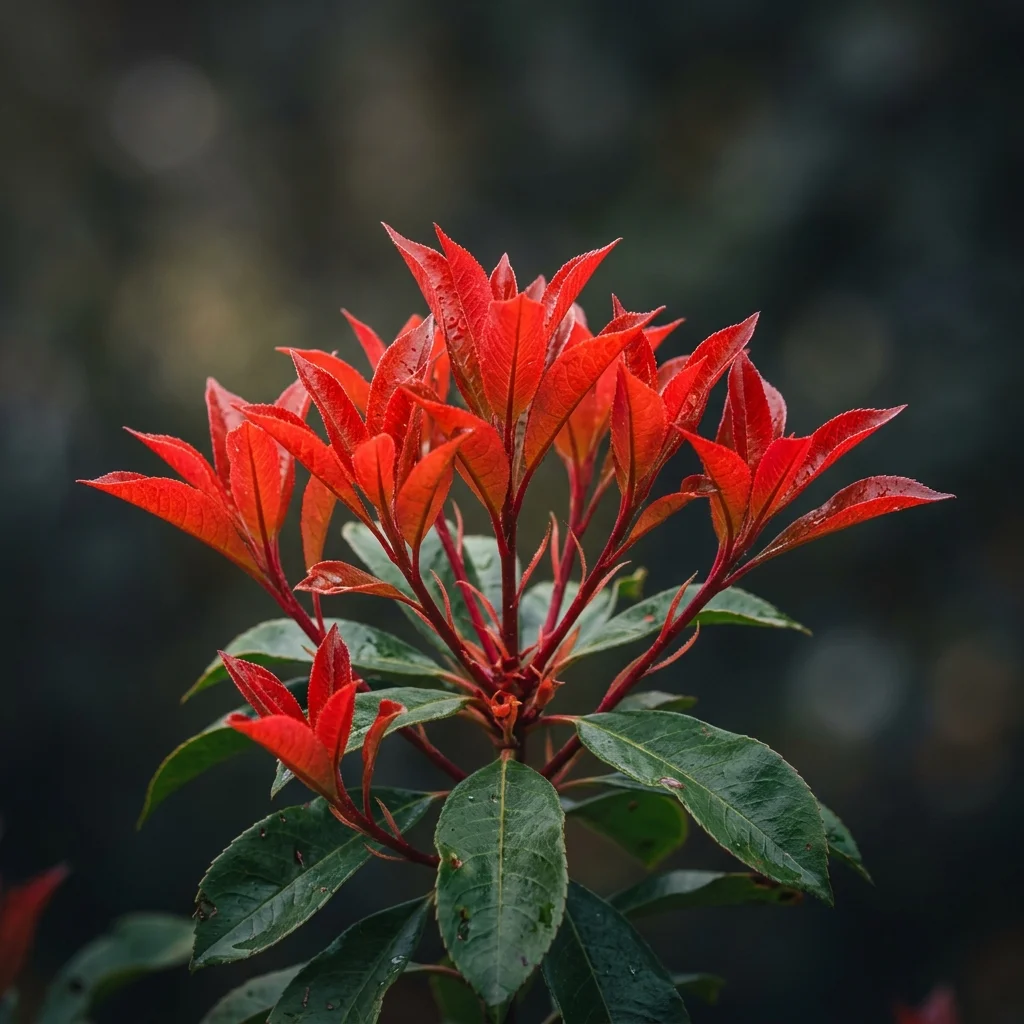
How to Identify Fraser Photinia
Identify Fraser Photinia (Photinia x fraseri) immediately by its distinctive leaf arrangements, wood structures, and flowers. Recognizing its definitive visual traits is key to distinguishing it from other similar species.
-
✔
Distinctive Features: Brilliant clusters of fiery scarlet-red new leaves at branch tips, contrasting sharply with glossy dark green older foliage below.
-
✔
Typical Coloration: Fiery scarlet-red new shoots and dark olive-green mature leaves, with flat clusters of small white early-summer flowers.
-
✔
Potential Confusions: Sometimes confused with Pieris japonica, but distinguished by its much larger size, upright woody habit, and flat flower clusters rather than dangling bell-shaped chains.
Complete Care & Cultivation Guide
Follow our detailed scientific care guide to keep your Fraser Photinia thriving and gorgeous all year round.
Frequently Asked Questions
How do I make my Photinia grow more red leaves?
Red foliage only occurs on new spring growth. You must prune your Photinia branch tips lightly 2 to 3 times between late spring and late summer to stimulate a continuous wave of fiery scarlet new shoots.
Is Photinia toxic to domestic pets?
Yes! All parts of Photinia x fraseri contain cyanogenic glycosides. Ingestion by dogs, cats, and horses causes vomiting, abdominal pain, rapid breathing, and tissue oxygen starvation.
What causes the red spots with black centers on my Photinia leaves?
This is Entomosporium leaf spot, a severe fungal disease favored by warm, humid stagnant air. Prune infected branches, clear fallen leaves, avoid overhead watering, and spray with organic copper fungicide.
When is the best time to prune my Photinia Red Robin?
Perform major shaping in early spring before growth starts. Light tip-pruning should be done in late spring and early summer immediately after the white blossoms fade.