Pieris Care & Identification Guide
Pieris (Pieris japonica), commonly known as Japanese Andromeda or Lily-of-the-Valley Bush, is a highly elegant, evergreen ornamental shrub native to eastern Asia. Celebrating for its beautiful, dangling chains of pure white urn-shaped spring flowers, it has adapted to cold, damp woodland understories and rocky acidic slopes. HIGHLY TOXIC WARNING: Pieris is exceptionally dangerous to grazing animals and household pets. All parts of the plant contain grayanotoxins, which bind to sodium channels in cellular membranes, leading to violent vomiting, cardiac arrhythmia, respiratory paralysis, and death. In ancient East Asia, it was named '马醉木' (Horse-Intoxicating Wood), highlighting its severe lethal effects on livestock.





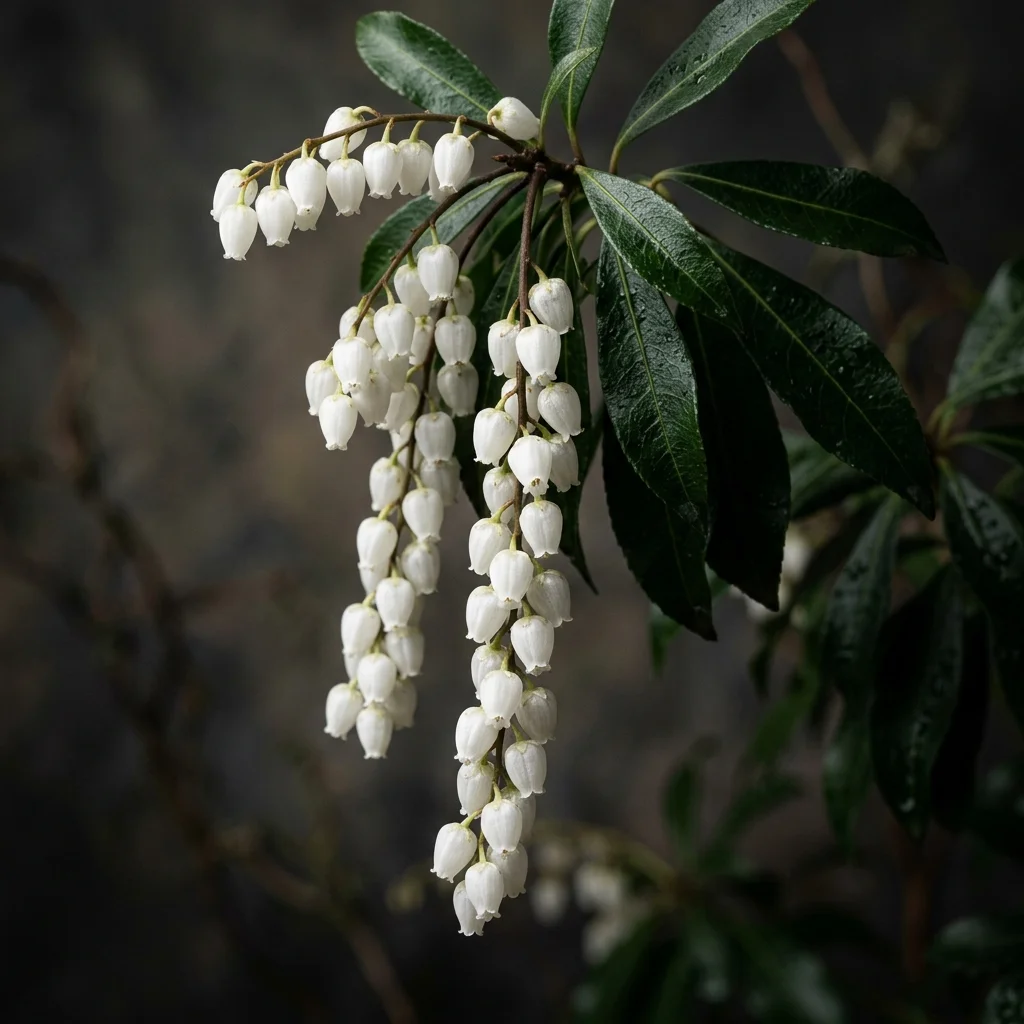
How to Identify Pieris
Identify Pieris (Pieris japonica) immediately by its distinctive leaf arrangements, wood structures, and flowers. Recognizing its definitive visual traits is key to distinguishing it from other similar species.
-
✔
Distinctive Features: Elegant, drooping terminal panicles of white, urn-shaped flowers resembling lily-of-the-valley, growing over glossy, leathery dark green leaves that emerge rich bronze-red in spring.
-
✔
Typical Coloration: Pure snow-white bell blossoms, shiny deep emerald leaves with bronze-red new shoots, and woody reddish-brown twigs.
-
✔
Potential Confusions: Superficially confused with Lily of the Valley (Convallaria) due to the bell-shaped white flowers, but Pieris is a large, woody evergreen shrub, whereas Convallaria is a small herbaceous groundcover.
Complete Care & Cultivation Guide
Follow our detailed scientific care guide to keep your Pieris thriving and gorgeous all year round.
Frequently Asked Questions
Why is Pieris commonly called Japanese Andromeda?
It is named after the Greek mythological figure Andromeda, who was chained to a rock. The dangling, chain-like flower clusters of Pieris japonica resemble the chains in the ancient myth.
Is Pieris safe to plant in a garden with dogs or cats?
Absolutely not. Pieris japonica is highly toxic to dogs, cats, horses, and humans. Ingestion of even a few leaves or flowers can cause severe cardiovascular and gastrointestinal poisoning.
How do I care for my Pieris in winter?
It is highly cold-hardy, but its shallow roots must be protected from deep freezing. Apply a 3-inch layer of pine bark mulch around the base and protect the evergreen leaves from dry, freezing winter winds.
When does Pieris bloom?
It blooms in late winter to early spring (usually February to April), producing clusters of spectacular bell flowers that last for several weeks before the colorful new leaf shoots emerge.