Potentilla Care & Identification Guide
Potentilla (Potentilla fruticosa), commonly known as Shrubby Cinquefoil or Bush Cinquefoil, is an exceptionally hardy, floriferous deciduous shrub native to cold-temperate and subarctic regions of the northern hemisphere. Celebrated as the ultimate choice for continuous summer color in cold northern gardens, it survives bone-chilling winter temperatures down to -45°C. Botanically, it features fine, silky-haired pinnate leaves designed to reflect intense solar radiation in exposed alpine tundra. Throughout the summer and autumn, it produces an endless display of five-petaled bright yellow flowers resembling wild roses that are highly attractive to butterflies.





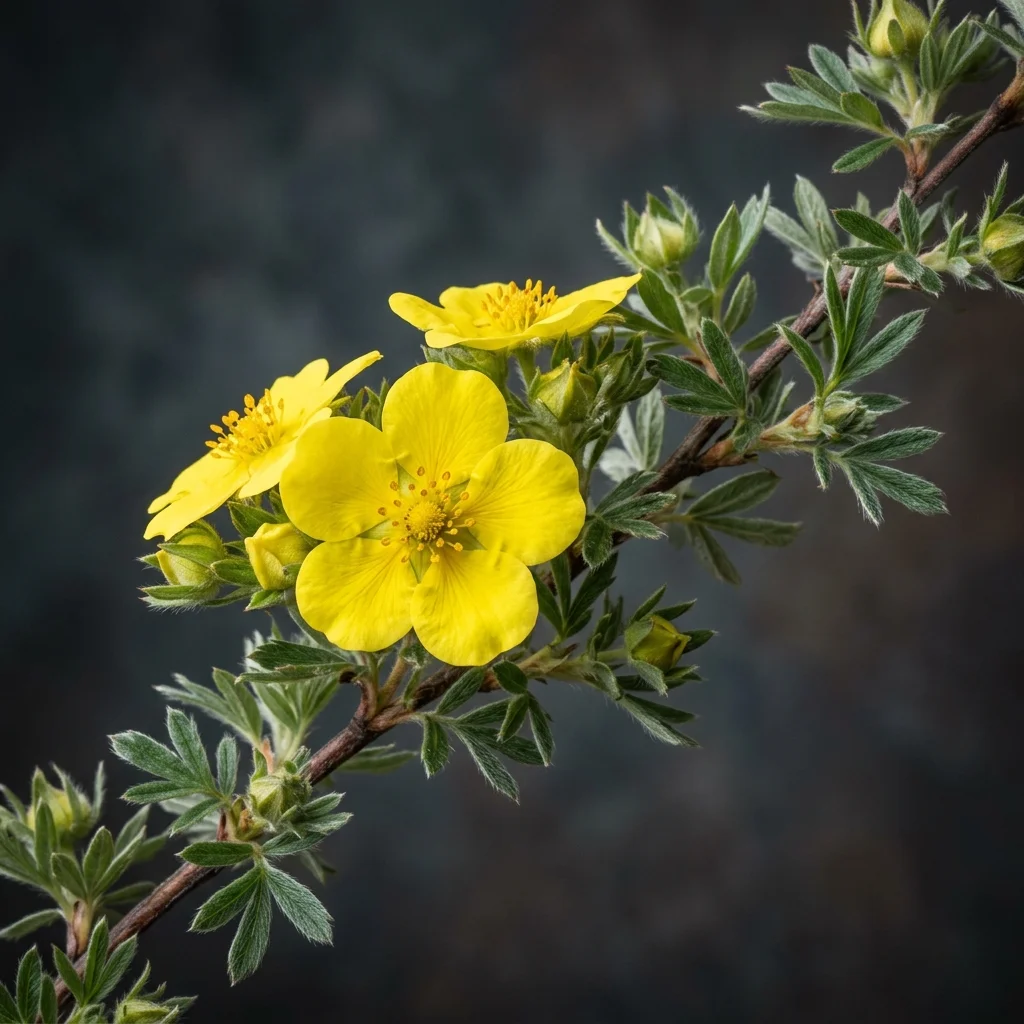
How to Identify Potentilla
Identify Potentilla (Potentilla fruticosa) immediately by its distinctive leaf arrangements, wood structures, and flowers. Recognizing its definitive visual traits is key to distinguishing it from other similar species.
-
✔
Distinctive Features: Fine, silky-haired pinnate leaves carrying five-petaled bright lemon-yellow blossoms resembling wild roses, forming a dense, rounded shrubby habit.
-
✔
Typical Coloration: Bright lemon-yellow blossoms, soft gray-green foliage with a silvery sheen, and reddish-brown woody stems.
-
✔
Potential Confusions: Superficially confused with Wild Rose (Rosa) due to similar single five-petaled yellow flowers, but Potentilla is easily distinguished by its completely spineless stems, silky-haired pinnate leaves, and absence of rose hips.
Complete Care & Cultivation Guide
Follow our detailed scientific care guide to keep your Potentilla thriving and gorgeous all year round.
Frequently Asked Questions
Why is it called the Shrubby Cinquefoil?
The name 'Cinquefoil' comes from the French 'cinque feuilles,' meaning 'five leaves,' referring to the five-lobed structure of its beautiful pinnate foliage.
Is Potentilla toxic to dogs and cats?
No! Potentilla fruticosa is completely non-toxic to dogs, cats, and horses. It is an exceptionally safe, tough choice for pet-friendly landscaping.
How long does Potentilla bloom?
It is one of the longest-blooming shrubs available, starting in late spring (June) and continuing to produce flowers all summer until the first hard winter freeze in October.
Can Potentilla grow in poor, rocky soil?
Yes! Potentilla is highly adapted to rocky, gravelly mountain soils and thrives in nutrient-deficient areas where other garden shrubs struggle.