Privet Care & Identification Guide
The magnificent Privet (Ligustrum vulgare) is an outstanding evergreen to semi-evergreen hedging shrub, renowned for its extremely rapid growth, dense branching, and ability to form tightly sheared visual screens. Native to open woodlands and scrublands of Europe and North Africa, this highly resilient wood perennial produces small, dense panicles of fragrant creamy-white blossoms in early summer, followed by clusters of waxy black berries. WARNING: All parts of Ligustrum vulgare are highly toxic to humans and pets, containing saponins and ligustrin that cause severe gastrointestinal distress.





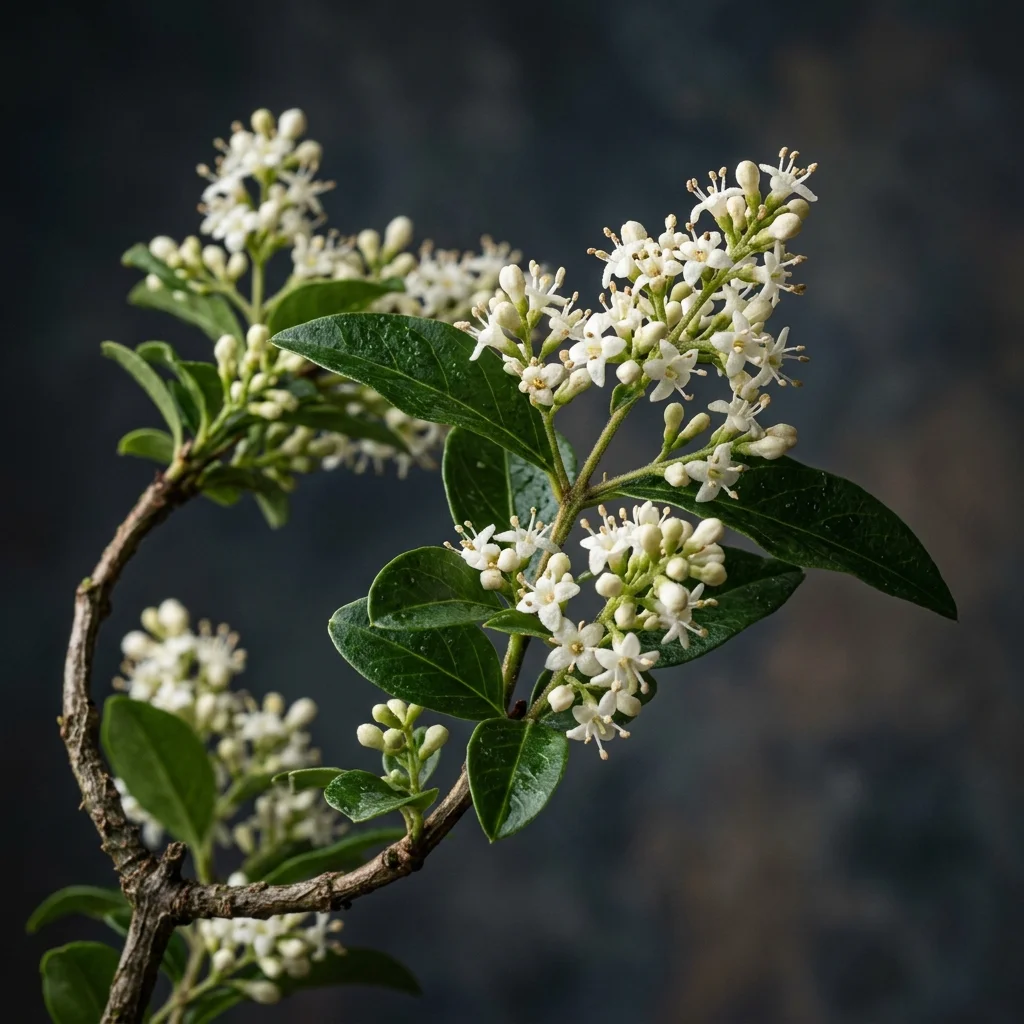
How to Identify Privet
Identify Privet (Ligustrum vulgare) immediately by its distinctive leaf arrangements, wood structures, and flowers. Recognizing its definitive visual traits is key to distinguishing it from other similar species.
-
✔
Distinctive Features: Dense panicles of small, tubular creamy-white flowers on erect twigs, rising above neat opposite lance-shaped dark green leaves.
-
✔
Typical Coloration: Creamy-white flowers and glossy black berries, with deep olive-green leaves turning purplish in late autumn.
-
✔
Potential Confusions: Sometimes confused with Boxwood due to shearing habits, but easily distinguished by its much larger lance-shaped leaves, summer white panicles, and black berries.
Complete Care & Cultivation Guide
Follow our detailed scientific care guide to keep your Privet thriving and gorgeous all year round.
Frequently Asked Questions
Why is my Privet hedge dropping its leaves in winter?
Ligustrum vulgare is semi-evergreen to semi-deciduous. In freezing cold winters or wind-exposed zones, it naturally drops a portion of its leaves to conserve moisture, which will rapidly regrow in spring.
Is Privet toxic to cats and dogs?
Yes! All parts of Ligustrum vulgare, particularly the black berries, contain toxic saponins and the glycoside ligustrin. Ingestion causes severe vomiting, diarrhea, abdominal pain, and low body temperature.
How often should I shear my Privet hedge?
To maintain a tight, compact formal green screen, shear the new growth back 2 to 3 times between late spring and late summer. Avoid shearing in mid-autumn.
Does Privet block street noise?
Yes, its extremely dense, multi-layered branching structure and thick waxy foliage make Privet one of the best botanical buffers for capturing dust and blocking neighborhood street noise.