Firethorn Care & Identification Guide
The magnificent Firethorn (Pyracantha coccinea) is an outstanding, extremely formidable evergreen ornamental shrub, highly celebrated for its massive, dense clusters of bright orange-red winter berries and fierce wood thorns that form impenetrable security barriers. Native to sunny rocky slopes and valley edges of Southern Europe and Western Asia, this highly resilient wood perennial is a traditional garden favorite, prized for its structural beauty and ecological value as a critical winter food source for birds. To sustain its heavy winter berry display, it requires full sun, adaptable well-drained soil, and proper seasonal pruning.





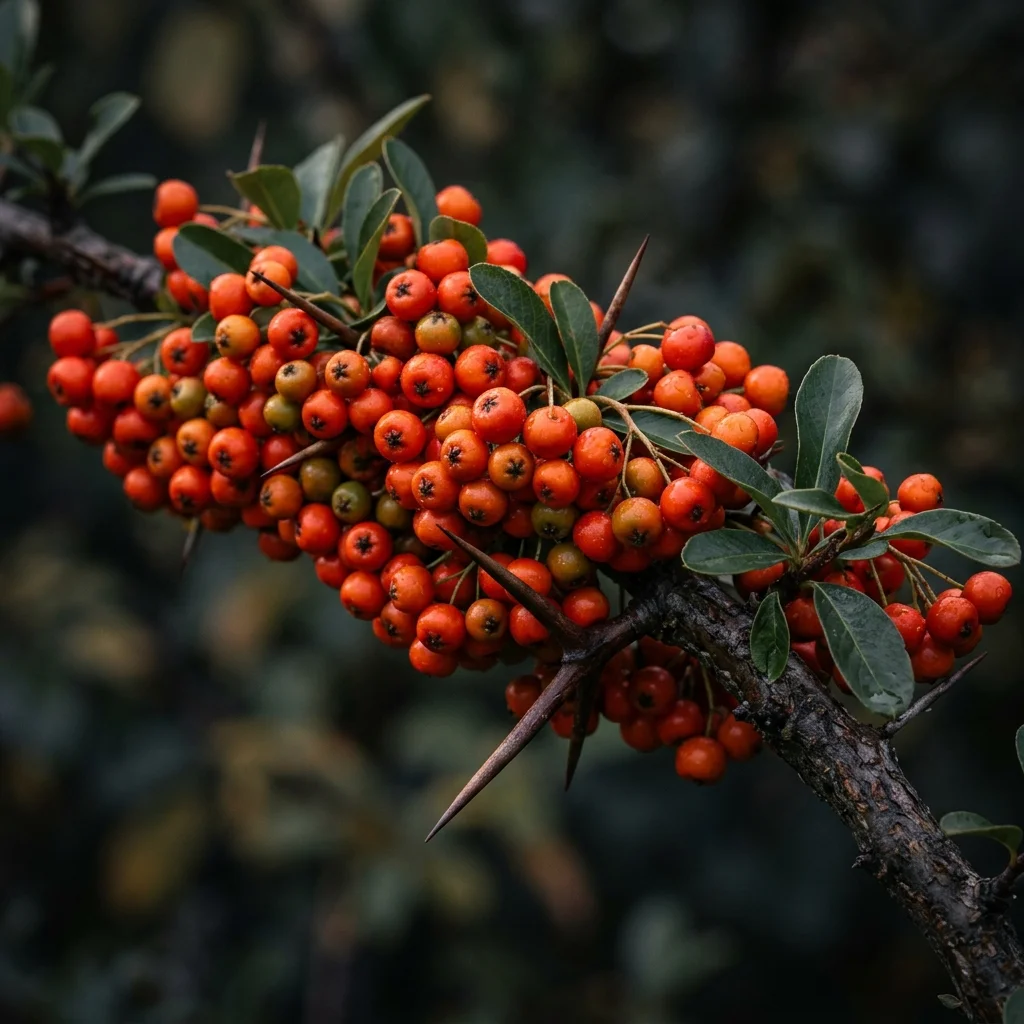
How to Identify Firethorn
Identify Firethorn (Pyracantha coccinea) immediately by its distinctive leaf arrangements, wood structures, and flowers. Recognizing its definitive visual traits is key to distinguishing it from other similar species.
-
✔
Distinctive Features: Dense clusters of glossy, bright orange-red pea-sized berries lining woody branches armed with extremely sharp, 1-inch thorns.
-
✔
Typical Coloration: Vibrant orange-red berries, with fine-textured glossy dark green narrow leaves and clusters of small white early-summer flowers.
-
✔
Potential Confusions: Often confused with Cotoneaster due to red berries, but easily distinguished by its extremely sharp 1-inch thorns and alternate narrow leaves rather than soft herringbone branch sprays.
Complete Care & Cultivation Guide
Follow our detailed scientific care guide to keep your Firethorn thriving and gorgeous all year round.
Frequently Asked Questions
Why is my Firethorn not producing red berries?
The primary cause is pruning too late. Pyracantha sets its flower buds on 'old wood' from the previous year. Pruning in late winter or early spring cuts off all the flower buds. Always prune immediately after early-summer flowering.
Is Firethorn toxic to domestic pets?
The orange-red berries are technically mildly toxic, containing trace amounts of cyanogenic glycosides. If cats or dogs ingest massive quantities, it causes mild vomiting and diarrhea. However, the physical danger of the sharp thorns is a much greater risk.
What is Fire Blight and how do I treat it?
Fire Blight is a highly destructive bacterial infection. Leaves turn black and branches look scorched. Immediately prune infected branches 8 inches below the visible damage, and sterilize your shears with rubbing alcohol between cuts.
Can I grow Firethorn against a brick wall?
Yes! Pyracantha is highly famous for 'espalier' training. You can easily tie and prune its woody branches to grow flat against a sunny brick wall, creating a spectacular vertical green carpet of orange berries.