Flowering Quince Care & Identification Guide
The magnificent Flowering Quince (Chaenomeles speciosa) is an outstanding deciduous ornamental shrub, highly celebrated for its spectacular, cup-shaped scarlet-red flowers that erupt along bare, thorny branches in late winter and early spring. Originating from valley woodlands and cliffs of East Asia, this highly resilient wood perennial is a traditional garden favorite, prized for its excellent thorny silhouette and edible spring fruits. To support its prolific early spring bloom display and vibrant green leaves, it requires full sun, fertile well-drained loam, and regular pruning.





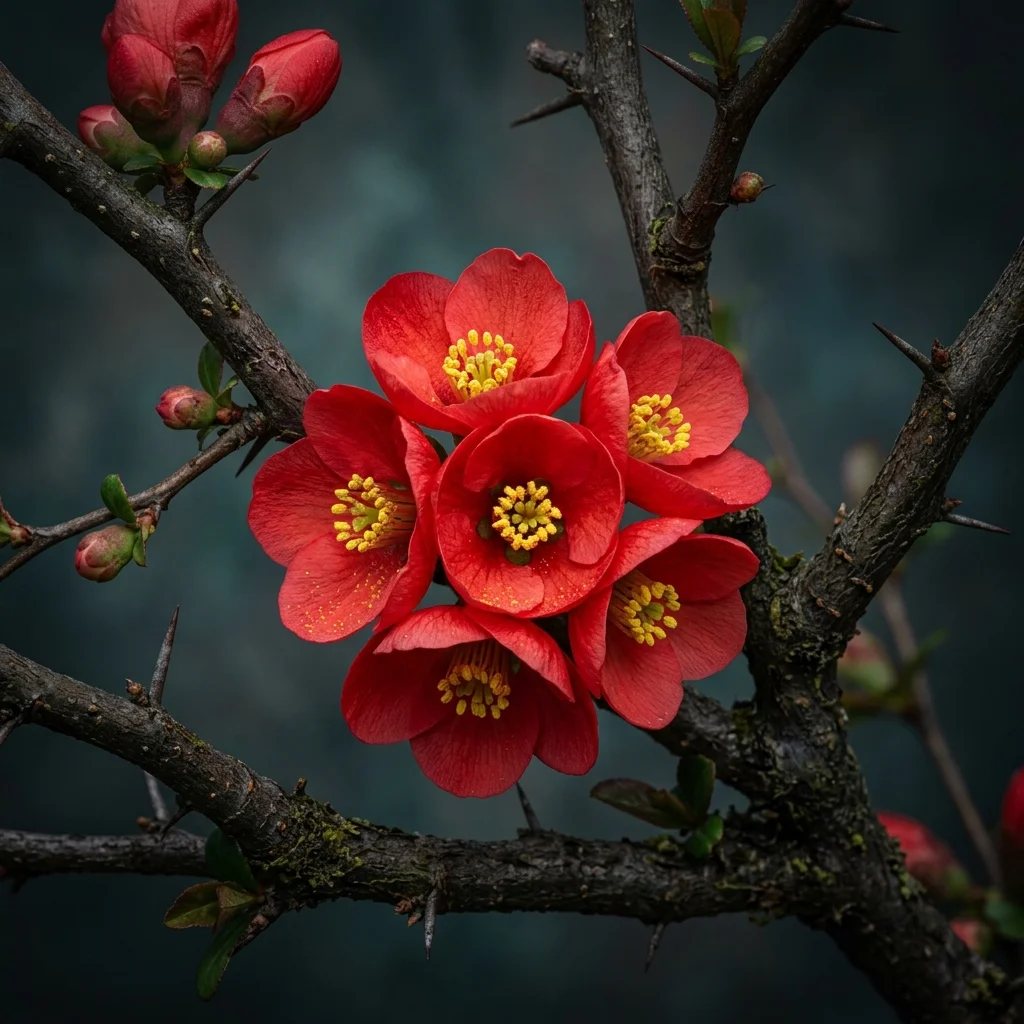
How to Identify Flowering Quince
Identify Flowering Quince (Chaenomeles speciosa) immediately by its distinctive leaf arrangements, wood structures, and flowers. Recognizing its definitive visual traits is key to distinguishing it from other similar species.
-
✔
Distinctive Features: Clusters of cup-shaped, five-petaled scarlet-red flowers featuring a highly prominent central crown of bright yellow anthers along gnarled thorny branches.
-
✔
Typical Coloration: Vibrant scarlet-red, pastel pink, coral, or white, with dark glossy green ovate leaves and small green edible fruits in autumn.
-
✔
Potential Confusions: Sometimes confused with Japanese Quince (Chaenomeles japonica), but distinguished by its much larger upright woody habit and larger flowers.
Complete Care & Cultivation Guide
Follow our detailed scientific care guide to keep your Flowering Quince thriving and gorgeous all year round.
Frequently Asked Questions
Why is my Flowering Quince not blooming in spring?
The primary cause is pruning too late in summer or autumn. Flowering Quince sets its flower buds on 'old wood' in mid-summer. Pruning late cuts off all the flower buds. Always prune immediately after spring blooms fade.
Is Flowering Quince toxic to cats and dogs?
No, Chaenomeles speciosa is completely non-toxic and pet-safe, offering a beautiful, vibrant, and highly safe border shrub for homes with pets.
How hard can I prune my Flowering Quince?
Very hard! You can cut the entire plant down to 4 to 6 inches from the ground in late winter. This rejuvenation pruning stimulates extremely vigorous, colorful new stems and massive summer blooms.
Are the fruits of Flowering Quince edible?
Yes! The hard, yellow-green fruits in autumn are highly astringent raw but are rich in pectin and intensely fragrant. They can be cooked down into delicious marmalades, jellies, and tarts.