Rock Rose Care & Identification Guide
Rock Rose (Cistus x hybridus), native to the dry, rocky Mediterranean hillsides, is an exceptionally hardy, evergreen ornamental shrub highly valued for its striking visual display and extreme drought tolerance. Celebrated as the ultimate water-wise choice for hot, sunny slopes, it features narrow green leaves covered in a sticky, highly aromatic resin (Labdanum) that acts as a powerful natural sunscreen to reflect intense heat and lock in moisture. In summer, it produces an abundance of five-petaled white flowers with delicate, papery wrinkled petals and a dense, crown-like cluster of bright golden-yellow center stamens. While individual flowers last only a few hours, new blossoms open continuously every morning for weeks.





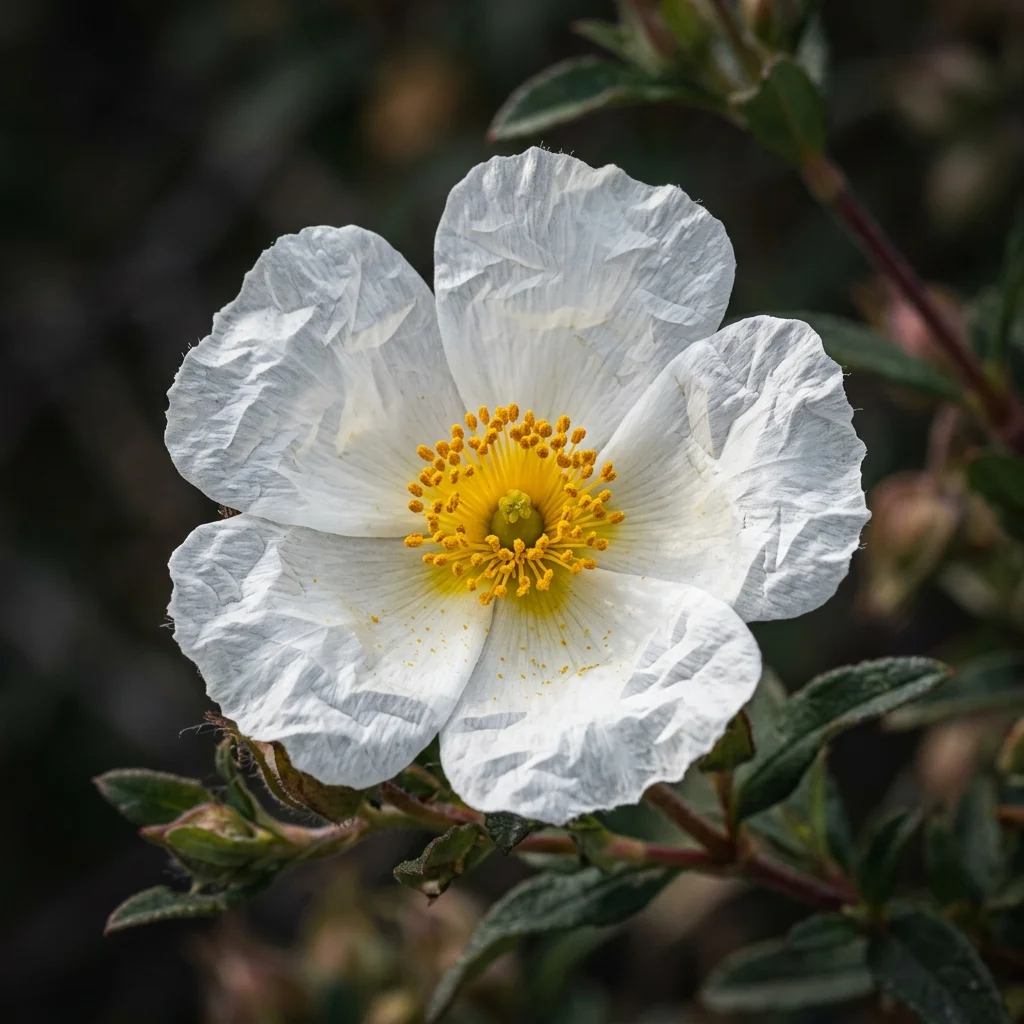
How to Identify Rock Rose
Identify Rock Rose (Cistus x hybridus) immediately by its distinctive leaf arrangements, wood structures, and flowers. Recognizing its definitive visual traits is key to distinguishing it from other similar species.
-
✔
Distinctive Features: Five-petaled white flowers with delicate, papery wrinkled petals and a dense, crown-like cluster of bright golden-yellow center stamens, over narrow green leaves covered in sticky aromatic resin.
-
✔
Typical Coloration: Snow-white flowers with bright golden-yellow center stamens, dark green leaves, and reddish-brown woody twigs.
-
✔
Potential Confusions: Superficially confused with Wild Rose (Rosa) due to similar single five-petaled white flowers, but Rock Rose is easily distinguished by its completely spineless stems, sticky aromatic resinous leaves, and paper-wrinkled petals.
Complete Care & Cultivation Guide
Follow our detailed scientific care guide to keep your Rock Rose thriving and gorgeous all year round.
Frequently Asked Questions
Why are the petals of the Rock Rose so wrinkled?
The delicate, paper-wrinkled texture of the petals is a natural trait that allows the flowers to expand rapidly in the morning sun, maximizing their appeal to early pollinators.
Is Rock Rose toxic to cats and dogs?
No! Cistus x hybridus is completely non-toxic to dogs, cats, and horses. It is an exceptionally safe, tough choice for pet-friendly drought-tolerant landscaping.
How long do Rock Rose flowers last?
Individual flowers last only a single day, opening in the morning and dropping their petals by afternoon. However, the plant produces so many buds that it remains covered in blooms for weeks.
What is the sticky resin on the leaves?
It is called Labdanum, a highly aromatic, sticky resin secreted by the leaves to prevent moisture loss under the blazing Mediterranean sun. It has been used for centuries in perfumery.