Rugosa Rose Care & Identification Guide
The Rugosa Rose (Rosa rugosa), widely known as the Beach Rose or Ramanas Rose, is an exceptionally robust, thorny deciduous shrub native to the sand dunes and coastal shores of eastern Asia. Globally celebrated for its extreme resilience to coastal salt winds and sandy soils, it features highly distinct, deeply wrinkled dark-green leaves covered in a thick, leathery surface that prevents salt burn and excessive transpiration. In midsummer, it produces an abundance of intensely fragrant, single five-petaled magenta blossoms, followed in autumn by massive, edible red rose hips resembling cherry tomatoes that are packed with vitamin C.





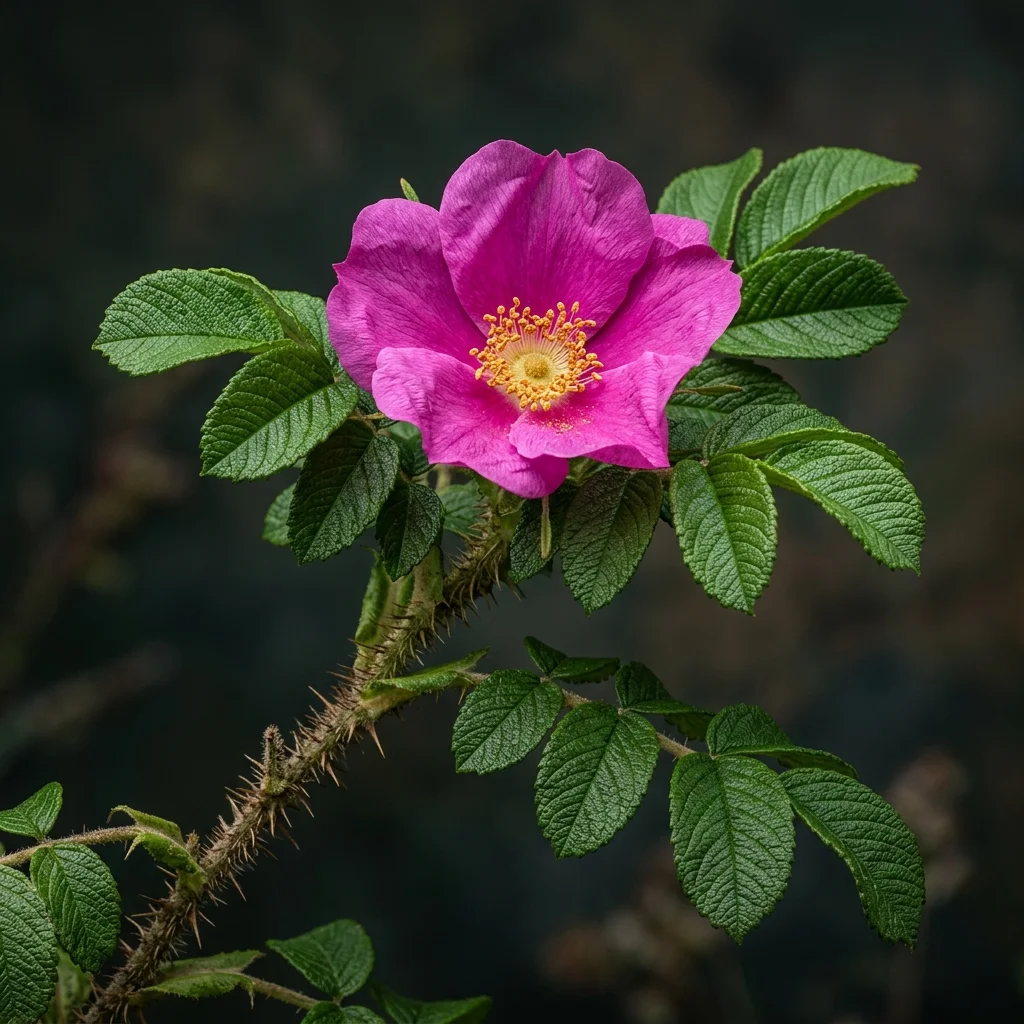
How to Identify Rugosa Rose
Identify Rugosa Rose (Rosa rugosa) immediately by its distinctive leaf arrangements, wood structures, and flowers. Recognizing its definitive visual traits is key to distinguishing it from other similar species.
-
✔
Distinctive Features: Vibrant, single five-petaled magenta-pink flowers with golden-yellow center stamens, set against highly distinct, deeply wrinkled (rugose) dark green leaves on stems covered in dense, bristly thorns.
-
✔
Typical Coloration: Brilliant magenta-pink petals, golden-yellow center stamens, deeply wrinkled emerald-green leaves, and thick woody stems packed with gray thorns.
-
✔
Potential Confusions: Sometimes superficially confused with other wild roses, but easily distinguished by its highly distinct, deeply wrinkled (rugose) leaves and extremely thorny, bristly branches.
Complete Care & Cultivation Guide
Follow our detailed scientific care guide to keep your Rugosa Rose thriving and gorgeous all year round.
Frequently Asked Questions
Why is it called 'Rugosa Rose'?
Because of its leaves! 'Rugosa' is Latin for 'wrinkled,' referring to the highly distinct, deeply textured, and wrinkled surface of its dark green foliage.
Is Rugosa Rose safe for pets?
Yes! Rosa rugosa is completely non-toxic to dogs, cats, and horses. However, its stems are covered in dense, sharp thorns, so plant it where pets will not accidentally run into it.
Are the large red rose hips edible?
Yes! The hips (fruit) are edible, sweet-tart, and exceptionally rich in vitamin C. They are widely harvested in autumn to make gourmet jams, jellies, and herbal teas.
Does Rugosa Rose tolerate coastal sand dunes?
Yes! It is one of the absolute best roses for coastal areas. It is highly salt-tolerant, wind-resistant, and binds shifting sand dunes with its extensive roots.