Sea Buckthorn Care & Identification Guide
Sea Buckthorn (Hippophae rhamnoides) is a spectacular, resilient deciduous shrub native to cold-temperate coasts and semi-arid sandy regions. Highly celebrated for its bright orange berry clusters that densely crowd the thorny branches in autumn, this ecological workhorse possesses an extensive, aggressive root system that excels in dune stabilization and soil reclamation. Botanically, it is a dioecious plant (requiring separate male and female shrubs for pollination) and is renowned for the incredible nutritional density of its berries, which are packed with vitamins C, E, carotenoids, and rare Omega-7 fatty acids.





How to Identify Sea Buckthorn
Identify Sea Buckthorn (Hippophae rhamnoides) immediately by its distinctive leaf arrangements, wood structures, and flowers. Recognizing its definitive visual traits is key to distinguishing it from other similar species.
-
✔
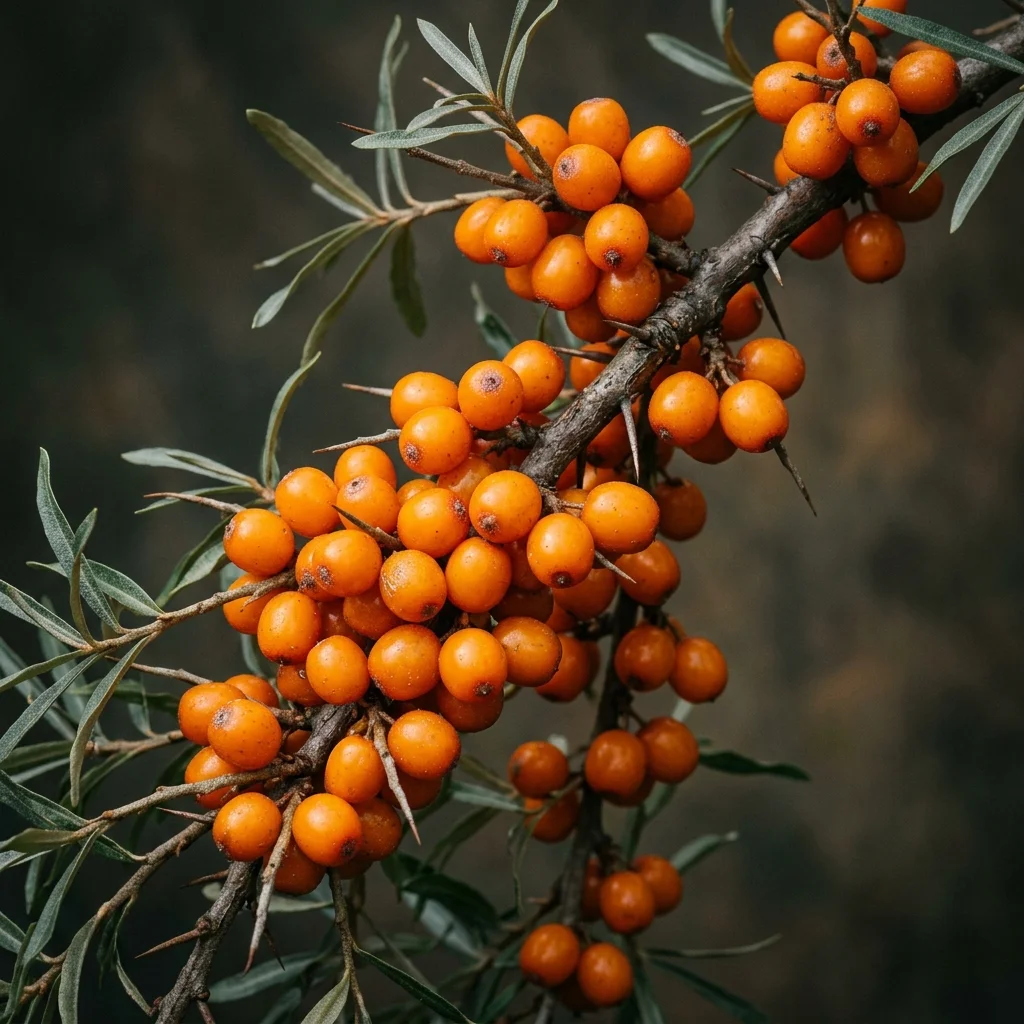
Distinctive Features: Narrow, linear silver-green leaves on stiff, thorny gray-brown branches, bearing dense, tight spikes of brilliant orange-yellow fleshy berries on female plants during late summer and winter.
-
✔
Typical Coloration: Silvery-grayish leaves, dark charcoal branches with stiff thorns, and extremely vibrant, luminous orange-yellow berries.
-
✔
Potential Confusions: Can be confused with Pyracantha (Firethorn) due to the orange berries and thorny stems, but Sea Buckthorn is easily distinguished by its narrow silvery willow-like leaves and completely non-toxic, edible acidic berries.
Complete Care & Cultivation Guide
Follow our detailed scientific care guide to keep your Sea Buckthorn thriving and gorgeous all year round.
Frequently Asked Questions
How can I tell the difference between male and female Sea Buckthorn plants?
In winter or early spring, look at the buds. Male plants have large, prominent buds with multiple scales that look like small pinecones. Female plants have much smaller, flatter, and simpler buds.
Are Sea Buckthorn berries edible for humans and pets?
Yes! They are extremely sour but completely non-toxic and highly nutritious, packed with vitamin C and Omega-7. They are widely used to make juices, syrups, skin oils, and gourmet jams.
How long does it take for Sea Buckthorn to produce fruit?
Typically, female shrubs will begin bearing fruit 3 to 4 years after planting, provided a male pollinator is nearby. Production reaches its peak by the sixth year.
Will Sea Buckthorn spread aggressively in my garden?
Yes, it produces vigorous underground root suckers that can spread laterally. To control its spread, regularly prune out suckers at the base, or plant it in areas where its spreading nature is helpful for erosion control.