Sea Grape Care & Identification Guide
Sea Grape (Coccoloba uvifera) is a highly spectacular, robust evergreen coastal shrub or small tree native to the tropical beaches and dune margins of Florida, the Caribbean, and Central America. Famous for its massive, leathery, completely round leaves adorned with prominent red-orange veins, it plays a vital ecological role in coastal protection, binding shifting sands and acting as a powerful windbreak against tropical hurricanes. Botanically, it is highly salt-tolerant and produces long, dangling grape-like green fruit clusters on female plants in late summer, which turn deep purple when ripe and are prized for making traditional island jams and wine.





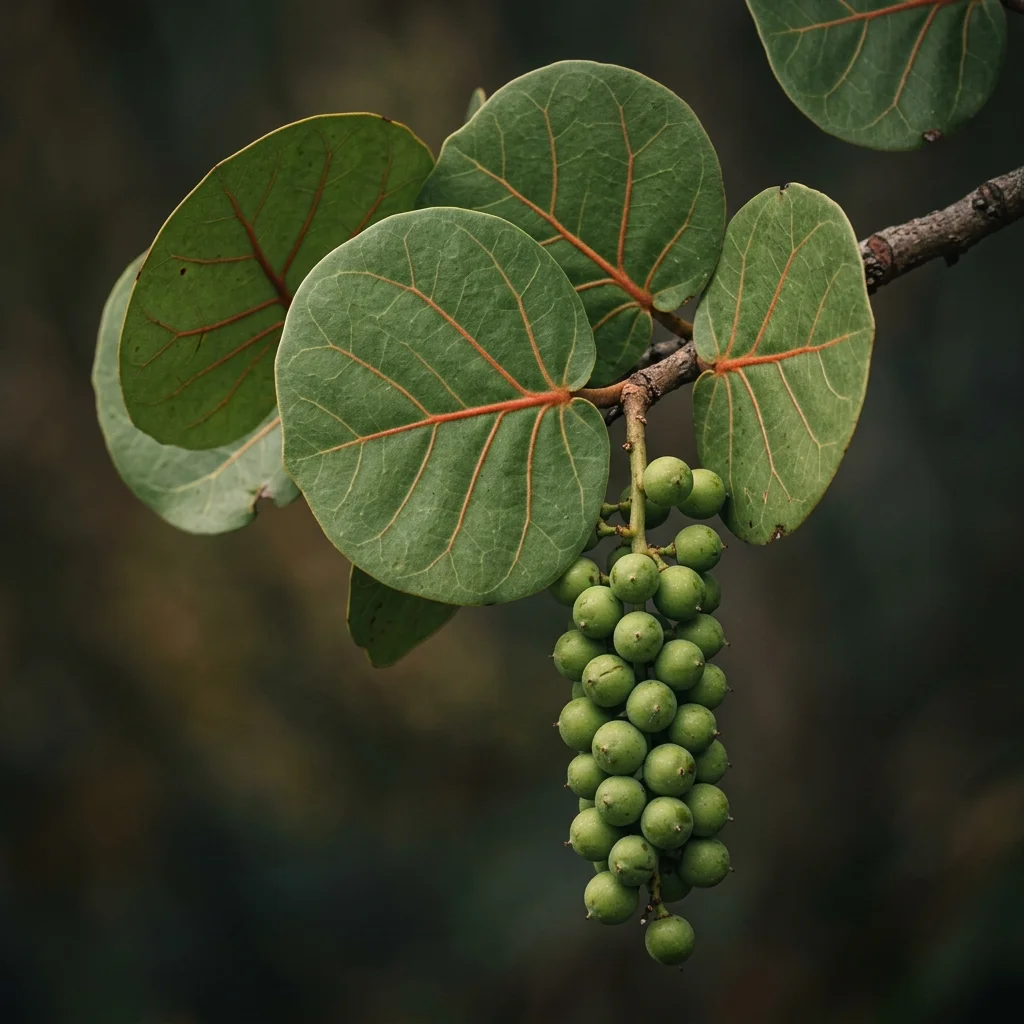
How to Identify Sea Grape
Identify Sea Grape (Coccoloba uvifera) immediately by its distinctive leaf arrangements, wood structures, and flowers. Recognizing its definitive visual traits is key to distinguishing it from other similar species.
-
✔
Distinctive Features: Massive, leathery, completely round glossy leaves with bright red-orange veins, bearing long, drooping grape-like fruit clusters that turn purple in late summer.
-
✔
Typical Coloration: Bright emerald green round leaves with coral-red veins, purplish fruit berries, and smooth grayish bark.
-
✔
Potential Confusions: Unlikely to be confused with other plants due to its highly distinct, plate-like round leaves and grape-like fruit spikes. However, young plants can superficially resemble Coccoloba diversifolia (Pigeonplum).
Complete Care & Cultivation Guide
Follow our detailed scientific care guide to keep your Sea Grape thriving and gorgeous all year round.
Frequently Asked Questions
Are the fruits of Sea Grape edible?
Yes! The ripe purple berries are edible, sweet-tart, and delicious. They are widely harvested in tropical regions to make famous coastal jams, jellies, syrups, and wine.
Is Sea Grape toxic to dogs and cats?
No. Coccoloba uvifera is completely non-toxic to dogs, cats, and humans. The ripe fruits are safe, though pets should not eat large quantities of the woody seeds.
Does Sea Grape tolerate salt spray and ocean winds?
Yes! It is exceptionally salt-tolerant and acts as a fantastic windbreak against tropical storms. It grows directly on sandy beaches just feet from the ocean wave line.
How do I make my Sea Grape grow as a tree?
Naturally a multi-stemmed shrub, you can easily train it into a small tree by selecting a single strong central stem, pruning away lateral shoots at the base, and staking it as it grows.