Spirea Care & Identification Guide
The magnificent Spirea (Spiraea japonica), commonly known as the Japanese Spiraea, is an outstanding and highly popular deciduous shrub celebrated for its dense, flat-topped clusters of vibrant pink flowers and colorful foliage. Originating from sunny riverbanks and valleys of East Africa, this tough wood perennial is highly prized by gardeners for its compact, rounded habit and long-lasting summer blooms. Extremely adaptable, it thrives in standard garden conditions, requiring bright direct sunlight, well-aerated fertile loam, and regular pruning.





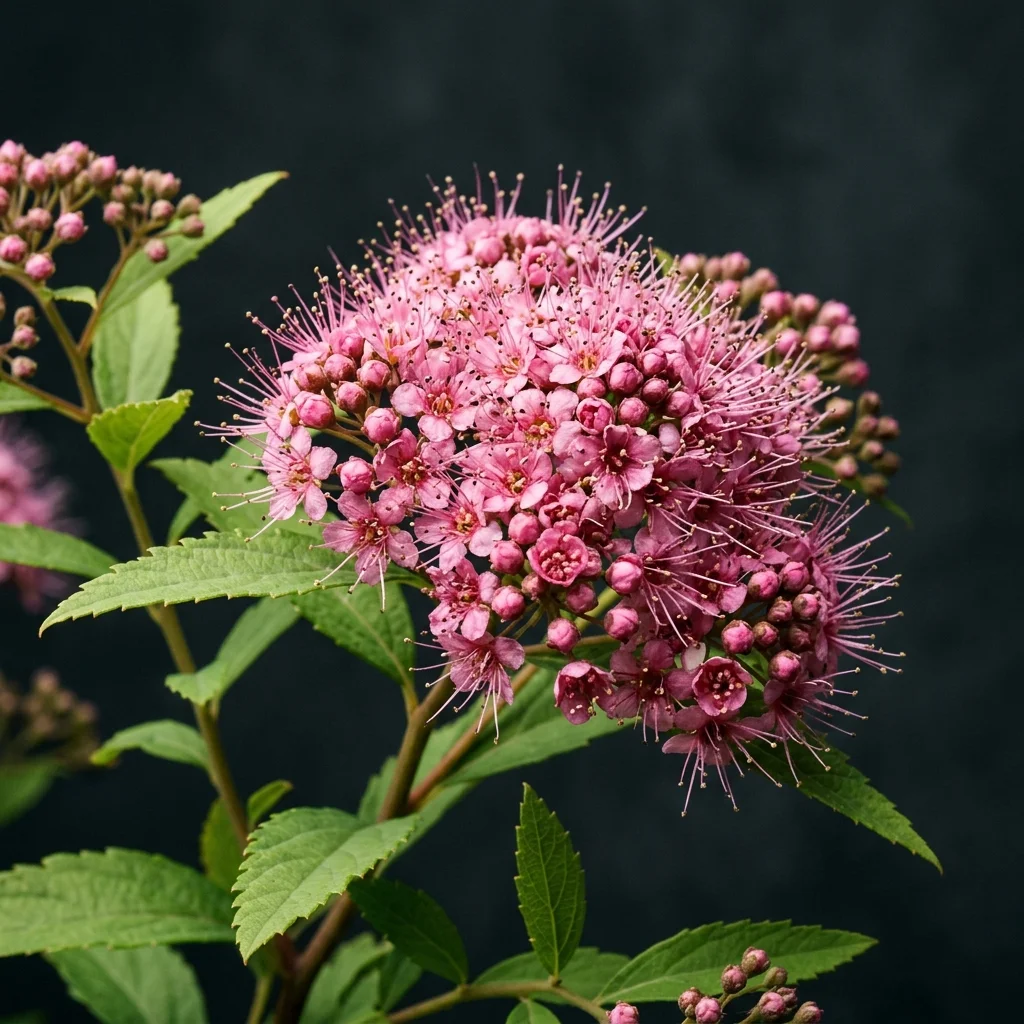
How to Identify Spirea
Identify Spirea (Spiraea japonica) immediately by its distinctive leaf arrangements, wood structures, and flowers. Recognizing its definitive visual traits is key to distinguishing it from other similar species.
-
✔
Distinctive Features: Dense, flat-topped umbrella-like flower heads packed with thousands of tiny pink blossoms featuring prominent, thread-like stamens.
-
✔
Typical Coloration: Lively rose-pink to magenta florets, with fine-textured, lance-shaped serrated leaves that turn brilliant copper in autumn.
-
✔
Potential Confusions: Sometimes confused with Astilbe, but distinguished by its woody shrub habit and flat-topped umbrella flower heads rather than feathery upright herbaceous spikes.
Complete Care & Cultivation Guide
Follow our detailed scientific care guide to keep your Spirea thriving and gorgeous all year round.
Frequently Asked Questions
Why is my Spirea not blooming?
The primary reasons are lack of direct sunlight or pruning at the wrong time. Spirea blooms on 'new wood' in summer, so it must be pruned in late winter or early spring before growth starts. Also, ensure it receives 6 hours of sun.
Is Spirea toxic to household pets?
No! Spiraea japonica is completely non-toxic and pet-safe, offering a beautiful, highly colorful, and worry-free border shrub for pet-owning households.
How hard can I prune my Spirea?
Very hard! You can cut the entire plant down to 4 to 6 inches from the ground in late winter. This rejuvenation pruning stimulates extremely vigorous, colorful new stems and massive summer blooms.
Why are my Spirea leaves losing their golden color and turning green?
Loss of golden foliage color is a classic sign of insufficient sunlight. Move the plant to a location where it receives absolute full, direct sun to maintain its vivid golden and copper hues.