Sweetshrub Care & Identification Guide
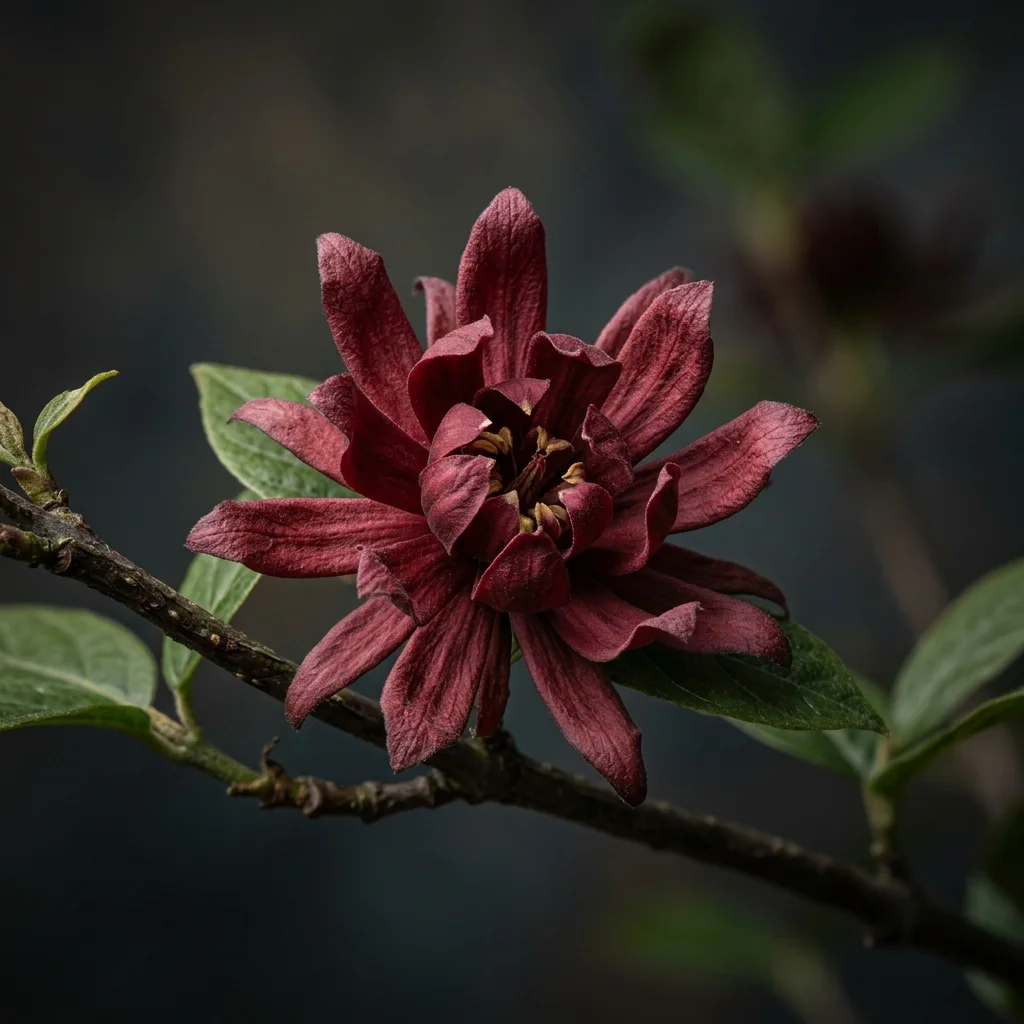
The magnificent Carolina Allspice Sweetshrub (Calycanthus floridus) is an outstanding deciduous woodland shrub celebrated for its highly unique strap-like deep maroon-red sepals that resemble exquisite woody lotuses. Hailing from shady moist stream banks and forest understories of the southeastern United States, this resilient wood perennial is famous for its spicy aromatic qualities. All parts of the plant, including leaves and stems, release a highly complex fragrance resembling a blend of strawberry, melon, and pineapple, requiring organic soil and semi-shade.





How to Identify Sweetshrub
Identify Sweetshrub (Calycanthus floridus) immediately by its distinctive leaf arrangements, wood structures, and flowers. Recognizing its definitive visual traits is key to distinguishing it from other similar species.
-
✔
Distinctive Features: Highly unique flower structure consisting of strap-like, overlapping deep maroon sepals resembling a woody lotus, rising on twigs.
-
✔
Typical Coloration: Deep maroon-red to chocolate-brown blossoms, with large, coarse opposite dark green leaves turning golden-yellow in autumn.
-
✔
Potential Confusions: Sometimes confused with Calycanthus occidentalis (Spicebush), but distinguished by its smaller, highly fragrant maroon sepals and velvety, fuzzy leaf undersides.
Complete Care & Cultivation Guide
Follow our detailed scientific care guide to keep your Sweetshrub thriving and gorgeous all year round.
Frequently Asked Questions
Why does my Sweetshrub flower have absolutely no scent?
Wild sweetshrubs grown from seed possess highly variable fragrance levels, with many having zero scent. Always purchase named cultivars propagated vegetatively from aromatic mother plants.
Is Sweetshrub toxic to domestic pets?
The seeds of Calycanthus floridus contain calycanthine, an alkaloid highly toxic to cattle, sheep, dogs, and cats. Ingestion of seeds causes severe muscle spasms and seizures, though leaves are rarely eaten.
What does the Sweetshrub flower smell like?
It has an incredibly complex, sweet fruit-spice fragrance. Depending on the soil and sun, it releases notes of strawberry, cantaloupe melon, pineapple, and spicy cinnamon bark (Allspice).
When is the best time to prune my Sweetshrub?
Always prune immediately after the late-spring flowers fade. Sweetshrub sets its buds on 'old wood' from the previous year; pruning in late winter will cut off all the upcoming spring blossoms.