Yew Shrub Care & Identification Guide
The magnificent Yew Shrub (Taxus baccata), known as the English Yew, is an legendary, extremely long-lived evergreen conifer conifer, celebrated for its flat needle-like foliage and absolute resilience to heavy structural shearing. Native to ancient moist woodlands of western Europe, this slow-growing conifer can live for thousands of years. DEADLY WARNING: All parts of Taxus baccata (except the red fleshy aril) contain highly lethal concentrations of taxine alkaloids (Taxine), which cause rapid cardiac arrest within hours of ingestion. Despite its extreme danger, it is one of the most elegant and durable landscaping options.





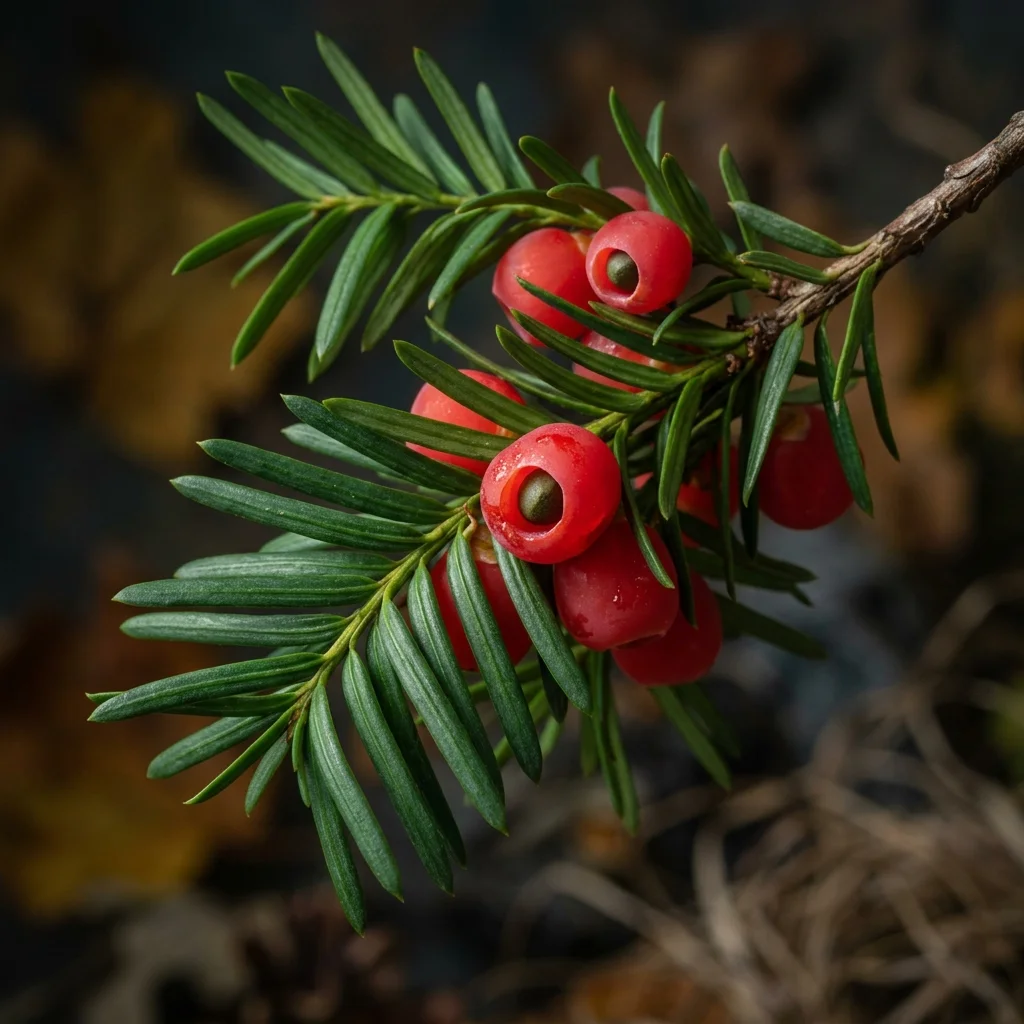
How to Identify Yew Shrub
Identify Yew Shrub (Taxus baccata) immediately by its distinctive leaf arrangements, wood structures, and flowers. Recognizing its definitive visual traits is key to distinguishing it from other similar species.
-
✔
Distinctive Features: Flat, needle-like deep green leaves measuring 1 inch long with two pale bands beneath, arranged in two flat rows along twigs, with red fleshy cup-like berries.
-
✔
Typical Coloration: Deep olive-green needles with bright red fleshy cup-like arils and central green seeds.
-
✔
Potential Confusions: Sometimes confused with Podocarpus or Cephalotaxus, but distinguished by its flat needle rows, cup-shaped red arils with exposed green seeds, and extreme taxine toxicity.
Complete Care & Cultivation Guide
Follow our detailed scientific care guide to keep your Yew Shrub thriving and gorgeous all year round.
Frequently Asked Questions
How dangerous is the English Yew shrub exactly?
Taxus baccata is exceptionally deadly. All parts (except the red fleshy cup) contain highly lethal taxine alkaloids. Ingestion of even a small handful of needles causes sudden vomiting, trembling, blue lips, and rapid cardiac arrest in pets and humans.
Is any part of the Yew berry safe?
Only the red, gelatinous fleshy cup (the aril) is non-toxic and sweet. However, the hard green seed in the center of the cup is highly lethal. Never consume any part of the Yew berry.
Why is my English Yew turning yellow and dropping needles?
This is a classic sign of 'wet feet' (root rot) caused by overwatering or heavy compacted clay soil. English Yews possess fleshy roots that rot rapidly in soggy conditions. Cut back watering.
Can I prune a Yew shrub back to bare wood?
Yes! Unlike most other conifers, Yews possess an incredible ability to regenerate new green needles from ancient, bare woody trunks, making them excellent for radical rejuvenation pruning.