Anubias Barteri Growing & Care Guide
Anubias Barteri, the parent species of the celebrated Anubias family, is a robust, large-leafed aquatic plant native to West Africa. Renowned for its broad, heavy spade-shaped leaves and ironclad resilience, it makes a premier midground anchor for larger tanks, requiring zero soil planting.





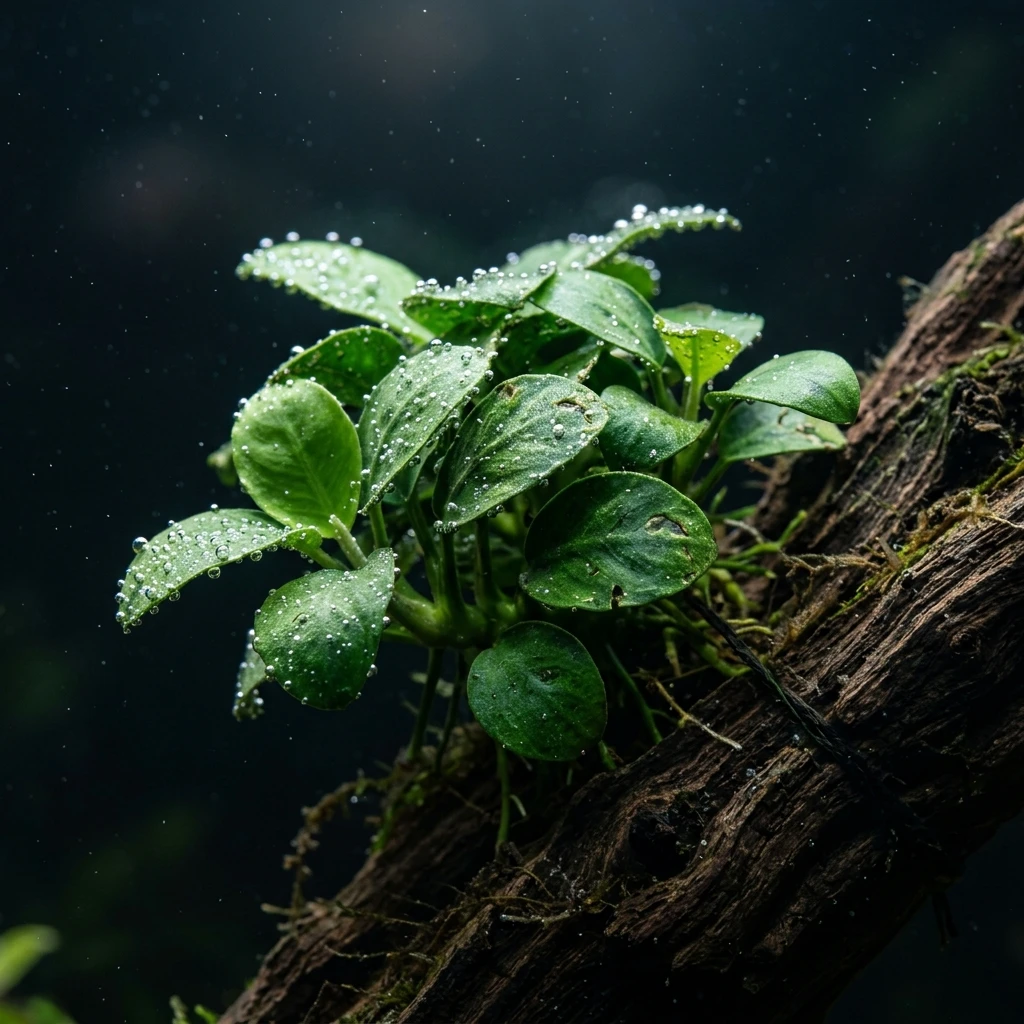
How to Identify Anubias Barteri
Anubias Barteri (Anubias barteri) is an iconic aquatic species. Recognizing its key structures is crucial for successful aquascaping and thriving growth.
-
✔
Visual Shape & Growth: Large, thick-stemmed epiphyte with broad, spade-shaped dark green leathery leaves.
-
✔
Leaf Morphology: Large, thick spade-like dark-green leaves that can grow up to 6 inches long.
-
✔
Root & Anchoring Structure: Extremely strong, thick white-green roots that wrap tightly around hard wood or stones.
Complete Cultivation & Spawning Guide
Follow our detailed scientific water parameters and care guides to keep your Anubias Barteri thriving.
Common Diseases & Treatment
Rhizome Rot (Bacterial)
Symptoms: The stout green rhizome turns soft, black, and decomposes, losing all its leaves.
Green Dust Algae (GDA)
Symptoms: A slimy, dusty layer of green algae covers the broad leaf surfaces.
Frequently Asked Questions
Q: How large does Anubias Barteri grow?
A: It is much larger than Anubias Nana. Leaf blades can grow up to 6 inches long and the plant can easily reach a height of 10 to 12 inches, making it ideal for large tanks.
Q: Can it grow out of water?
A: Yes! In high-humidity environments like terrariums or paludariums, it grows happily emersed, often producing beautiful white calla-lily-like flowers.
Q: Why is my Anubias Barteri losing leaves?
A: This is usually caused by burying the rhizome in substrate, which suffocates the plant. Always keep the creeping green rhizome above gravel or sand.
Q: Is Anubias Barteri toxic to dogs and cats?
A: Yes. Like all members of the Araceae family, it contains calcium oxalate crystals, which can cause oral irritation if chewed by land pets.