Anubias Coffeefolia Growing & Care Guide
Anubias Coffeefolia is an exceptionally beautiful, heavily-textured vertical species of water rhizome plant. Prized for its gorgeous, deeply ribbed leaves resembling coffee leaf veins, it starts with a spectacular copper-red leaf coloration on young foliage before turning into a highly glossy, deep dark-green. Thriving in shaded areas, it makes an elite foreground or midground architectural contrast anchor.





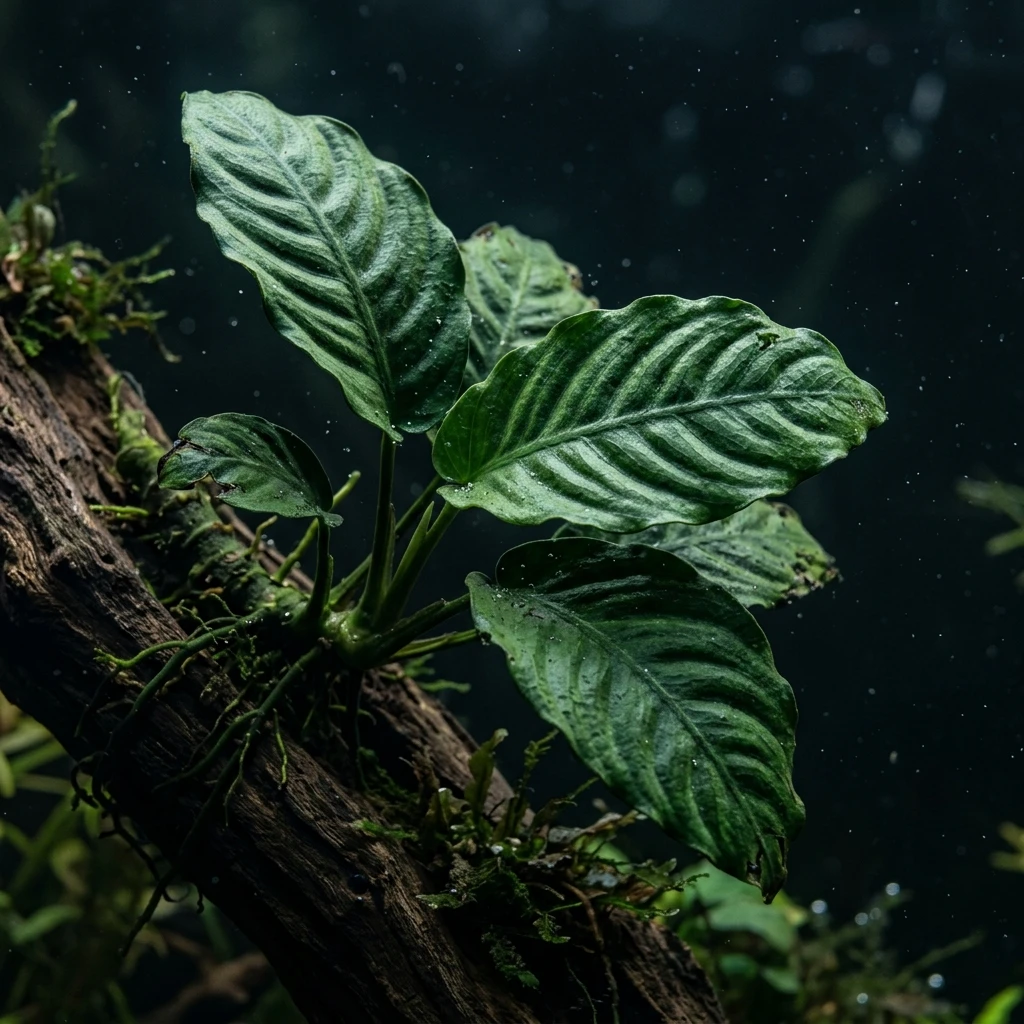
How to Identify Anubias Coffeefolia
Anubias Coffeefolia (Anubias barteri 'Coffeefolia') has key botanical markers. Recognizing these features is crucial for successful aquascaping and thriving growth.
-
✔
Visual Shape & Growth: Dense upright horizontal clumps of very hard, deeply-ribbed glossy dark-green leaves.
-
✔
Leaf Morphology: Uniquely crinkled, convex leaves with deep, regular ribbing. Young leaves show copper-brown color.
-
✔
Root & Anchoring Structure: Thick creeping green horizontal rhizome producing strong anchor roots that bind to rocks or wood.
Complete Cultivation & Spawning Guide
Follow our detailed scientific water parameters and care guides to keep your Anubias Coffeefolia thriving.
Common Diseases & Treatment
Anubias Rot (Bacterial)
Symptoms: Creeping rhizome turns soft, mushy, and smelly, with leaves falling off completely.
Black Spot Algae Cover
Symptoms: Leaf surfaces gather stubborn green or black spots that block light, causing leaves to yellow and drop.
Frequently Asked Questions
Q: Why is my Anubias Coffeefolia melting?
A: It is usually caused by burying the creeping green rhizome under the substrate. Always attach it to driftwood or rocks, leaving roots exposed.
Q: How do I propagate Anubias Coffeefolia?
A: Propagate easily by cutting the creeping rhizome into sections with a clean blade. Ensure each segment has at least 3-4 healthy leaves.
Q: Why are new leaves copper colored?
A: This is normal! Anubias Coffeefolia foliage naturally emerges with a copper-bronze tint before hardening into its signature deep dark-green.
Q: Can it grow out of water?
A: Yes! It grows happily emersed in humid terrariums, paludariums, or wabi-kusa, provided the roots remain continuously wet.