Anubias Congensis Growing & Care Guide
Anubias Congensis, native to West Africa, is a majestic, vertical growing species of water rhizome plant. Celebrated for its slender, spear-like lanceolate leaves, it grows considerably taller than other Anubias varieties, serving as a premier midground or background anchor in large aquariums, prized for its extreme durability and cichlid-proof foliage.




How to Identify Anubias Congensis
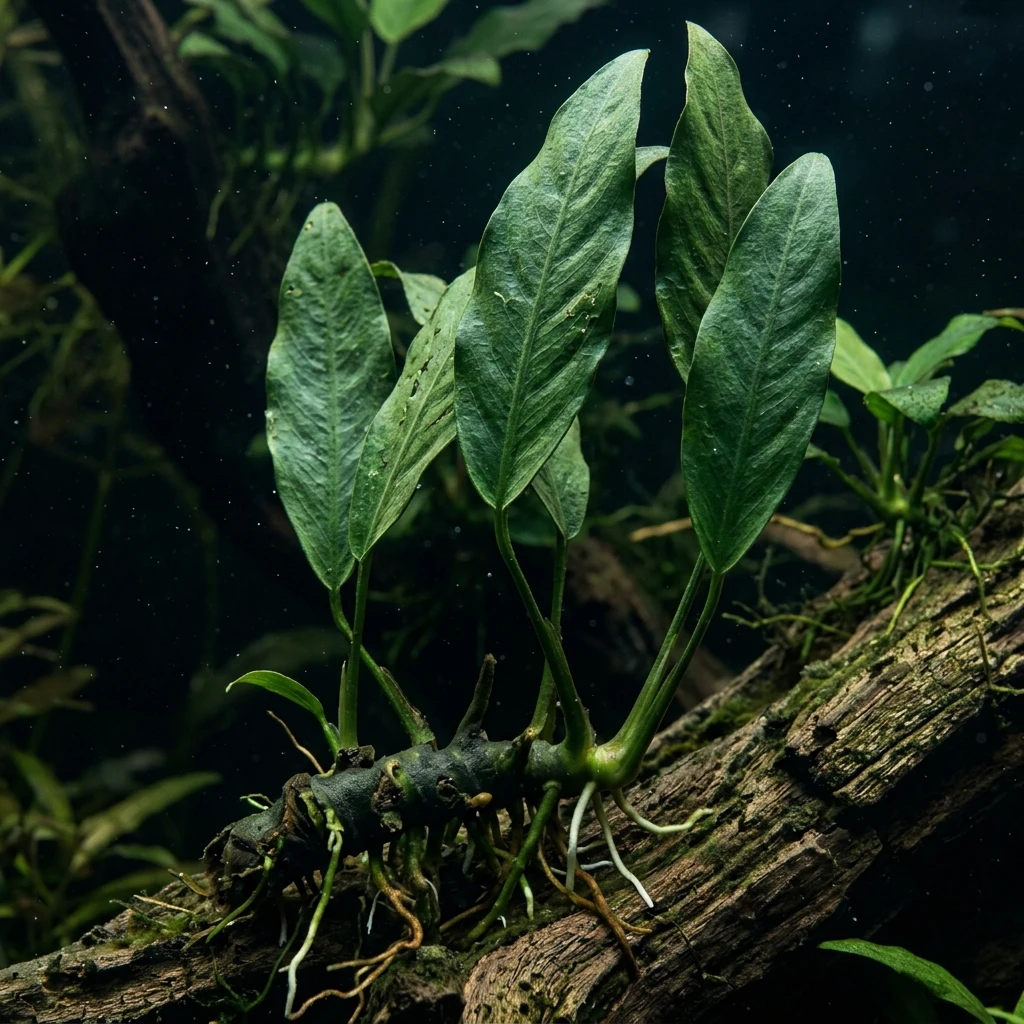
Anubias Congensis (Anubias afzelii) has key botanical markers. Recognizing these features is crucial for successful aquascaping and thriving growth.
-
✔
Visual Shape & Growth: Stately upright vertical clumps of very hard, spear-shaped elongated dark-green leaves.
-
✔
Leaf Morphology: Slender lanceolate (spear-like) thick green leaves (up to 8-12 inches tall) with smooth edges.
-
✔
Root & Anchoring Structure: Thick creeping horizontal rhizome producing strong anchor roots that bind to rocks or wood.
Complete Cultivation & Spawning Guide
Follow our detailed scientific water parameters and care guides to keep your Anubias Congensis thriving.
Common Diseases & Treatment
Anubias Rot (Bacterial)
Symptoms: Creeping rhizome turns soft, mushy, and smelly, with leaves falling off completely.
Iron Deficiency (Chlorosis)
Symptoms: Mature spear leaves lose their deep green color, turning pale lime-green or yellow.
Frequently Asked Questions
Q: How tall does Anubias Congensis grow?
A: It is one of the tallest Anubias species, easily reaching 8 to 12 inches under stable conditions, making it excellent for background placement.
Q: Can I plant it in the sand?
A: Only if you bury the roots while keeping the creeping green horizontal rhizome completely exposed above the sand. Tieing it to wood is much safer.
Q: Why are the leaf tips turning yellow?
A: Yellow leaf tips usually indicate nutrient deficiencies (lack of potassium or nitrogen) or excessive light exposure. Dose liquid fertilizers.
Q: Can it grow in dry soil?
A: No. It is an obligate wetland plant. Roots must remain constantly wet or submerged to survive.