Anubias Nana Growing & Care Guide
Anubias Nana, the absolute royalty of low-light aquatic setups, is a slow-growing African native. Prized for its thick, deep-green ovate leaves and ultimate hardiness, it thrives attached to driftwood or rocks, making it a stellar centerpiece for beginner and expert aquascapers alike.



How to Identify Anubias Nana
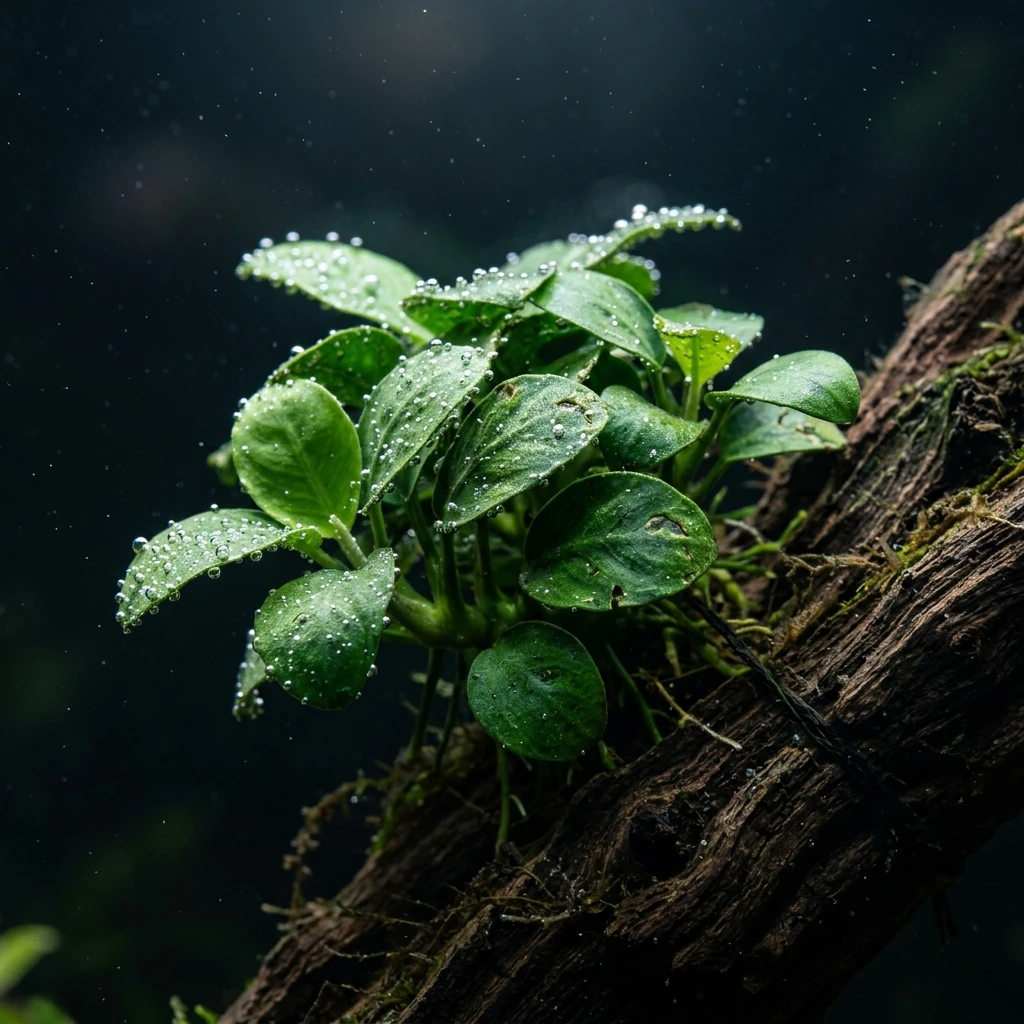
Anubias Nana (Anubias barteri var. nana) is an iconic aquatic species. Recognizing its key structures is crucial for successful aquascaping and thriving growth.
-
✔
Visual Shape & Growth: Compact, bushy epiphyte with dark green, thick, glossy teardrop-shaped leaves.
-
✔
Leaf Morphology: Thick, leathery, dark-green leaves growing along a stout creeping rhizome.
-
✔
Root & Anchoring Structure: Stout, anchoring white roots that cling tenaciously to wood, stones or gravel surface.
Complete Cultivation & Spawning Guide
Follow our detailed scientific water parameters and care guides to keep your Anubias Nana thriving.
Common Diseases & Treatment
Anubias Rhizome Rot (Fungal)
Symptoms: Rhizome turns soft, mushy, and foul-smelling, causing leaves to fall off.
Green Spot Algae (GSA)
Symptoms: Hard, round dark-green spots form on the surface of slow-growing leaves.
Frequently Asked Questions
Q: Can I plant Anubias Nana in gravel?
A: No, you must never bury the creeping rhizome in substrate. If buried, the rhizome will suffocate, rot, and kill the plant. Keep the roots exposed or tie the plant to wood/rocks.
Q: Why are my Anubias leaves turning yellow?
A: Yellowing leaves are usually a sign of iron or potassium deficiency, or it could be old leaves naturally dying off. Add comprehensive water fertilizer weekly.
Q: Is Anubias Nana safe for aquarium shrimp?
A: Yes! It is highly favored in shrimp tanks because its thick leaves provide excellent biofilm grazing surfaces and safe hiding places for baby cherry shrimps.
Q: How fast does Anubias Nana grow?
A: It is an exceptionally slow-growing plant. Under standard conditions, it typically produces only one new leaf every two to three weeks.