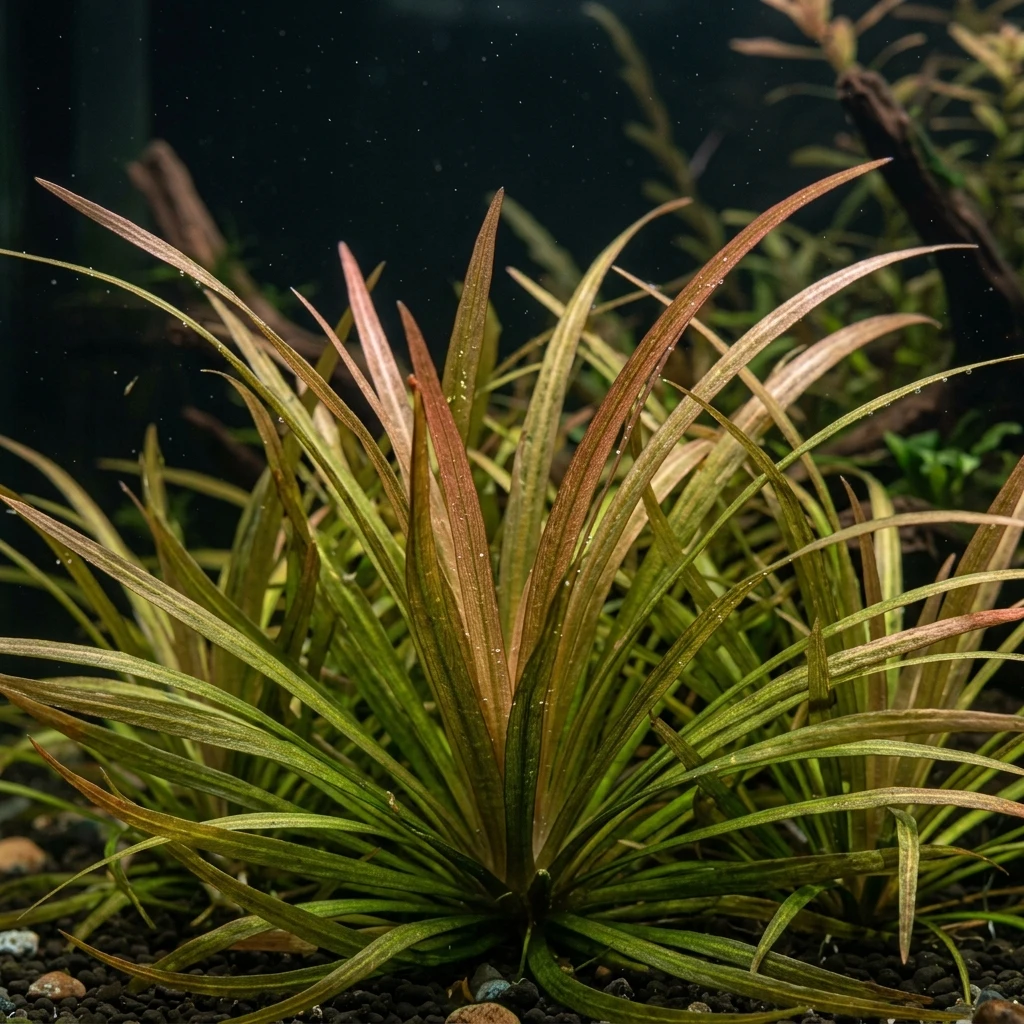
Blyxa japonica

Blyxa Japonica Growing & Care Guide

Blyxa Japonica is a grass-like bush plant native to Asian wetlands, highly valued for its elegant rosette blades that turn beautiful golden-red under high light. Unlike other grass plants, it is a stem plant that grows in a tight rosette-like cluster, making it a spectacular mid-ground anchor for community community and nature aquariums.


Lighting Icon
Lighting Moderate to High
Water Hardness Icon
Water Hardness Aquatic (pH 5.5-7.0)
Substrate Icon
Substrate Nutrient-rich aquasoil
Temperature Icon
Water Temp 16°C - 26°C
Toxicity Warning Icon
Toxicity Pet Friendly (Non-toxic)
Botanical macro photography of Blyxa Japonica (Blyxa japonica) - Plant AI care database

How to Identify Blyxa Japonica

Blyxa Japonica (Blyxa japonica) has key botanical markers. Recognizing these features is crucial for successful aquascaping and thriving growth.

  • Visual Shape & Growth: Compact, bushy grass-like rosette of slender, arching green-to-red blades.
  • Leaf Morphology: Long, narrow, lanceolate leaves with fine longitudinal veins, turning golden-red under strong light.
  • Root & Anchoring Structure: Extremely robust, thick white-green roots designed to anchor deeply into nutrient-rich clay/soil.
💡 Plant AI Tip: Take a photo with Plant AI to identify aquatic weeds and diagnose fungal spot diseases in 1 second.

Complete Cultivation & Spawning Guide

Follow our detailed scientific water parameters and care guides to keep your Blyxa Japonica thriving.

pH: 5.5 - 7.0, GH: 2 - 10 dGH. Strongly prefers soft, slightly acidic water. Stunts in hard, alkaline setups.
High. Pressurized CO2 injection is highly recommended. It will grow sparse, drop leaves, and melt in low-tech tanks.
Moderate to high. Strong light promotes compact, bushy rosettes and brings out its famous golden-red coloration.
Blyxa grows stems that branch. Up-root the bushy cluster, cut individual lateral shoots from the main stem, and replant them.
Heavy phosphate and iron feeder. Responds dramatically to weekly liquid iron dosing to maintain its vibrant gold-red hue.
A heavy root feeder. Requires rich aquasoil. Add root fertilizer tabs near the base every few months to support its massive root system.
Optimal temperature is 16°C to 26°C (61°F - 79°F). Growth slows down and leaves melt above 28°C.
Enjoys moderate current. Steady water flow delivers essential water column nutrients to its opposite leafy rosettes.
Perfect for community setups. Offers shelter and biofilm grazing for dwarf shrimps and community fish. Safe from grazers.
Its dense, grassy structure can gather hair algae. Keep nutrients balanced and use Amano shrimp to keep leaves clean.
Best planted in the mid-ground. Space individual rosettes at least 1 to 2 inches apart to accommodate their massive leaf spread.

Are your Blyxa Japonica leaves melting, turning yellow or rotting at the roots?

Dose potassium and iron, inject pressurized CO2, and plant in rich aquasoil.

Diagnose My Aquatics

Common Diseases & Treatment

Blyxa Root Rot (Inert Substrate)

Symptoms: Roots turn black, rot, and the rosette floats to the surface.

Action: Caused by planting in inert sand or gravel without nutrients. Replant in fresh aquasoil or add root tabs.

Leaf Melting (Shock)

Symptoms: Leaves turn transparent, yellow, and dissolve rapidly after introducing to a new tank.

Action: Usually occurs due to sudden water chemistry shock. Trim the melted leaves; new submersed leaves will sprout soon.

Frequently Asked Questions

How do I propagate Blyxa Japonica?

Blyxa is a stem plant that branches at the base. Gently pull up the bush, separate the individual side shoots from the main stem using sharp scissors, and replant them.

Why is my Blyxa turning red/gold?

Blyxa turns golden-red under strong lighting, pressurized CO2, and rich iron dosing. This is a natural, healthy response, not a disease.

Does it need soil?

Yes, Blyxa is a heavy root feeder and demands a nutrient-rich substrate like aquasoil. It does not do well in inert sand.

Is it safe for shrimp?

Yes, Blyxa is 100% pet-friendly, non-toxic, and highly favored in shrimp tanks where its dense leaves provide excellent shelter.

Master advanced aquascaping. Start today!

Get Started for Free