Bolbitis Growing & Care Guide
Bolbitis, also known as the Congo Water Fern, is an incredibly elegant, high-class vertical aquatic species native to West African forest streams. Renowned for its spectacular, semi-transparent deep emerald-green feathered leaves, it grows slowly on hardscape and is prized by professional aquascapers for forming lush, wild jungle textures in high-flow, low-tech layouts.





How to Identify Bolbitis
Bolbitis (Bolbitis heudelotii) has key botanical markers. Recognizing these features is crucial for successful aquascaping and thriving growth.
-
✔
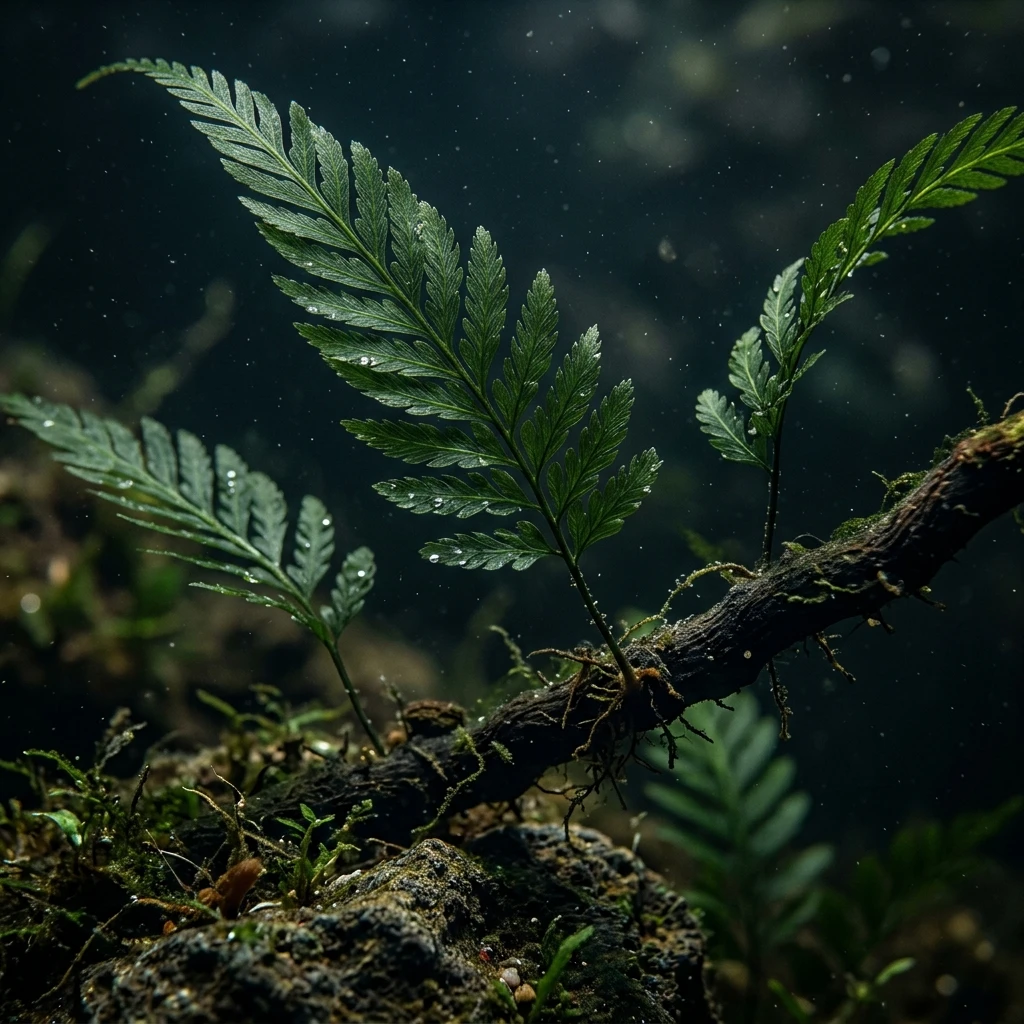
Visual Shape & Growth: Stately vertical bushes of highly-textured, translucent dark emerald feathered leaves bound to wood.
-
✔
Leaf Morphology: Beautifully divided, feather-like (pinnate) semi-transparent leaves showing a deep, moody dark-green color.
-
✔
Root & Anchoring Structure: Dark creeping horizontal rhizome producing strong anchor roots that bind to rocks or wood.
Complete Cultivation & Spawning Guide
Follow our detailed scientific water parameters and care guides to keep your Bolbitis thriving.
Common Diseases & Treatment
Rhizome Rot (Bacterial)
Symptoms: The creeping horizontal rhizome turns soft, black, and decomposes, losing all its leaves.
Opaque Blackening
Symptoms: Leaves lose their translucent green color, turning opaque brown or black and dying.
Frequently Asked Questions
Q: Why is my Bolbitis turning black?
A: Bolbitis leaves turn black under high water temperatures, high pH, or excessive light. Keep water cool (under 26°C) and slightly acidic.
Q: How do I attach Bolbitis correctly?
A: Use superglue gel or dark cotton thread to bind the creeping green rhizome onto driftwood or lava rocks. Roots will anchor naturally in a few weeks.
Q: Does it need CO2?
A: While it can survive in low-tech tanks, pressurized CO2 is highly recommended to develop its iconic translucent, deep green feathered leaves.
Q: How fast does it grow?
A: It is a very slow grower, typically producing one or two new feathered fronds every 2 to 3 weeks.