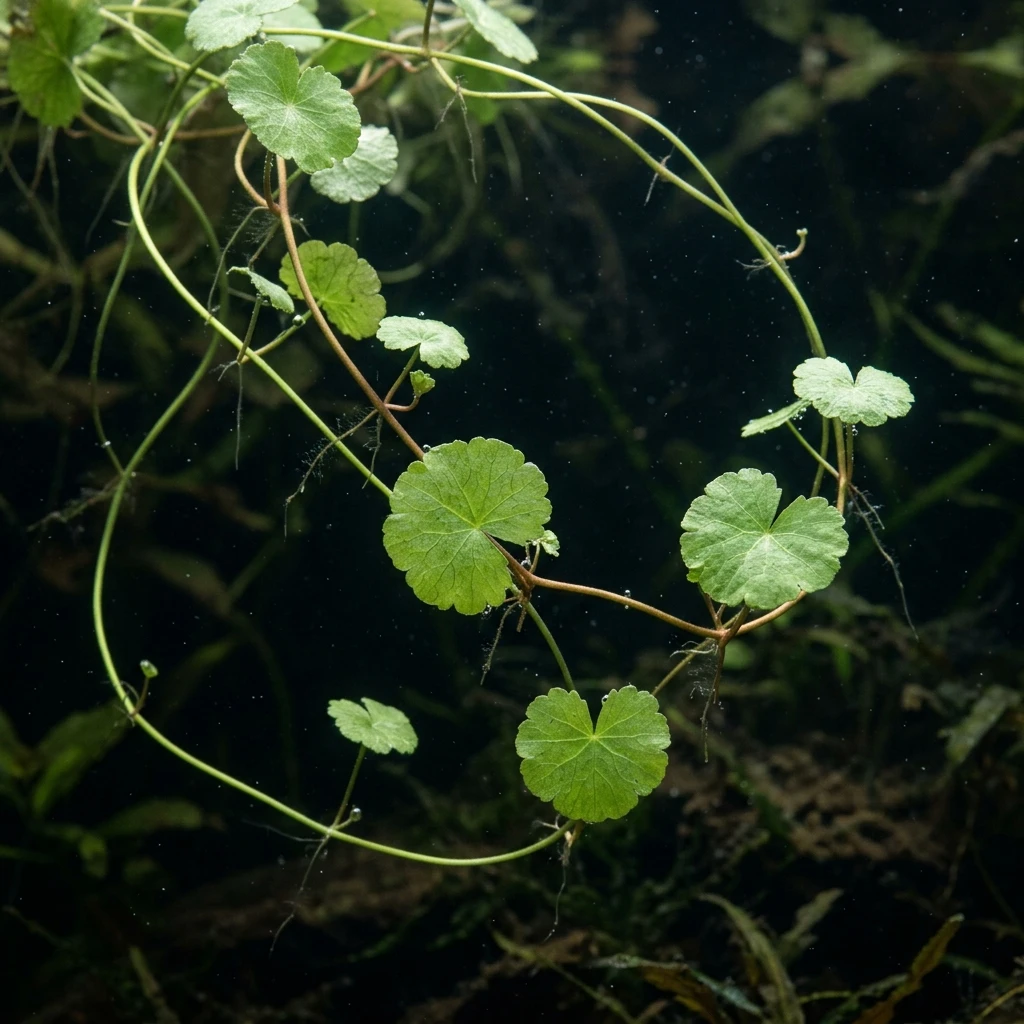
Brazilian Pennywort
Scientific Name: Hydrocotyle leucocephala
Brazilian Pennywort is a highly dynamic, incredibly fast-growing stem species native to tropical wetlands of South America. Famous for its beautiful waxy, heart-to-kidney shaped light green leaves that climb upwards or trail gracefully across the water surface, it is a premier aquascaping choice. Highly versatile, it can be planted, wedged, or left floating.
Lighting Needs
Low to High
Water Parameters
Aquatic (pH 6.0-7.8)
Optimal Substrate
Sand, gravel or rich substrate
Hardy Temperature
15°C - 30°C
Toxicity Level
Pet Friendly (Non-toxic)
How to Identify Brazilian Pennywort
Use our structural morphological markers to verify the identity of your Brazilian Pennywort in any local nursery or wild wetland:
-
✔
Overall Visual Shape: Highly dynamic vertical or trailing vine-like stems with heart-shaped waxy light-green kidney leaves.
-
✔
Leaf Morphology: Heart-to-kidney shaped light-green alternate waxy leaves with shallow lobed margins that crawl upwards or float.
-
✔
Root & Anchoring Structure: Fast-growing white vertical adventitious roots sprouting copiously from every leaf stem junction.
Complete Cultivation & Spawning Guide
Follow our detailed scientific water parameters and care guides to keep your Brazilian Pennywort thriving.
pH: 6.0 - 7.8, GH: 3 - 15 dGH. Exceptionally adaptable to soft or hard water conditions.
Low. Grows perfectly well without pressurized CO2, though carbon injection induces faster growth and thicker stems.
Low to High. Exceptionally versatile; thrives in deep shade but grows rapidly and thickly under bright full-spectrum lights.
Cut the creeping runner into sections using sharp scissors. Replant the cut sections; each node will shoot a new runner.
A heavy water-column feeder. Relies on liquid macro and micro nutrients; substrate fertilizers are secondary.
Grows best in nutrient-rich aquasoil or fine sand. Fibrous root system develops rapidly to anchor the creeping runners.
Optimal temperature is 15°C to 30°C (59°F - 86°F). Outstanding heat tolerance, surviving hot summer peaks.
Requires moderate to strong circulation. Good current prevents organic silt and algae from clinging to feathery leaves.
Its tough waxy leaves are highly resistant to plant-eating fish. Safe for community and shrimp setups.
Fast growth makes it a brilliant nutrient sponge, starving out hair algae. Clean debris using cherry or Amano shrimps.
Best planted in the midground or background. Space individual stems 1 inch apart to allow light to reach the bottom nodes.
Common Diseases & Treatment
🚨 Adventitious Root Rot
Common Cause: White adventitious roots from the nodes turn black, mushy, and decay, causing stems to snap.
Professional Cure: Poor water circulation or high organic waste. Perform a water change, increase flow, and trim decayed roots.
🚨 Interveinal Chlorosis
Common Cause: New kidney leaves emerge very pale yellow while leaf veins remain dark green.
Professional Cure: Classic iron or magnesium deficiency. Increase comprehensive liquid micro-nutrient dosing weekly.
Frequently Asked Questions
❓ How do I plant it as a foreground carpet or climber?
To carpet, secure runners to the substrate using U-shaped aquascaping pins. To climb, wrap its trailing vine-like stems around driftwood branches above or below water.
❓ How fast does Brazilian Pennywort grow?
It is an extremely fast grower. Under moderate light, it can easily grow 2 to 4 inches per week, requiring regular pruning.
❓ Can it float on the surface?
Yes! When left floating, it forms beautiful, leafy surface rafts that provide superb shade for fish and breeding spots for bubblenest builders.
❓ Why are the new leaves very small?
This is a classic sign of nitrogen or potassium deficiency. Increase macro-nutrient dosing to restore large, healthy kidney leaves.