Broadleaf Arrowhead Growing & Care Guide
Broadleaf Arrowhead, also known as Duck Potato, is an exceptionally hardy, attractive vertical marginal plant native to North American wetlands. It is famed for its large, arrowhead-shaped green leaves and delicate three-petaled white flowers. Producing edible underground tubers prized by wildlife, it serves as a premier bio-filtering and soil-stabilizing species for pond edges and bog gardens.





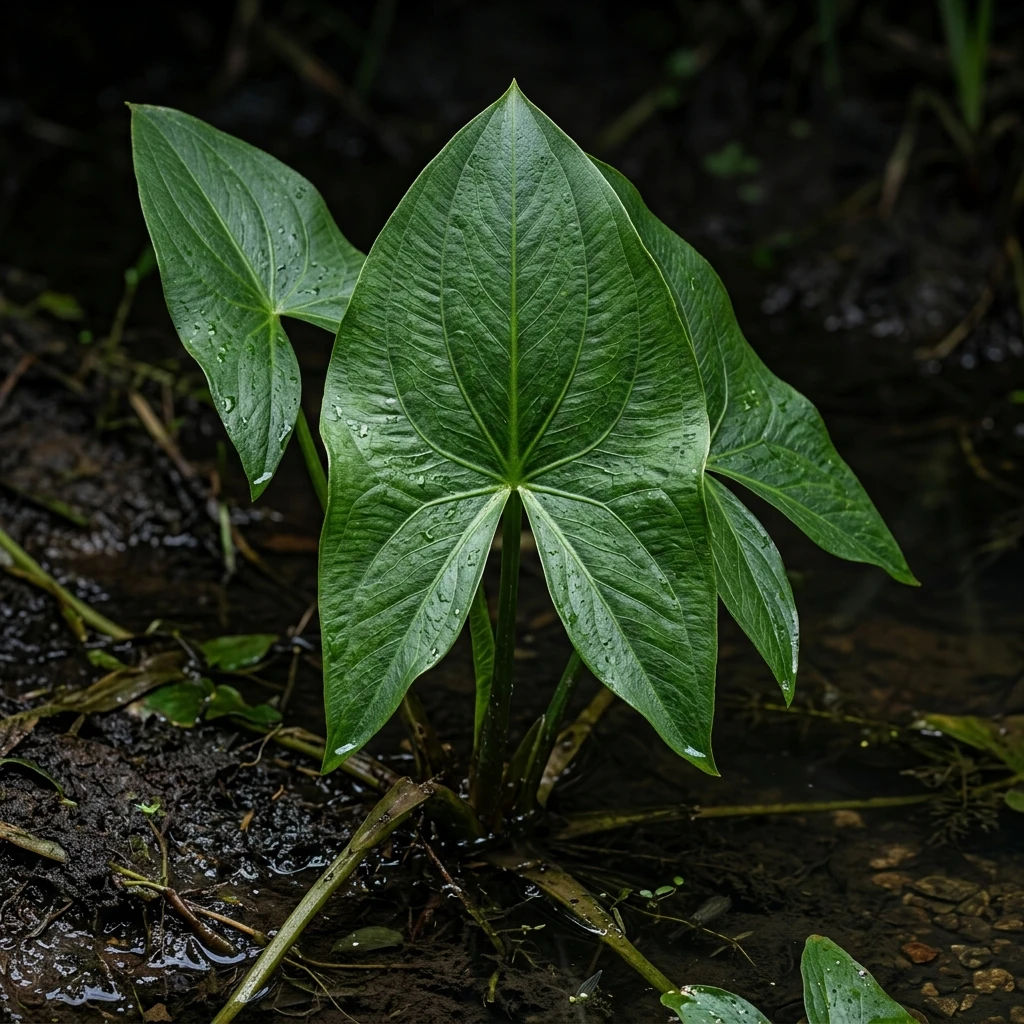
How to Identify Broadleaf Arrowhead
Broadleaf Arrowhead (Sagittaria latifolia) has key botanical markers. Recognizing these features is crucial for successful aquascaping and thriving growth.
-
✔
Visual Shape & Growth: Upright vertical clumps of striking arrowhead-shaped green leaves, with whorls of three-petaled white flowers.
-
✔
Leaf Morphology: Broad, glossy green leaves shaped exactly like classic arrowheads (up to 8-12 inches long) with prominent veins.
-
✔
Root & Anchoring Structure: Fibrous roots spreading from a central crown, producing runners that terminate in rounded starch-rich tubers.
Complete Cultivation & Spawning Guide
Follow our detailed scientific water parameters and care guides to keep your Broadleaf Arrowhead thriving.
Common Diseases & Treatment
Leaf Rust
Symptoms: Small, powdery orange-brown pustules develop on the leaves, causing premature yellowing and leaf drop.
Tuber Rot
Symptoms: The rounded edible tubers turn soft, gray-brown, and decay in stagnant, highly compacted anaerobic mud.
Frequently Asked Questions
Q: Why is it called Duck Potato?
A: The plant produces round, starchy underground tubers that resemble small potatoes, which are a major, highly sought-after food source for ducks and geese.
Q: Can it grow inside a standard home aquarium?
A: Only as a juvenile. Its massive emersed arrowhead leaves will quickly grow out of the top of the tank, requiring open-top setups with high-intensity light.
Q: Is Broadleaf Arrowhead invasive?
A: In small garden ponds, it can spread rapidly via creeping runners. Plant it in plastic containers to restrict root spreading.
Q: Are the tubers edible for humans?
A: Yes! When cooked, the roasted tubers taste similar to potatoes and sweet chestnuts, and were a historic food source for Native Americans.