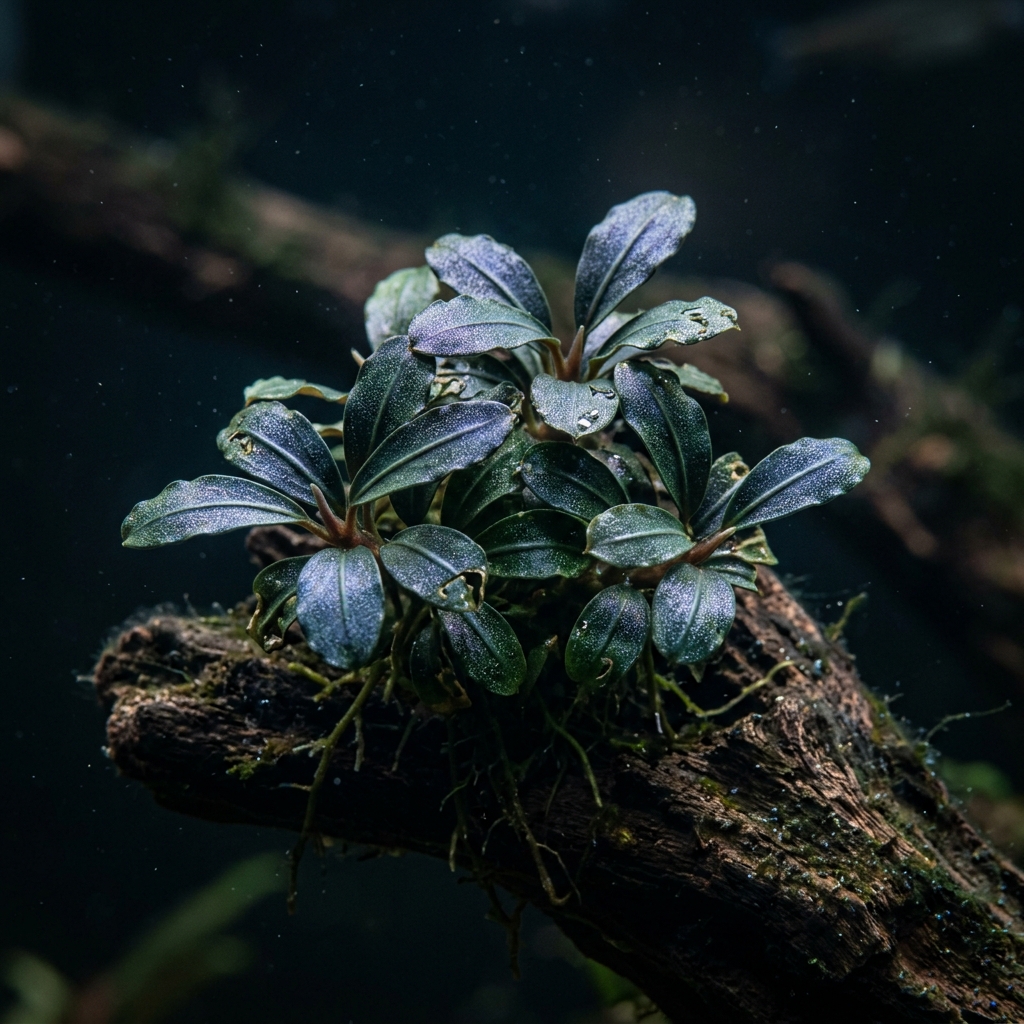
Bucephalandra
Scientific Name: Bucephalandra sp.
Bucephalandra is the absolute luxury of the aquascaping world, a highly sought-after slow-growing epiphyte endemic to the fast-flowing mountain streams of Borneo. Prized for its thick, leathery vertical dark leaves that shimmer with a breathtaking metallic blue, violet, or bronze sheen under light, this majestic plant anchors to rocks and driftwood, adding a spectacular, wild treasure-like look to any aquascape.
Lighting Needs
Low to Moderate
Water Parameters
Aquatic, Soft Acidic (pH 5.5-7.0)
Optimal Substrate
Epiphytic (Driftwood / Rock)
Hardy Temperature
18°C - 26°C
Toxicity Level
Pet Friendly (Non-toxic)
How to Identify Bucephalandra
Use our structural morphological markers to verify the identity of your Bucephalandra in any local nursery or wild wetland:
-
✔
Overall Visual Shape: Compact vertical clusters of dark, thick waxy leaves with gorgeous metallic iridescent speckles reflecting blue, violet, or bronze.
-
✔
Leaf Morphology: Narrow, obovate waxy leaves with highly wavy margins and miniature shining stomata-like white dots (iridescent pearls).
-
✔
Root & Anchoring Structure: Extremely thick, woody horizontal creeping rhizomes and strong anchoring roots that bind tightly to wood or stone.
Complete Cultivation & Spawning Guide
Follow our detailed scientific water parameters and care guides to keep your Bucephalandra thriving.
pH: 5.5 - 7.0, GH: 2 - 10 dGH. Highly prefers soft, slightly acidic water with active buffering substrates.
Moderate to High. Pressurized CO2 injection is highly recommended to stimulate its slow growth and induce intense metallic blue coloration.
Low to Moderate. Too intense lighting will scorch the leaves and cover them with stubborn black beard algae.
Clip the thick horizontal rhizome into sections containing at least 3-4 leaves using a sharp blade to propagate.
A heavy water-column feeder. Relies on comprehensive liquid macro and micro nutrients; substrate tabs are secondary.
Do not bury the woody rhizome in soil! Tie, glue, or wedge it onto lava rocks or wood. Submerging rhizome leads to rapid rot.
Optimal temperature is 18°C to 26°C (64.4°F - 78.8°F). Extremely heat sensitive; starts melting above 28°C.
Requires steady water circulation. Good current prevents organic silt and algae spores from landing on waxy leaves.
Its tough, thick, waxy leaves are completely fish-proof. Provides excellent hiding and climbing zones for dwarf shrimps.
Prone to slow-growing spot algae. Deploy Amano shrimp and Nerite snails to keep the waxy leaf blades clean.
Best attached to midground rocks or roots. Leave spacing of 3 to 4 inches from neighboring clumps to allow perfect spread.
Common Diseases & Treatment
🚨 Rhizome Melt (Rot)
Common Cause: The woody horizontal rhizome turns soft, black, and decomposes, losing all its waxy leaves.
Professional Cure: Rhizome was buried in substrate, suffocating it. Snip rotted tissue immediately, perform a water change, and glue it onto hardscape.
🚨 Metallic Color Fading
Common Cause: Leaves lose their beautiful blue-violet sheen, turning a dull, plain green.
Professional Cure: Insufficient carbon dioxide or lack of iron. Supply gas CO2 and increase water column comprehensive liquid iron dosing.
Frequently Asked Questions
❓ Can I plant Bucephalandra in the substrate?
No. Burying its roots or creeping rhizome in sand, gravel, or soil will suffocate the plant, leading to rapid rhizome rot. Always secure it onto driftwood or rocks.
❓ Why does it have a metallic blue shine?
The metallic sheen is a highly specialized evolutionary adaptation to deep-shade riverbeds. It uses special cell structures that refract light, creating a sparkling iridescent appearance under water.
❓ How do I induce intense coloration?
Provide consistent pressurized CO2 injection, moderate full-spectrum lighting, comprehensive liquid iron/trace mineral dosing, and maintain water under 25°C.
❓ Is it safe for dwarf shrimps?
Yes! Shrimps love grazing on its thick, waxy, wave-edged leaf blades, keeping them clean of dust and micro-algae.