Cattail Growing & Care Guide
Broadleaf Cattail is an iconic, ultra-hardy vertical marginal plant native to wetlands globally. It is famous for its tall, grass-like leaves and distinctive, sausage-like velvety brown flower spikes. Growing up to 6-8 feet, it is a powerhouse bio-filter and soil stabilizer, but is highly vigorous and best suited for large ponds or contained bog gardens where its robust roots can be restricted.





How to Identify Cattail
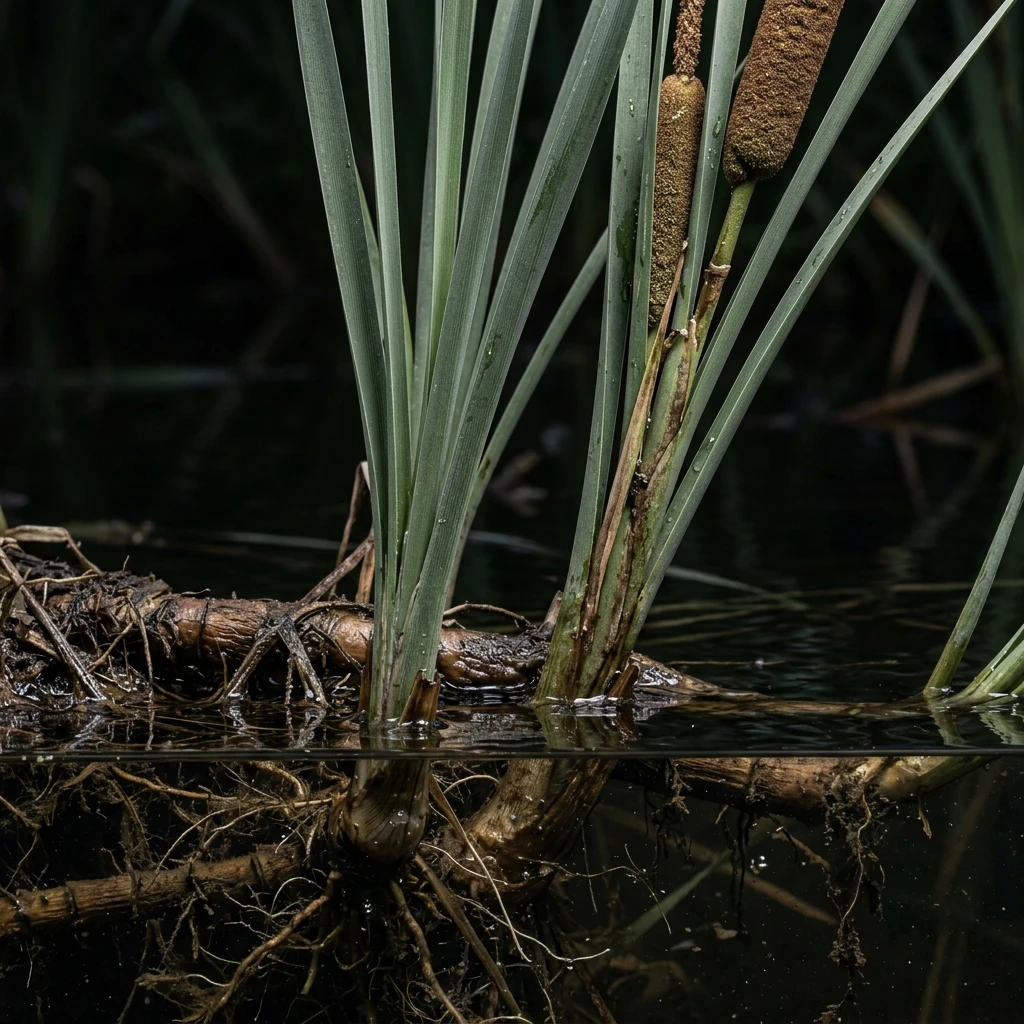
Cattail (Typha latifolia) has key botanical markers. Recognizing these features is crucial for successful aquascaping and thriving growth.
-
✔
Visual Shape & Growth: Very tall, upright grass-like clumps with unique sausage-shaped velvety brown seed heads at the tips.
-
✔
Leaf Morphology: Long, flat, blade-like grayish-green leaves (up to 6 feet tall) that sway gracefully in the wind.
-
✔
Root & Anchoring Structure: Incredibly robust, creeping horizontal rhizomes that form dense, interlocking root mats.
Complete Cultivation & Spawning Guide
Follow our detailed scientific water parameters and care guides to keep your Cattail thriving.
Common Diseases & Treatment
Rhizome Rot
Symptoms: Creeping rhizomes turn soft, black, and decompose in stagnant, highly compacted anaerobic mud.
Cattail Rust (Fungal)
Symptoms: Powdery orange spots scatter across the long leaves, causing leaf tips to wither and turn brown prematurely.
Frequently Asked Questions
Q: Why are my Cattails spreading everywhere?
A: Cattails are highly aggressive growers that spread via robust creeping rhizomes. Always plant them in heavy plastic containers to restrict root spread in small ponds.
Q: When do the brown seed heads appear?
A: The sausage-shaped velvety brown seed heads develop in mid-summer and last through autumn, eventually bursting into white fluffy seeds.
Q: Are Cattails edible?
A: Yes! Almost every part of the Cattail is edible. The creeping rhizomes can be processed into flour, the young shoots taste like asparagus, and the pollen is highly nutritious.
Q: Can it grow in dry soil?
A: No. Cattails are obligate wetland plants that require constantly saturated soil or standing water. They will wilt and die quickly in dry soil.