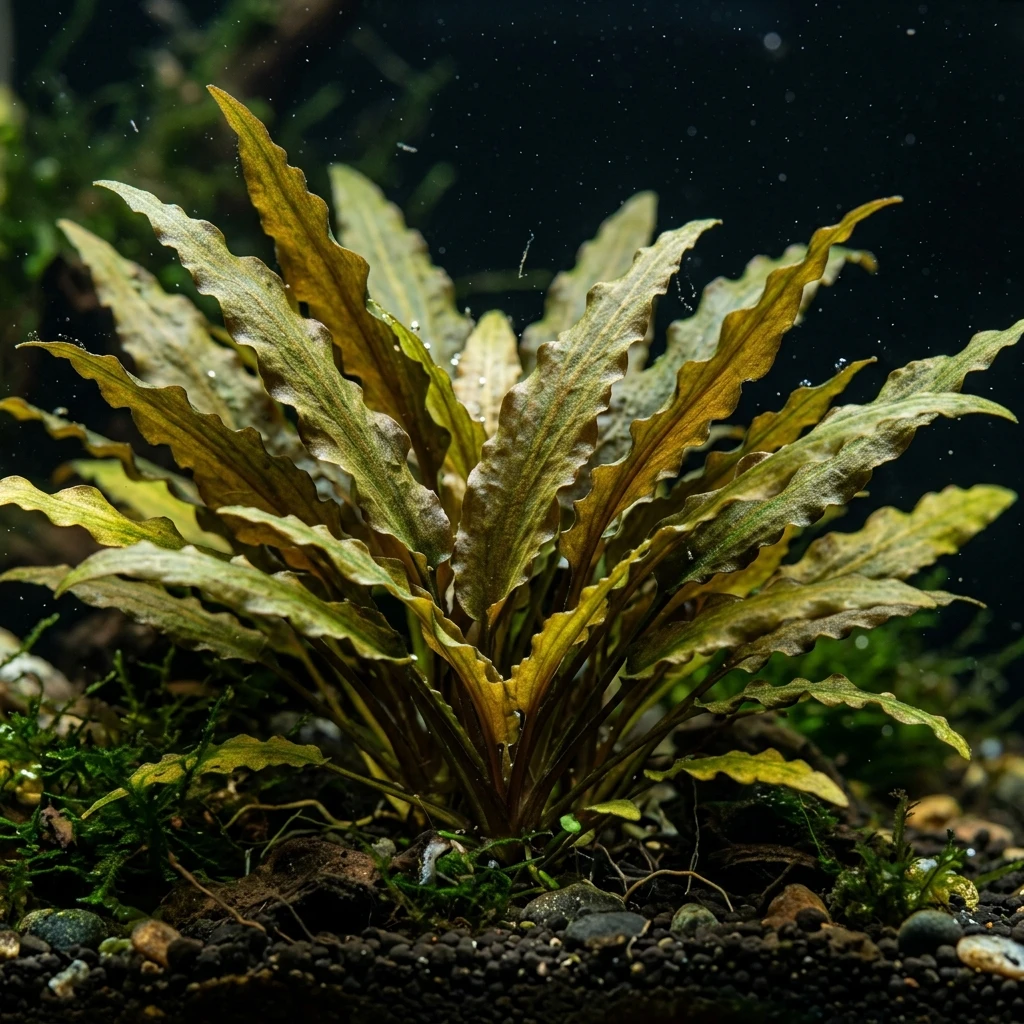
Cryptocoryne lutea

Crypt Lutea Growing & Care Guide

Crypt Lutea is a vertical, compact midground species native to Sri Lanka, prized for its narrow bright green leaves and stable, easy-to-grow constitution. It is highly valued for low-tech setups, forming dense, upright grass-like clumps that require very little light or maintenance.


Lighting Icon
Lighting Low to Moderate
Water Hardness Icon
Water Hardness Aquatic (pH 6.0-8.0)
Substrate Icon
Substrate Sand or gravel
Temperature Icon
Water Temp 20°C - 28°C
Toxicity Warning Icon
Toxicity Pet Friendly (Non-toxic)
Botanical macro photography of Crypt Lutea (Cryptocoryne lutea) - Plant AI care database

How to Identify Crypt Lutea

Crypt Lutea (Cryptocoryne lutea) has key botanical markers. Recognizing these features is crucial for successful aquascaping and thriving growth.

  • Visual Shape & Growth: Upright, compact rosette of vertical narrow green leaves.
  • Leaf Morphology: Slender, vertical bright-green leaves (approx. 4-6 inches tall) with clean margins.
  • Root & Anchoring Structure: Extremely strong, extensive root network that anchors deeply into sand or gravel.
💡 Plant AI Tip: Take a photo with Plant AI to identify aquatic weeds and diagnose fungal spot diseases in 1 second.

Complete Cultivation & Spawning Guide

Follow our detailed scientific water parameters and care guides to keep your Crypt Lutea thriving.

pH: 6.0 - 8.0, GH: 4 - 15 dGH. Adaptable to soft or moderately hard freshwater setups.
Low. Grows perfectly without CO2. Supplemental liquid carbon can be dosed occasionally to assist growth.
Low to moderate lighting. High lighting will cover its large leaves with unsightly spot algae.
Cut away dead or algae-covered leaves at the stem base. Cut the main rhizome into sections with a sterilized blade to propagate.
A heavy root feeder. Requires nutrient-rich substrate. Insert root fertilizer tabs near the base every few months.
Plant in sand, gravel, or aquasoil. Ensure the green crown (base of leaves) is completely above the substrate.
Optimal temperature is 20°C to 28°C (68°F - 82°F). Sensitive to sudden cold water shocks during tank maintenance.
Enjoys moderate current. Steady water flow delivers essential water column nutrients to its opposite leafy rosettes.
Its tough texture and bitter taste make it highly resistant to plant-eating fish. Safe for community setups.
Slow growth makes it susceptible to hair algae. Keep water clean and employ Amano shrimps or Nerite snails.
Best planted in the mid-ground. Space individual crowns 2 to 3 inches apart in the background.

Is your Crypt Lutea melting, turning yellow or rotting?

Avoid relocation, keep the crown above gravel, and insert substrate root fertilizer tabs.

Diagnose My Aquatics

Common Diseases & Treatment

Crypt Melt (Bacterial/Shock)

Symptoms: The stout green rhizome turns soft, black, and decomposes, losing all its leaves.

Action: Prune rotted tissue immediately, dip in dilute hydrogen peroxide, or discard infected specimens to prevent spread.

Crown Suffocation

Symptoms: Leaves rot at the base and float away.

Action: Caused by planting the crown too deeply in the gravel. Pull the plant upward until the green crown base is visible.

Frequently Asked Questions

Why is my Crypt Lutea melting?

Crypts are highly sensitive to sudden changes in water chemistry or temperature. Overdosing chemicals or moving it to a vastly different tank will cause a massive leaf drop.

Can it grow out of water?

Yes! In high-humidity environments like terrariums or paludariums, it grows happily emersed, often producing beautiful flowers.

Why is my Crypt Lutea losing leaves?

This is usually caused by burying the rhizome in substrate, which suffocates the plant. Always keep the creeping green rhizome above gravel or sand.

How fast does it grow?

Under moderate light and nutrients, it is a moderate grower, typically producing one new leaf every 7 to 10 days.

Master advanced aquascaping. Start today!

Get Started for Free