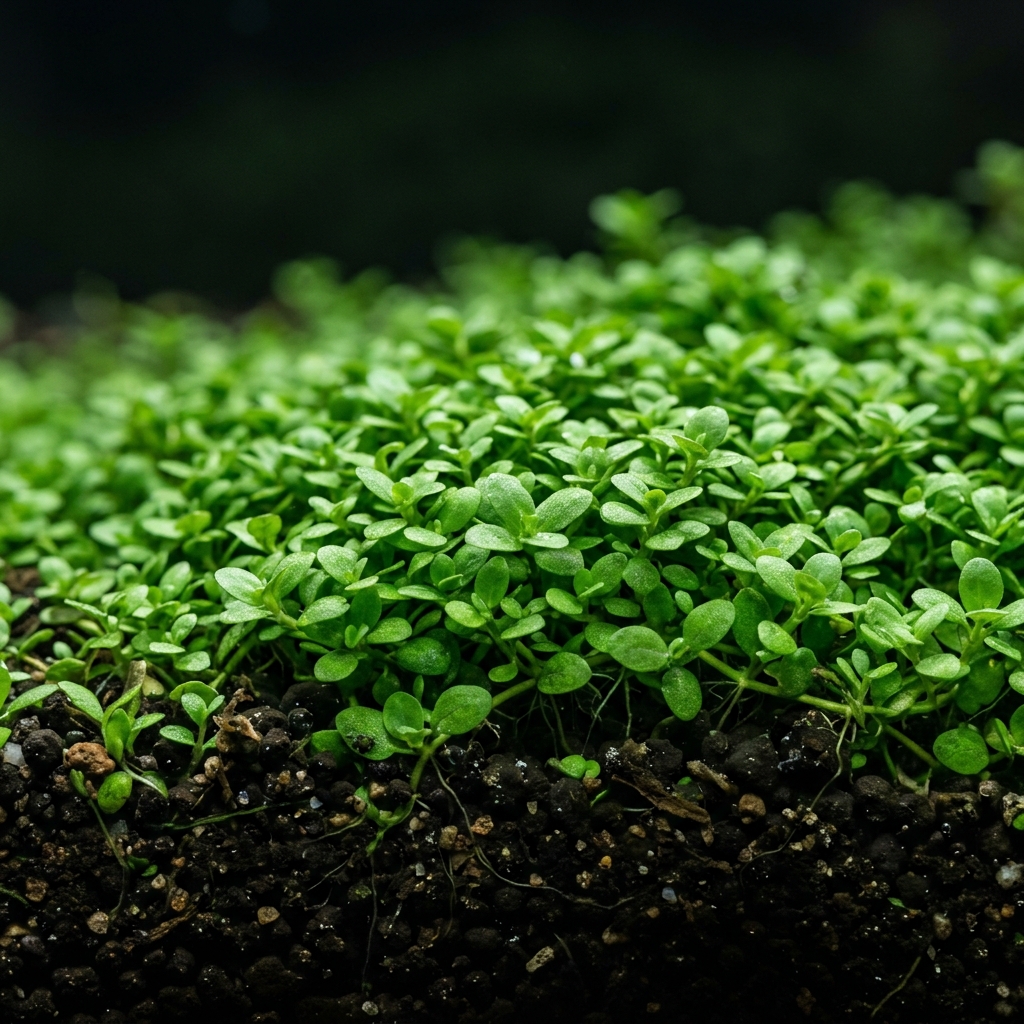
Hemianthus callitrichoides 'Cuba'

Dwarf Baby Tears Growing & Care Guide

Dwarf Baby Tears is the smallest, most sought-after aquarium carpeting plant in the world, prized for forming dense, light-green grass lawns. Native to Cuba, this spectacular foreground carpet is famous for trapping tiny pearling bubbles, creating a brilliant, shimmering landscape that serves as the gold standard of professional aquascaping.


Lighting Icon
Lighting High (Requires CO2)
Water Hardness Icon
Water Hardness Aquatic (pH 6.0-7.0)
Substrate Icon
Substrate Nutrient-rich aquasoil
Temperature Icon
Water Temp 20°C - 28°C
Toxicity Warning Icon
Toxicity Pet Friendly (Non-toxic)
Botanical macro photography of Dwarf Baby Tears (Hemianthus callitrichoides 'Cuba') - Plant AI care database

How to Identify Dwarf Baby Tears

Dwarf Baby Tears (Hemianthus callitrichoides 'Cuba') has key botanical markers. Recognizing these features is crucial for successful aquascaping and thriving growth.

  • Visual Shape & Growth: Extremely low, tight creeping carpet of tiny, round light-green leaves.
  • Leaf Morphology: 袖珍-sized leaves, only 1-2 millimeters wide, growing in dense opposite pairs along delicate stems.
  • Root & Anchoring Structure: Very fine, shallow root network designed to anchor in nutrient-rich soft clay beds.
💡 Plant AI Tip: Take a photo with Plant AI to identify aquatic weeds and diagnose fungal spot diseases in 1 second.

Complete Cultivation & Spawning Guide

Follow our detailed scientific water parameters and care guides to keep your Dwarf Baby Tears thriving.

pH: 6.0 - 7.0, GH: 4 - 10 dGH. Requires soft, clean water with low carbonate levels. High organic waste triggers leaf decay.
Extremely high. Pressurized CO2 injection (at least 20-30 ppm) is mandatory. It will starve and fail to carpet in low-tech setups.
Requires high-intensity lighting (at least 1.0 watt/liter). Insufficient light will cause the plant to grow vertically and slowly die off.
Trim regularly with curved spring scissors to maintain a thin, flat carpet (under 1 inch). Thick layers will suffocate and lift off the substrate.
Heavy water column feeder. Requires comprehensive dosing of NPK liquid fertilizers and weekly iron to prevent yellowing.
Demands nutrient-rich, fine aquasoil (like powder type). Inert sand offers poor anchoring and lacks crucial root nutrients.
Thrives in warm tropical water between 20°C and 28°C (68°F - 82°F). Sensitive to high temperatures above 29°C.
Enjoys moderate, steady water circulation at the substrate level to deliver carbon and micro-nutrients to all tiny leaves.
Ideal for nano community fish and dwarf shrimps. Avoid large cichlids, goldfish, or bottom-dwelling loaches that will easily dig up the carpet.
Highly prone to catching hair algae due to high light and fertilization. Maintain a heavy clean-up crew of Amano shrimps and Nerite snails.
Separate the pot into tiny plugs (approx. 5-8 stems). Plant plugs 1 inch apart deep in the substrate using fine tweezers.

Are your Dwarf Baby Tears turning yellow, lifting or melting away?

Achieve a tight green lawn. Secure strong PAR lighting, inject pressurized CO2, and plant in fine aquasoil.

Diagnose My Aquatics

Common Diseases & Treatment

Carpet Suffocation & Lifting

Symptoms: The bottom layer of the carpet turns brown and rots, causing the entire green patch to float to the surface.

Action: Occurs when the carpet grows too thick (over 1 inch), preventing light and water flow from reaching the bottom. Prune regularly.

Hair Algae Choking

Symptoms: Green thread-like hair algae wraps around the tiny leaves, suffocating the carpet.

Action: Caused by nutrient imbalances and fluctuating CO2. Spot treat with liquid carbon or excel, and add Amano shrimp.

Frequently Asked Questions

How do I keep Dwarf Baby Tears from floating?

Plant in very small plugs deep into fine aquasoil, leaving only a few leaves exposed. Trim regularly to prevent it from growing too thick and becoming buoyant.

Is CO2 mandatory for HC Cuba?

Yes, pressurized CO2 injection is virtually mandatory to grow a healthy, dense carpet. Without CO2, it will wither and fail.

Why is my Dwarf Baby Tears turning yellow?

Yellowing indicates a nutrient deficiency, usually iron or nitrogen, or insufficient lighting. Increase liquid fertilizer dosing and check light PAR.

Can I grow it in dry start method?

Yes! The Dry Start Method (DSM) is highly recommended for this plant, as it allows the roots to anchor firmly in damp soil before flooding the tank.

Master advanced aquascaping. Start today!

Get Started for Free