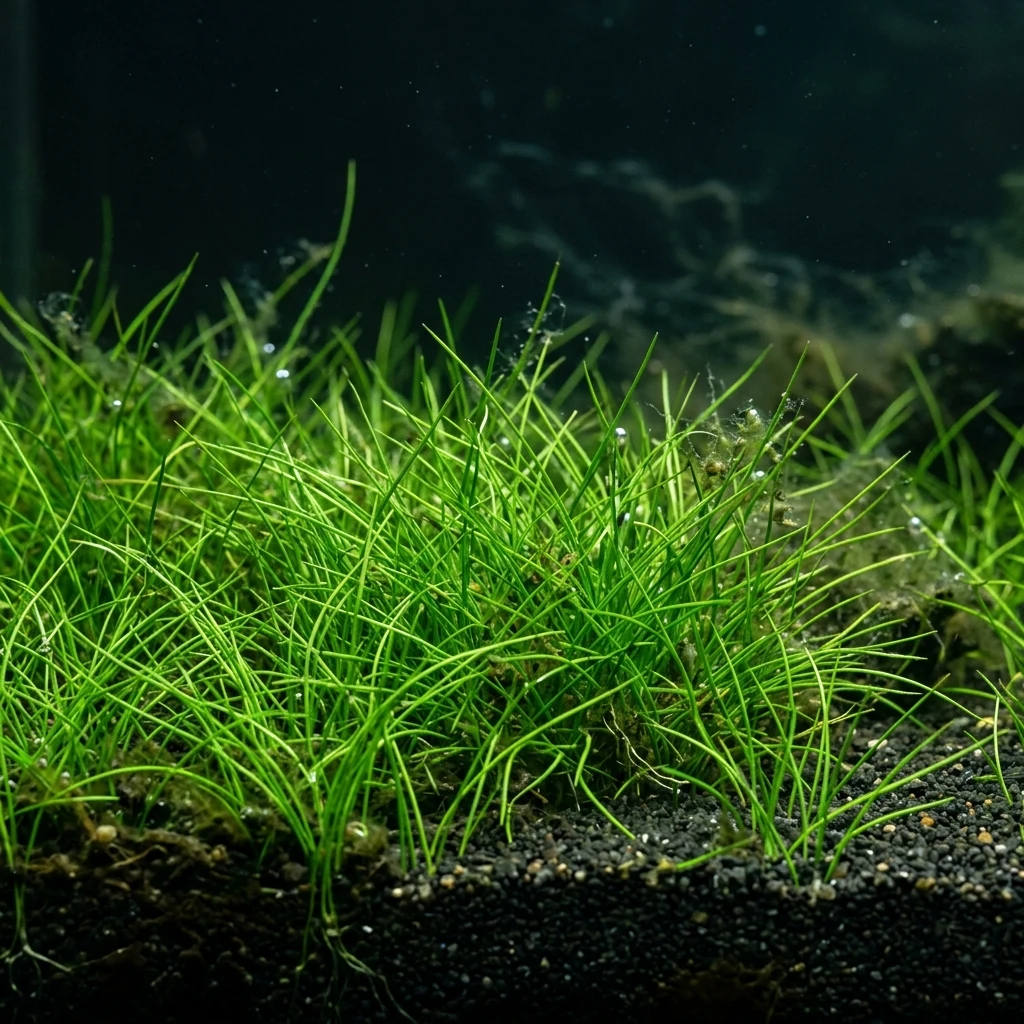
Eleocharis acicularis

Dwarf Hairgrass Growing & Care Guide

Dwarf Hairgrass is a popular foreground plant featuring needle-like leaves that create highly natural grass lawns, perfect for classic Nature Aquariums. Native to wetlands worldwide, this resilient grass propagates rapidly via runners, forming a beautiful, lush green turf that sways dynamically in the filter flow.


Lighting Icon
Lighting Moderate to High
Water Hardness Icon
Water Hardness Aquatic (pH 6.5-7.5)
Substrate Icon
Substrate Nutrient-rich soil or fine sand
Temperature Icon
Water Temp 10°C - 28°C
Toxicity Warning Icon
Toxicity Pet Friendly (Non-toxic)
Botanical macro photography of Dwarf Hairgrass (Eleocharis acicularis) - Plant AI care database

How to Identify Dwarf Hairgrass

Dwarf Hairgrass (Eleocharis acicularis) has key botanical markers. Recognizing these features is crucial for successful aquascaping and thriving growth.

  • Visual Shape & Growth: Dense green carpet of fine, vertical, hair-like grass blades creeping via runners.
  • Leaf Morphology: Very slender, needle-like bright green leaves rising directly from a dense root crown.
  • Root & Anchoring Structure: Extremely dense, creeping runner network that rapidly colonizes and binds the substrate.
💡 Plant AI Tip: Take a photo with Plant AI to identify aquatic weeds and diagnose fungal spot diseases in 1 second.

Complete Cultivation & Spawning Guide

Follow our detailed scientific water parameters and care guides to keep your Dwarf Hairgrass thriving.

pH: 6.5 - 7.5, GH: 4 - 15 dGH. Incredibly tolerant of a wide range of water parameters and hardness levels.
Moderate. Can grow in low-tech tanks, but pressurized CO2 injection significantly speeds up runner propagation and lawn density.
Moderate to high. Under strong lighting, it stays short and spreads rapidly; low light will cause it to grow tall and sparse.
Mow the grass aggressively using sharp, curved scissors, trimming it down to 0.5 inches. This stimulates rapid runner growth.
Enjoys both water column and substrate fertilization. Weekly micro-dosing keeps the grass blades vibrant green.
Prefers fine aquasoil or sand. Insert root tabs in sandy substrates to provide nitrogen and potassium to the runner roots.
Highly cold-hardy, surviving from 10°C to 28°C (50°F - 82°F). Can easily tolerate cool outdoor ponds during spring/autumn.
Enjoys steady water circulation to keep organic detritus from settling in the dense grass lawn, preventing hair algae.
Perfect for community community setups. Ideal hiding place for baby shrimp and fish fry. Safe from plant-grazers.
Its dense structure easily catches filamentous algae. Employ Amano shrimps, Otocinclus, and perform regular water changes.
Separate the pot into small plugs. Plant plugs 1 inch apart in a grid pattern. It will quickly fill in the empty spaces.

Is your Dwarf Hairgrass growing too tall, turning brown or catching algae?

Trim aggressively near the substrate, ensure strong root tabs, and maintain clean water flow.

Diagnose My Aquatics

Common Diseases & Treatment

Algae Choking

Symptoms: Hair algae wraps around the grass blades, choking out light and causing the lawn to turn brown.

Action: Reduce light duration, perform regular water changes, trim the algae-covered blades, and increase your shrimp crew.

Root Suffocation (Anaerobic)

Symptoms: Roots turn black and rot, causing the grass blades to yellow and die.

Action: Caused by compacted, anaerobic substrate. Gently vacuum the substrate and improve bottom circulation.

Frequently Asked Questions

How do I make Dwarf Hairgrass carpet faster?

Aggressive trimming is the secret. Trimming the grass blades down to 0.5 inches forces the plant to send its energy into underground runners, accelerating carpet speed.

How tall does Eleocharis acicularis grow?

Under strong light, it typically stays very short, around 1 to 2 inches. Under low light, it will stretch upward to 3 to 4 inches.

Can I grow it in sand?

Yes, but you must insert root tabs near the root crown every few months, as sand lacks the natural nutrients found in aquasoil.

Does it need CO2?

While not strictly mandatory, CO2 is highly recommended to achieve a dense, thick carpet. Without CO2, the lawn will grow very slowly.

Master advanced aquascaping. Start today!

Get Started for Free