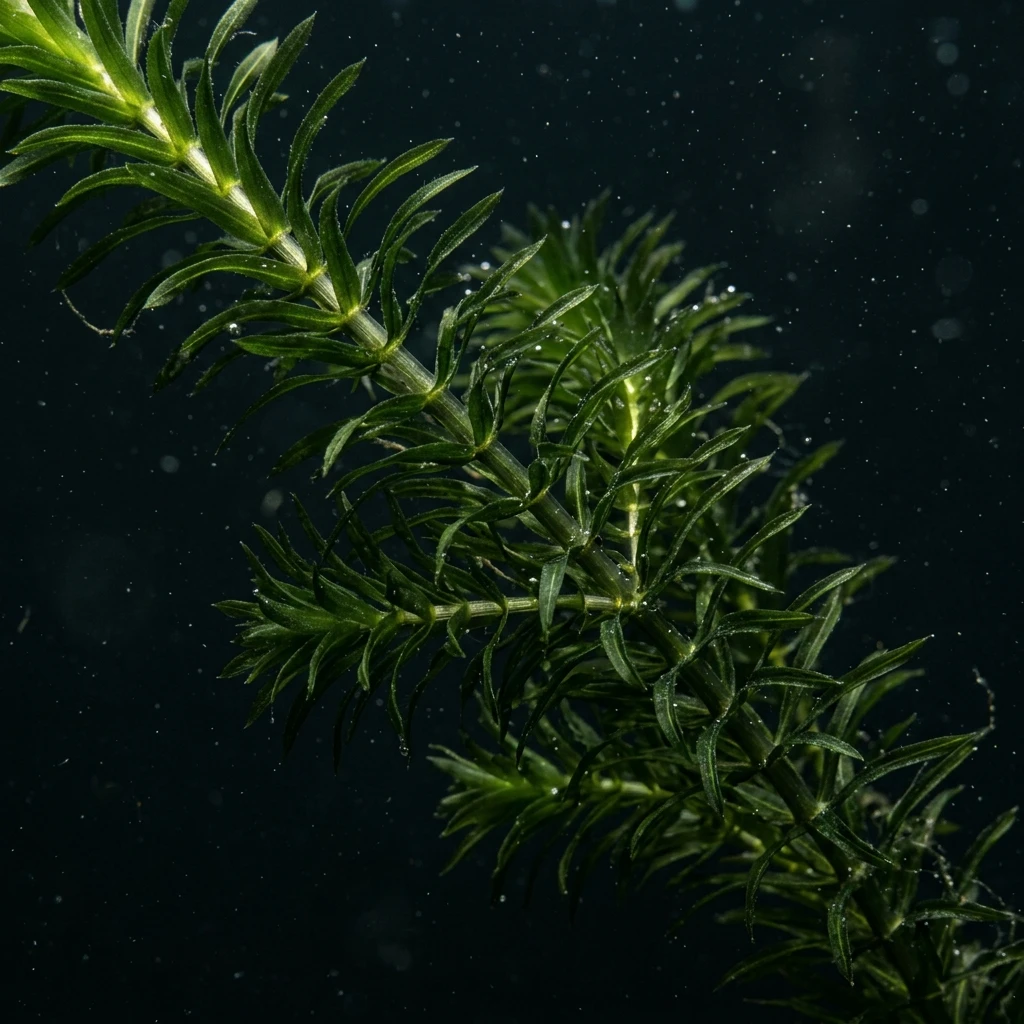
Egeria densa

Anacharis Growing & Care Guide

Anacharis, commonly known as Elodea Densa, is an exceptionally hardy, oxygenating pond and aquarium plant featuring dark-green leafy whorls that absorb waste instantly. It is globally famous for its ultimate resilience, making it the premier plant for aquarium starters, goldfish tanks, and outdoor garden ponds.


Lighting Icon
Lighting Low to Moderate
Water Hardness Icon
Water Hardness Aquatic (pH 6.5-9.0)
Substrate Icon
Substrate Floating or planted in sand
Temperature Icon
Water Temp 10°C - 26°C
Toxicity Warning Icon
Toxicity Pet Friendly (Non-toxic)
Botanical macro photography of Anacharis (Egeria densa) - Plant AI care database

How to Identify Anacharis

Anacharis (Egeria densa) has key botanical markers. Recognizing these features is crucial for successful aquascaping and thriving growth.

  • Visual Shape & Growth: Long, trailing green stems covered in dense whorls of 4 opposite curved dark-green leaves.
  • Leaf Morphology: Small, linear, bright to dark-green leaves arranged in dense whorls of 4 along a translucent green stem.
  • Root & Anchoring Structure: Very sparse, slender white anchoring roots designed to anchor in sand, though true roots are not required.
💡 Plant AI Tip: Take a photo with Plant AI to identify aquatic weeds and diagnose fungal spot diseases in 1 second.

Complete Cultivation & Spawning Guide

Follow our detailed scientific water parameters and care guides to keep your Anacharis thriving.

pH: 6.5 - 9.0, GH: 5 - 20 dGH. Strongly prefers hard, alkaline water rich in dissolved minerals.
None. Absorbs bi-carbonates directly from hard water, making CO2 injection entirely unnecessary.
Low to moderate light. Too high light combined with high temperature will cause the stems to stretch and melt.
Prune simply by snapping or cutting the stem at any point. Throw away the decaying bottom; the top section will continue growing.
Elite biological filter. Absorbs huge amounts of ammonia and nitrates directly from the water, naturally suppressing algae.
Can float freely or be anchored in sand or gravel. Do not bury too deep as the buried stem segment will eventually rot.
Strongly prefers cool water between 10°C and 26°C (50°F - 79°F). Highly cold-hardy; easily overwinter outdoors in ponds.
Tolerates any water current. Steady flow delivers essential water column nutrients to its opposite leafy whorls.
Perfect for community fish and ponds. Its fast growth outpaces grazing by goldfish and pond snails.
Secretes natural allelopathic compounds that actively suppress the growth of blue-green algae and cyanobacteria.
Highly sensitive to liquid carbon Excel (glutaraldehyde), which destroys its cell walls, causing the plant to melt completely.

Is your Anacharis turning white, melting or shedding its whorls?

Lower your water temperature, stop liquid carbon Excel dosing, and provide steady light.

Diagnose My Aquatics

Common Diseases & Treatment

Anacharis Melt (Chemical/Heat Shock)

Symptoms: Stems turn white, translucent, mushy, and dissolve completely into a messy pulp.

Action: Caused by temperatures above 27°C or dosing liquid carbon (Excel). Stop chemical dosing and lower water temperature immediately.

Chlorosis (Mineral Deficient)

Symptoms: Leaf whorls turn pale yellow-green and grow very sparse.

Action: Indicates lack of trace minerals. Dose comprehensive liquid trace elements weekly.

Frequently Asked Questions

Why is my Anacharis melting and turning white?

Anacharis melts when exposed to high water temperatures (above 27°C) or when liquid carbon (Excel) is dosed. It is highly sensitive to glutaraldehyde.

Does Anacharis need substrate or roots?

No. It doesn't need roots or soil. It can absorb all nutrients through its leaves. It can float freely at the surface, which is ideal for ponds.

How fast does Anacharis grow?

Very fast. In cool, nutrient-rich water, it can grow up to 1 to 2 inches a day, rapidly outcompeting algae for nutrients.

Is Anacharis legal in all US states?

No, because of its extreme hardiness, it has become invasive in several states. Trade is restricted in states like Washington and Oregon. Check local laws.

Master advanced aquascaping. Start today!

Get Started for Free