Eriocaulon Cinereum Growing & Care Guide
Eriocaulon Cinereum, also known as the Spinehead or Sea Urchin plant, is a spectacular, ultra-demanding foreground species native to tropical wetlands of Asia. PRIZED for its unique, ball-shaped rosette of vertical needle-like leaves, it resembles a miniature green sea urchin. It requires pressurized CO2, very soft acidic water, and rich nutrients, serving as an elite focal point in professional layouts.





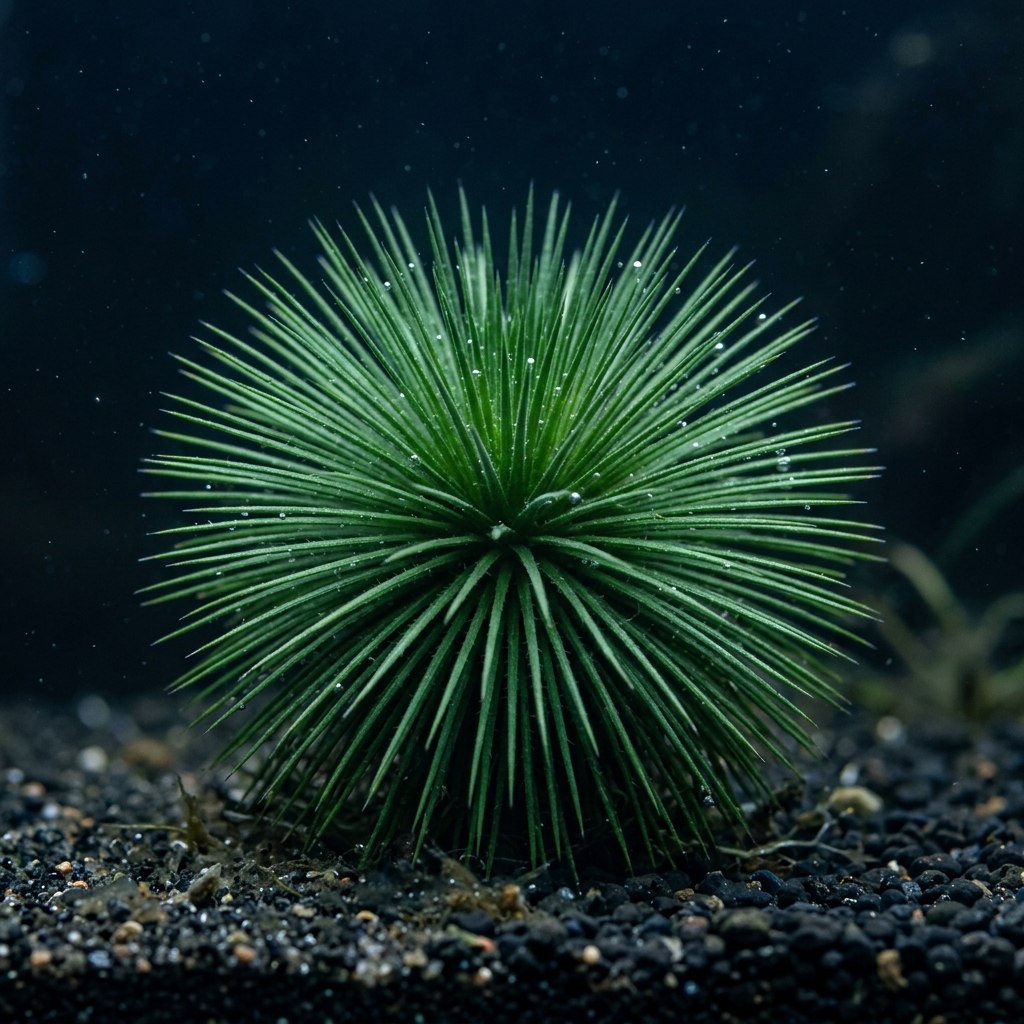
How to Identify Eriocaulon Cinereum
Eriocaulon Cinereum (Eriocaulon cinereum) has key botanical markers. Recognizing these features is crucial for successful aquascaping and thriving growth.
-
✔
Visual Shape & Growth: Compact, perfect spherical rosette of stiff, vertical green needle-like leaves resembling a sea urchin.
-
✔
Leaf Morphology: Very stiff, linear-lanceolate green needle leaves (approx. 2-3 inches tall) radiating from a central root crown.
-
✔
Root & Anchoring Structure: Extremely large, massive white roots that grow several times larger than the plant itself.
Complete Cultivation & Spawning Guide
Follow our detailed scientific water parameters and care guides to keep your Eriocaulon Cinereum thriving.
Common Diseases & Treatment
Sudden Melting
Symptoms: The central growing point turns black and mushy, causing newly emerging leaves to rot immediately.
Premature Flowering
Symptoms: The rosette stops growing leaves and shoots up multiple tall white flower spikes (spines).
Frequently Asked Questions
Q: Why is my Eriocaulon shooting white spikes?
A: Eriocaulon shoots flower spikes (spines) when it is stressed, typically due to low nitrogen or sudden water parameter shocks. Cut the spikes off to force leaf growth.
Q: How do I propagate Eriocaulon?
A: When the plant grows large, it will naturally split into two or three crowns. Carefully uproot it, split the crowns using a razor blade, and replant.
Q: Does it need extremely soft water?
A: Yes! Eriocaulon cinereum will quickly melt and die in hard water. Use RO (Reverse Osmosis) water to maintain a GH of 1 to 4.
Q: How fast does it grow?
A: It is an extremely slow grower, typically producing only one or two new needle-like leaves every week.