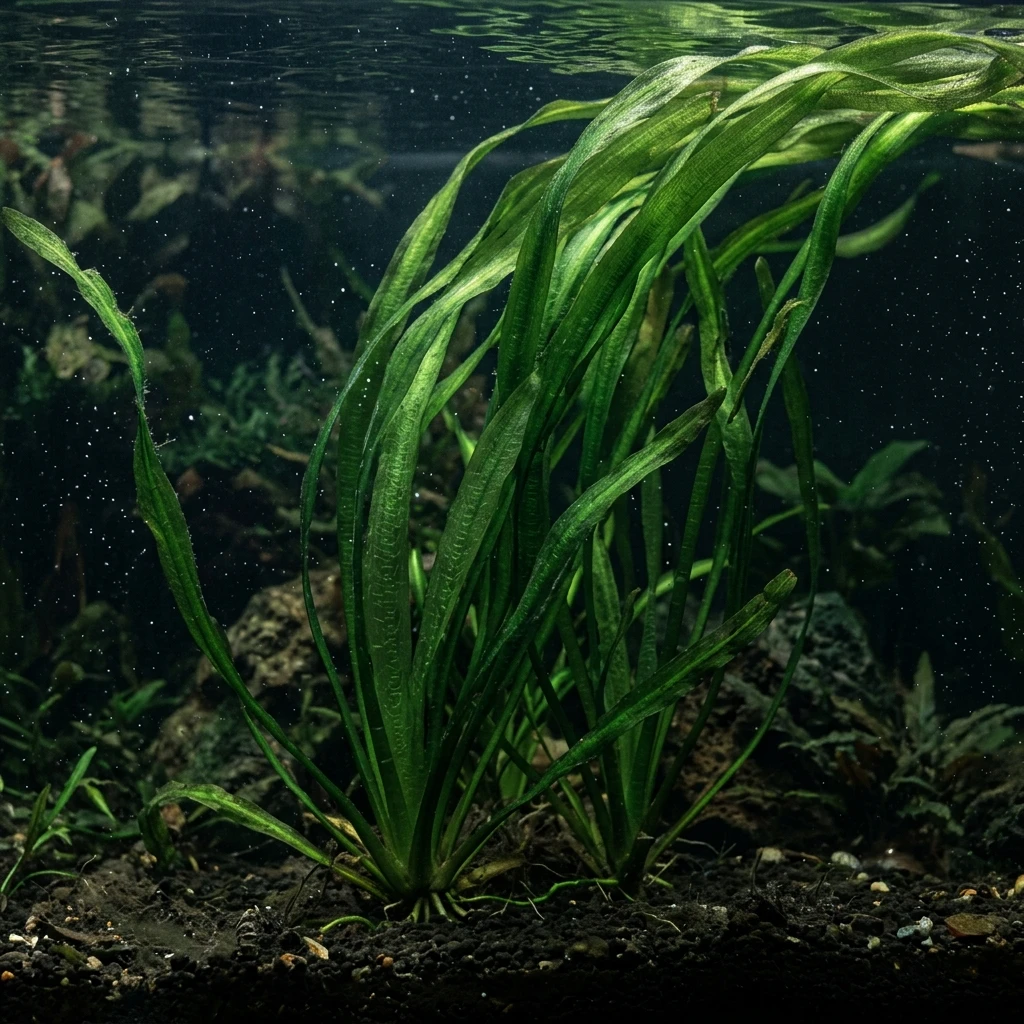
Jungle Val
Scientific Name: Vallisneria gigantea
Jungle Val is the absolute ruler of background aquascapes, famous for its majestic, translucent vertical dark-green ribbon leaves that can easily grow up to 6 feet long. Native to deep rivers in Southeast Asia and Australia, this robust rosette plant creates dramatic curtain effects under steady currents, providing an incredibly secure natural sanctuary for large and active fish species.
Lighting Needs
Low to High
Water Parameters
Aquatic (pH 6.5-8.0)
Optimal Substrate
Sand, gravel or rich substrate
Hardy Temperature
18°C - 30°C
Toxicity Level
Pet Friendly (Non-toxic)
How to Identify Jungle Val
Use our structural morphological markers to verify the identity of your Jungle Val in any local nursery or wild wetland:
-
✔
Overall Visual Shape: Massive, translucent vertical green ribbon-like leaves reaching up to 6 feet long.
-
✔
Leaf Morphology: Long, linear ribbon-like light green leaves with dynamic serrated tips that flow beautifully in high current.
-
✔
Root & Anchoring Structure: Incredibly strong, thick white runner roots that anchor deeply and spread widely under substrate.
Complete Cultivation & Spawning Guide
Follow our detailed scientific water parameters and care guides to keep your Jungle Val thriving.
pH: 6.5 - 8.0, GH: 5 - 20 dGH. Highly prefers moderately hard to hard freshwater setups with carbonate buffering.
Low. Grows perfectly without pressurized CO2. Highly sensitive to liquid glutaraldehyde (liquid carbon) which will melt it.
Low to High. Exceptionally versatile; thrives in deep shade but grows rapidly and thickly under bright full-spectrum lights.
Do not cut the leaf tips horizontally, as the cut will rot! Instead, prune the entire leaf at the very base near the crown.
Requires heavy liquid iron and potassium. Avoid copper-heavy fertilizers if housing delicate ornamental shrimps.
Needs a deep substrate bed (at least 2 inches) of sand or fine gravel, enriched with iron root tabs to support heavy feeding.
Optimal temperature is 18°C to 30°C (64.4°F - 86°F). Outstanding heat tolerance, surviving hot summer peaks.
Enjoys strong current. Heavy water circulation displays its elegant ribbon leaves beautifully and distributes nutrients.
Its tough, fibrous, celery-like texture makes it highly resistant to herbivorous fish like goldfish or silver dollars.
Prone to hair algae due to broad leaves. Deploy Siamese Algae Eaters, Nerite snails, or Amano shrimps to keep leaves spotless.
Best planted in the absolute background. Space crowns 2 to 3 inches apart, keeping the green crown base visible above soil.
Common Diseases & Treatment
🚨 Liquid Carbon Shock (Melting)
Common Cause: Leaves turn yellow, translucent, and completely dissolve within days.
Professional Cure: Highly sensitive to glutaraldehyde based algaecides. Discontinue chemical liquid carbon dosing immediately; use gas CO2 instead.
🚨 Iron Chlorosis
Common Cause: Newly emerging ribbon leaves appear pale green, white, or completely transparent.
Professional Cure: Severe iron deficiency. Increase water column chelated iron dosing and insert iron-rich root tabs directly into the substrate.
Frequently Asked Questions
❓ Does Jungle Val need pressurized CO2?
No. It is exceptionally hardy and can easily extract bi-carbonates from hard water for carbon, making it ideal for low-tech tanks.
❓ Can I trim the leaves like grass?
It is highly recommended not to prune leaves in half. Cutting a leaf tip causes the rest of that leaf to slowly yellow and decay. Always pinch off the entire leaf at the base of the crown.
❓ Why is my Jungle Val melting?
It usually melts due to liquid carbon dosing (such as Excel) or sudden shocks in salinity. Ensure water parameters are kept stable.
❓ Can it grow in a pure sand bed?
Yes, but since sand contains no nutrients, you must insert root fertilizer tabs near the base every few months to support its massive root system.