Java Moss Growing & Care Guide
Java Moss is the most famous and widely used aquatic moss globally. Exceptionally hardy and versatile, it forms beautiful vibrant green carpets, wall coverings, or tree-like scapes, providing vital hiding spots and spawning nests for aquarium fish and shrimps.





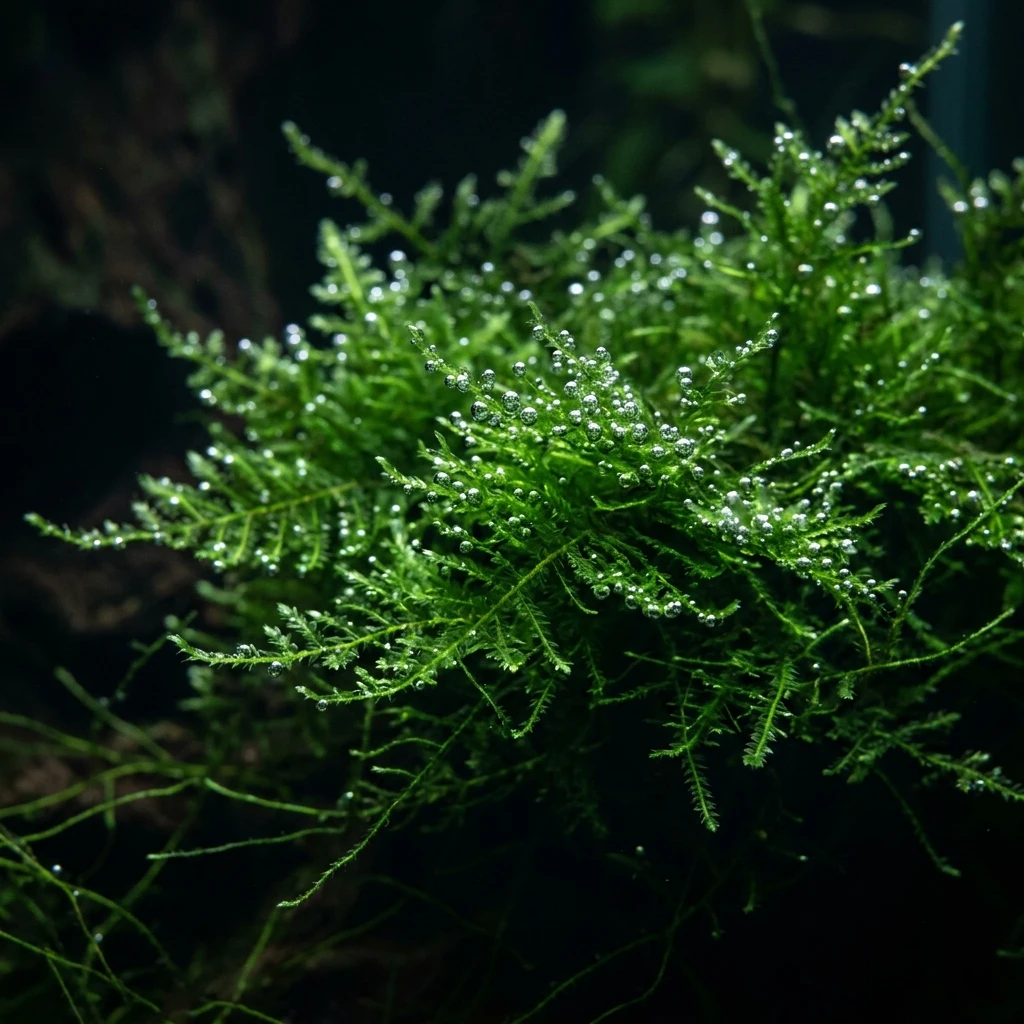
How to Identify Java Moss
Java Moss (Taxiphyllum barbieri) is an iconic aquatic species. Recognizing its key structures is crucial for successful aquascaping and thriving growth.
-
✔
Visual Shape & Growth: Dense, tangled clumps of small, delicate, overlapping green leaves on creeping stems.
-
✔
Leaf Morphology: Teeny-tiny, pointed leaves arranged in flat rows along fine, highly branched green threads.
-
✔
Root & Anchoring Structure: Lacks true roots; uses microscopic rhizoids to latch securely onto almost any hard surface.
Complete Cultivation & Spawning Guide
Follow our detailed scientific water parameters and care guides to keep your Java Moss thriving.
Common Diseases & Treatment
Moss Browning (Suffocation)
Symptoms: Inner layers of moss turn brown, die, and detach from the wood/rocks.
Hair Algae Infestation
Symptoms: Thread-like green algae wraps around the moss, suffocating it.
Frequently Asked Questions
Q: Why is my Java Moss turning brown?
A: Browning is usually caused by lack of light in the inner layers of a thick clump, detritus accumulation, or high temperatures above 30°C. Trim it regularly to keep it healthy.
Q: How do you attach Java Moss to wood?
A: Spread the moss very thinly over the wood, then wrap it tightly with sewing thread or fishing line. The thread will dissolve or get hidden once the moss grows.
Q: Can Java Moss grow out of water?
A: Yes! In high-humidity setups like terrariums, paludariums, or on damp soil, it can grow as a lush terrestrial carpet.
Q: Does Java Moss need substrate?
A: No, Java Moss has no roots and does not feed from soil. It absorbs all nutrients through its stems and leaves from the water.