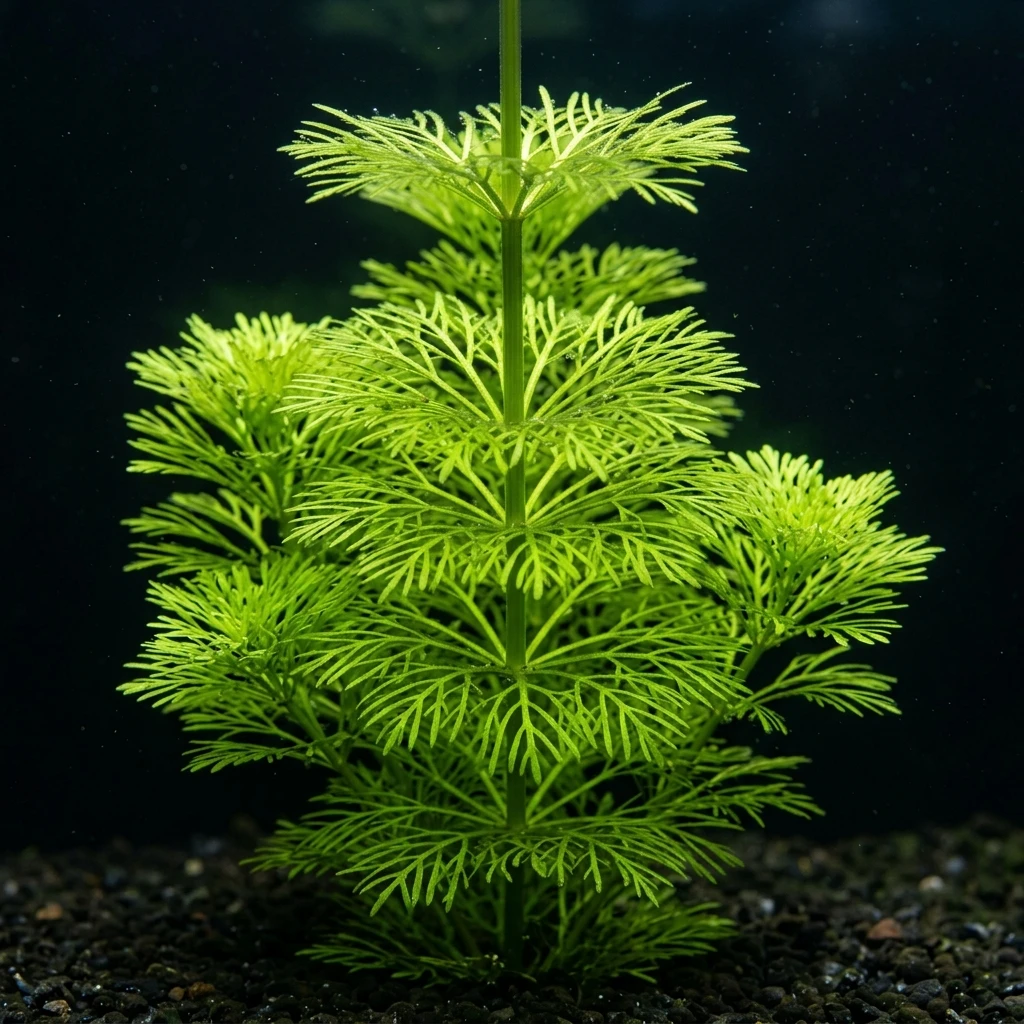
Dwarf Ambulia
Scientific Name: Limnophila sessiliflora
Dwarf Ambulia, also known as Asian Marshweed, is a highly popular, fast-growing background species native to wetlands of Asia. Prized for its gorgeous whorls of fine, pine-needle like bright green leaves, it creates dense, fluffy light-green jungles. Exceptionally easy to grow, it serves as a premier nutrient sponge that effectively starves out algae while providing an ideal nursery for baby fish and shrimp.
Lighting Needs
Moderate to High
Water Parameters
Aquatic (pH 6.0-7.5)
Optimal Substrate
Nutrient-rich substrate
Hardy Temperature
15°C - 28°C
Toxicity Level
Pet Friendly (Non-toxic)
How to Identify Dwarf Ambulia
Use our structural morphological markers to verify the identity of your Dwarf Ambulia in any local nursery or wild wetland:
-
✔
Overall Visual Shape: Dense vertical clusters of vibrant green fan-shaped whorled leaves resembling a miniature pine forest.
-
✔
Leaf Morphology: Fine, feathery fan-shaped leaves arranged in whorls around a central vertical stem, showing bronze-green tips under high light.
-
✔
Root & Anchoring Structure: Fibrous white node roots that sprout easily from any stem node stuck in the soil.
Complete Cultivation & Spawning Guide
Follow our detailed scientific water parameters and care guides to keep your Dwarf Ambulia thriving.
pH: 6.0 - 7.5, GH: 3 - 15 dGH. Highly adaptable to soft or moderately hard freshwater setups.
Low to Moderate. Pressurized CO2 is not mandatory, but minor carbon injection induces extremely lush, compact crown whorls.
Moderate to High. Low light causes the plant to become leggy, with wide spaces between leaf whorls (etiolation).
Propagate by cutting the top healthy stems and replanting. Cut mid-stems to force bushy lateral branching.
A heavy water-column feeder. Relies on liquid macro and micro nutrients; substrate fertilizers are secondary.
Grows best in nutrient-rich aquasoil or fine sand. Fibrous root system develops rapidly to anchor the tall stems.
Optimal temperature is 15°C to 28°C (59°F - 82.4°F). Prefers cooler water; highly sensitive to heat above 30°C.
Requires gentle to moderate water circulation. Too strong current will snap the delicate feathery stems.
Its delicate, fluffy foliage provides the ultimate hiding spots for fry, shrimp, and shy breeding community fish.
Fast growth makes it a brilliant nutrient sponge, starving out hair algae. Clean debris using cherry or Amano shrimps.
Best planted in the background in groups. Space individual stems 1 inch apart to allow light to reach the bottom nodes.
Common Diseases & Treatment
🚨 Etiolation (Leggy Stretching)
Common Cause: The spacing between leaf whorls becomes very wide, and the lower stem leaves turn yellow and drop.
Professional Cure: Caused by insufficient light. Increase lighting intensity or trim the top canopy to allow light to penetrate downward.
🚨 Stem Melting
Common Cause: Stems turn soft, dark, and dissolve at the substrate line.
Professional Cure: Caused by sudden water shocks or poor water circulation around the base. Cut off the healthy tops and replant them in clean water.
Frequently Asked Questions
❓ How fast does Dwarf Ambulia grow?
It is an extremely fast grower. Under high light and nutrients, it can grow up to 2 to 3 inches per week, requiring weekly trimming.
❓ Does it need high lighting?
It prefers moderate to high light. In low light, it will survive but will stretch, look thin, and lose its fluffy, compact appearance.
❓ How do I propagate it?
Simply snip off a healthy top stem of about 3 to 4 inches, strip the bottom leaf whorls, and insert the stem into the substrate.
❓ Can it grow out of water?
Yes! In damp emersed setups, it grows a creepier habit with thicker, tougher, darker green leaves that sometimes produce tiny purple flowers.