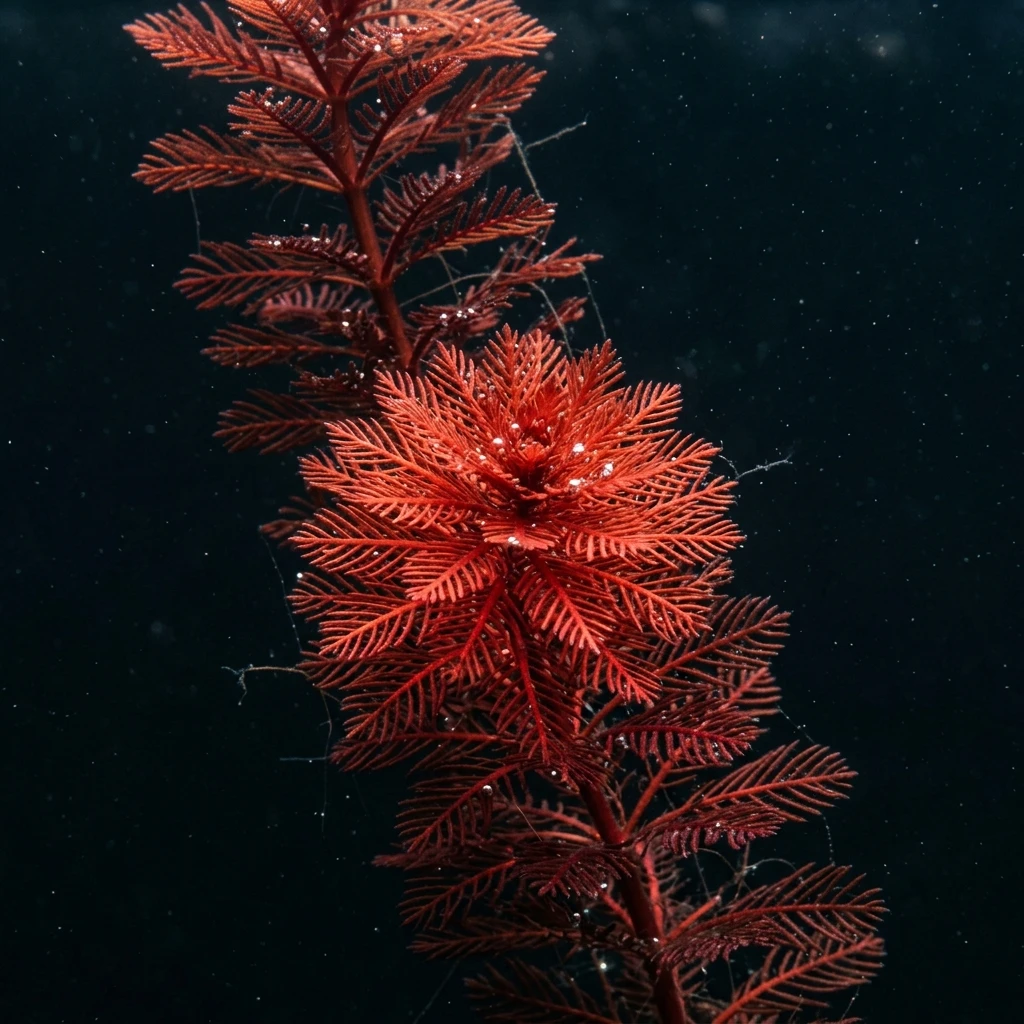
Myriophyllum tuberculatum

Red Water Milfoil Growing & Care Guide

Red Water Milfoil is an exceptionally delicate, finely-feathered vertical stem species native to tropical wetlands of Asia. Highly demanding, it features striking, needle-thin leaves that turn a brilliant brick-red under intense lighting and chelated iron. It forms incredibly soft, feather-like background clouds that add unparalleled texture to professional layouts.


Lighting Icon
Lighting High to Very High
Watering Icon
Water Parameter Soft to Moderate (pH 6.0-7.2)
Substrate Icon
Substrate Nutrient-rich Aquasoil
Temperature Icon
Water Temp 22°C - 28°C
Toxicity Warning Icon
Toxicity Pet Friendly (Non-toxic)
Botanical macro photography of Red Water Milfoil (Myriophyllum tuberculatum) - Plant AI care database

How to Identify Red Water Milfoil

Red Water Milfoil (Myriophyllum tuberculatum) has key botanical markers. Recognizing these features is crucial for successful aquascaping and thriving growth.

  • Visual Shape & Growth: Upright vertical stems with incredibly fine, feathered, linear brick-red needle leaves in whorls.
  • Leaf Morphology: Finely-divided pinnate leaves (approx. 1 inch long) with hair-like needle segments, showing deep brick-red colors.
  • Root & Anchoring Structure: Extremely fine, delicate white root networks that require loose, uncompacted substrate.
💡 Plant AI Tip: Take a photo with Plant AI to identify aquatic weeds and diagnose fungal spot diseases in 1 second.

Complete Cultivation & Spawning Guide

Follow our detailed scientific water parameters and care guides to keep your Red Water Milfoil thriving.

pH: 6.0 - 7.2, GH: 3 - 10 dGH. Requires clean, soft to moderately soft water. Highly sensitive to sudden water hardness shifts.
Very High. Pressurized CO2 injection (30 ppm) is mandatory to prevent stem melting and support its fast growth rate.
High to Very High. Intense full-spectrum lighting is mandatory to develop and sustain its gorgeous brick-red color.
Propagate by cutting the top healthy stems and replanting. Cut mid-stems to force bushy lateral branching.
Requires heavy iron and micro-nutrient dosing. Maintain low nitrates and high phosphates to induce intense redness.
Requires rich aquasoil. Provide slow-release root tabs to feed its delicate vertical root network.
Optimal temperature is 22°C to 28°C (71.6°F - 82.4°F). Sensitive to sudden cold water shocks during maintenance.
Requires steady water circulation. Good current prevents organic waste and algae spores from landing on delicate leaves.
Its delicate leaves can be eaten by herbivorous fish. Best for community tanks with small fish and shrimp.
Fast growth makes it prone to hair algae under unstable parameters. Employ Amano Shrimps to keep delicate foliage clean.
Best placed in the background. Plant stems individually with 0.5-inch spacing to allow light penetration to lower leaves.

Are your Red Water Milfoil stems melting, catching hair algae or losing red color?

Inject pressurized CO2, ensure soft water (GH < 6), and provide high-intensity light and iron.

Diagnose My Aquatics

Common Diseases & Treatment

Filamentous Algae Infestation

Symptoms: Delicate feathered leaf whorls get choked by green hair or thread algae, suffocating the plant.

Action: Prune infected areas. Introduce Amano shrimp and balance nitrates/phosphates to starve the algae.

Iron Deficiency (Chlorosis)

Symptoms: New leaves emerge pale green or white, lacking their signature brick-red tips.

Action: Increase comprehensive liquid iron dosing or insert iron-rich root tabs near the root zone.

Frequently Asked Questions

Why is my Red Water Milfoil losing its red color?

Insufficient light or low iron levels are the main causes. It needs intense lighting and chelated iron dosing to maintain its red feathered appearance.

Is it suitable for low-tech setups?

No. Red Water Milfoil will quickly melt and die without pressurized CO2, soft acidic water, and intense lighting.

How do I propagate it?

Cut the tops of the stems and replant them in the soil. The bottom section will sprout multiple new lateral shoots, forming a bushier clump.

What fish can I keep with it?

Keep only with peaceful, non-destructive fish like Neon Tetras, Harlequin Rasboras, or celestial pearl danios.

Master advanced aquascaping. Start today!

Get Started for Free